









Enormous sinkholes measuring hundreds of feet in depth have been appearing across Turkey, prompting some observers to draw parallels with biblical scripture.
The Book of Numbers, Chapter 16, recounts the ground opening to consume people as divine retribution for defiance, a passage that certain individuals have connected to the ground collapses occurring in the Konya Plain.
Some have interpreted these dramatic events as evidence that "God is on the move".
Turkey's Disaster and Emergency Management Authority has documented 648 substantial sinkholes throughout the vital wheat-producing region.
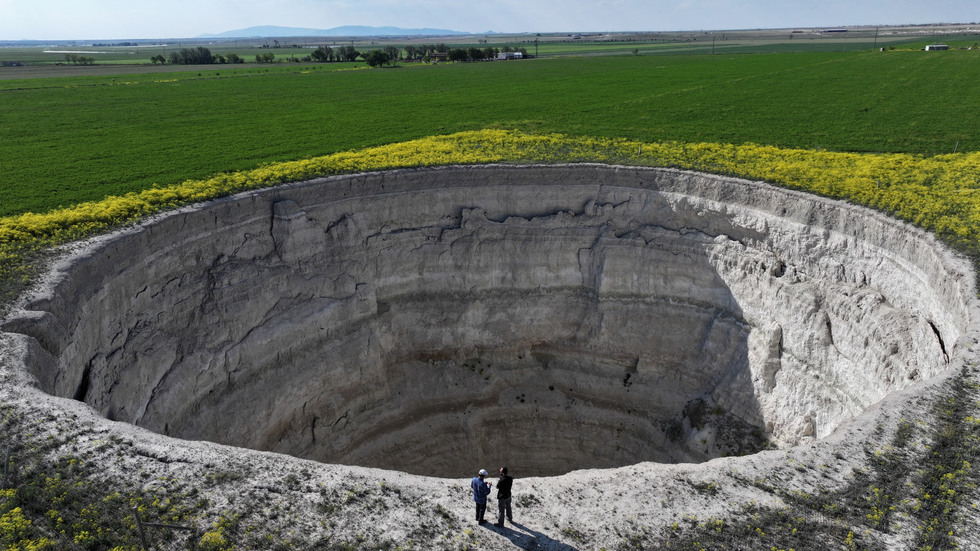
Turkey's Disaster and Emergency Management Authority has documented 648 substantial sinkholes in the region
|GETTY
Prior to the turn of the millennium, such collapses were rare, with only a small number occurring per decade.
Now, however, scores of massive ground failures happen annually, with some exceeding 100 feet in diameter.
Scientists, however, attribute the phenomenon to entirely terrestrial factors.
Researchers at Konya Technical University have identified over 20 fresh sinkholes within the past 12 months, supplementing approximately 1,900 locations already charted by 2021 where subsidence or early-stage collapse was detected.
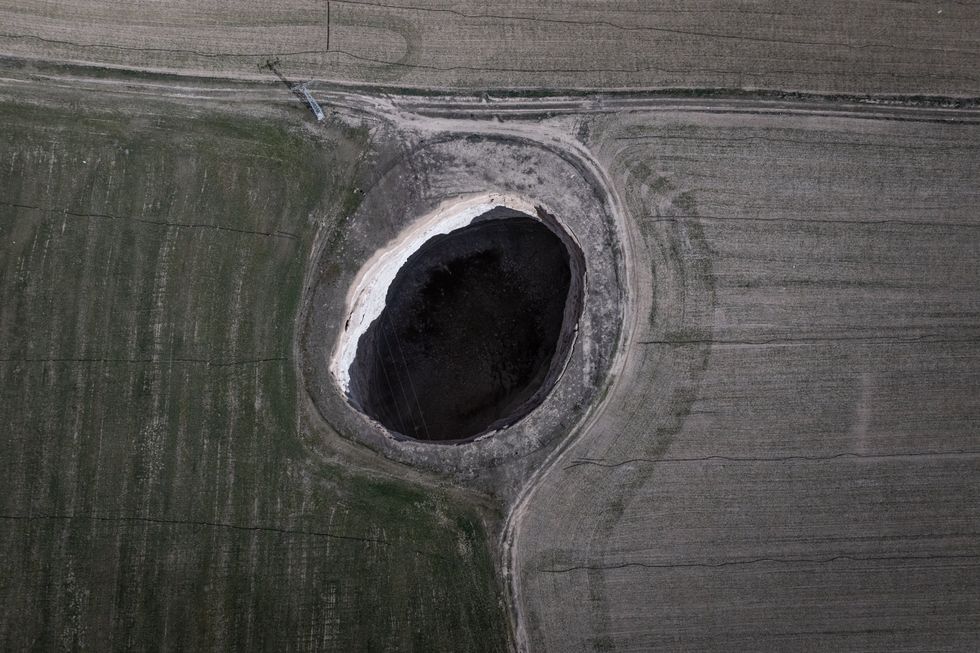
Researchers at Konya Technical University have identified over 20 fresh sinkholes within the past 12 months
|GETTY
Prolonged drought over the past quarter-century has been identified as the primary driver behind this dramatic surge in ground failures.
Declining water tables beneath the surface are creating cascading problems, including depleted wells, damaged ecosystems, failing harvests, and sinking terrain.
Agricultural workers extracting additional groundwater to sustain their sugar beet and maize crops are worsening the crisis.
According to Turkey Today, farmers have already suffered crop losses or been compelled to vacate fields considered hazardous.
SCIENCE - READ THE LATEST:
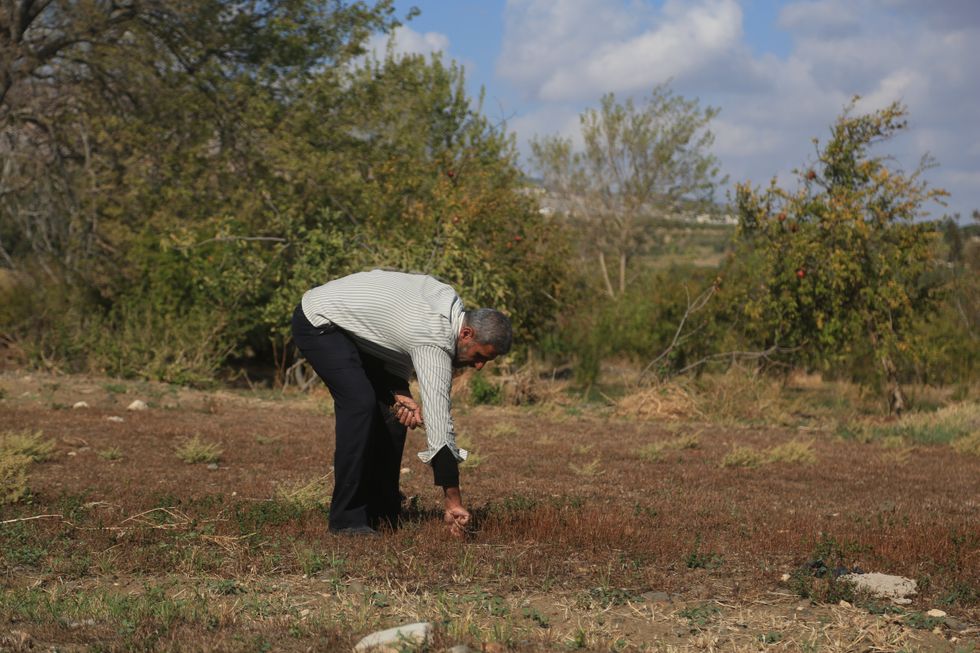
Farmers have already suffered crop losses or been compelled to vacate fields considered hazardous
|GETTY
NASA's Earth Observatory data indicates Turkish water reserves fell to their lowest point in 15 years during 2021.
Researchers caution that comparable dangers could materialise across portions of the US, Asia, the Middle East, the Mediterranean, and Australia as groundwater reserves continue to diminish.
In America, the mechanism behind these collapses follows a predictable pattern.
When farmers and municipalities extract vast quantities of water from limestone formations during arid periods, underground caverns that once held water become empty, causing their roofs to give way suddenly.
Texas, Arizona, and New Mexico have already witnessed such events first-hand.
In March, a sinkhole approximately 200 feet across and 40 feet deep emerged near an abandoned 1950s oil well in Upton County, Texas, close to McCamey.
Arizona's Cochise County has experienced ground subsidence exceeding six inches annually across hundreds of acres, producing fissures and holes ranging from 10 to 30 feet wide.
In May 2024, a 30-foot-deep sinkhole opened near residential properties in Las Cruces, southern New Mexico, engulfing two vehicles and necessitating evacuations of nearby homes.
Authorities pointed to unstable ground resulting from recent dry conditions, though no statewide restrictions on water extraction followed.
The US Drought Monitor has recorded the most severe conditions along the western Texas border with Mexico, registering at D4, the highest drought classification.
Northern Florida, southern Georgia, New Mexico, Arizona, Colorado, and Utah have all been assessed as experiencing severe to extreme drought this December.
Scientists have warned of an "unprecedented 21st century drought risk" affecting the Southwest and Central Plains, with multiple studies projecting severe arid conditions persisting until 2100.
Our Standards: The GB News Editorial Charter