










A 66-million-year-old tooth unearthed in North Dakota revealed the secrets of mosasaurs, a huge 40ft ocean predator.
The findings revealed that the fearsome marine reptile ventured far from its natural habitat to stalk prey in freshwater rivers.
The fossil, discovered in the renowned Hell Creek Formation, was analysed by an international research team whose findings were published yesterday in the journal BMC Zoology.
Scientists had previously believed these apex predators were exclusively ocean-dwelling creatures, but chemical analysis of the tooth indicates the animal also inhabited a riverine environment.
TRENDING
Stories
Videos
Your Say
The discovery means dinosaurs drinking at prehistoric waterways may have faced threats not only from land-based predators but also from these enormous aquatic hunters like Mosasaur lurking beneath the surface.
The creature responsible for the tooth was no small predator.
Researchers estimate it measured approximately 40ft in length, making it larger than a modern killer whale and comparable in size to a city bus.
Dr Melanie During of Uppsala University, who led the isotope analysis, told IFLScience: "It was bigger than a killer whale."
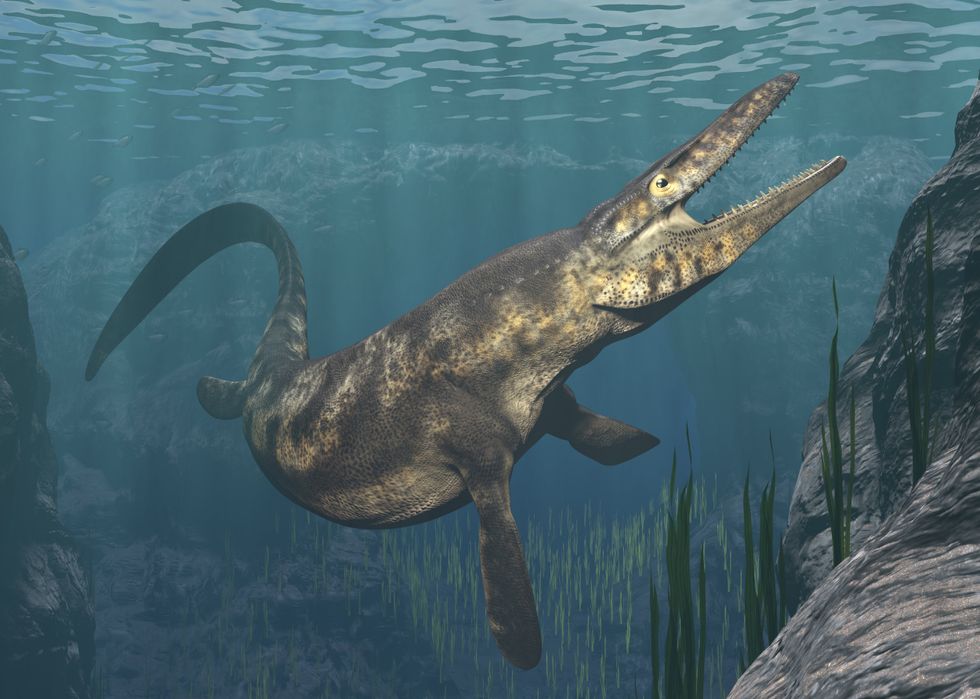
A tooth fossil has revealed the secrets of mosasaurs, a 40ft prehistoric sea monster
|GETTY
Dr During noted the creature would have been far bigger than some of the most infamous predators familiar to humans, like crocodiles and great white sharks.
Advanced chemical testing at the Vrije Universiteit in Amsterdam examined oxygen and strontium isotope ratios within the tooth enamel.
The results revealed a higher proportion of lighter oxygen isotopes than typically found in saltwater-dwelling mosasaurs, strongly indicating a freshwater habitat.
Mosasaur's presence in landlocked North Dakota, nearly 2,000 kilometres from any ocean, puzzled researchers until they examined the region's geological history.
LATEST DEVELOPMENTS
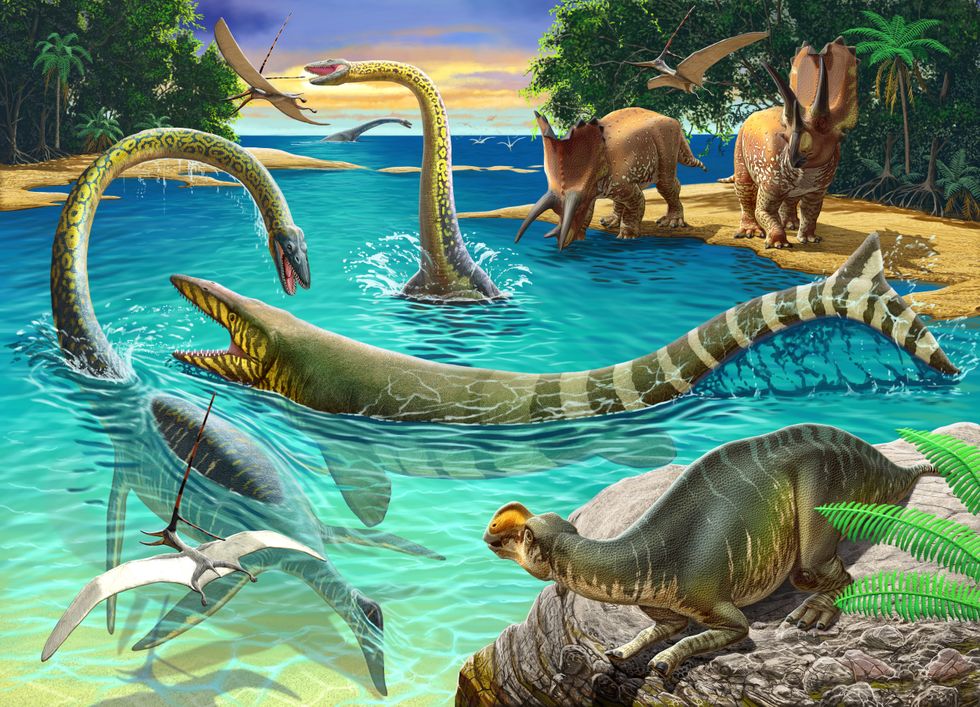
The breakthrough has revealed that mosasaurs also hunted in rivers
|GETTY
During the Late Cretaceous period, the Western Interior Seaway divided North America, but tectonic activity gradually cut it off from both the Gulf of Mexico and the Arctic Ocean.
Rainfall progressively flushed salt from the waters, transforming the seaway into a network of rivers and freshwater channels.
Dr During explained that adapting from saltwater to freshwater is comparatively straightforward for marine creatures, comparing the mosasaur's flexibility to that of modern Australian saltwater crocodiles, which readily move between marine and riverine environments.
The research team also uncovered tantalising evidence about the mosasaur's diet.
Carbon isotope ratios in the tooth proved so dramatically different from marine specimens that they barely registered on the same analytical charts.
Dr During told IFLScience these ratios resembled those of animals that fed on dinosaurs, leading her to suspect the docile herbivore hadrosaurs likely featured on the predator's menu.
Researchers have since dubbed the species the "King of the Riverside”.
They explained that adaptability would have been crucial in their ability to thrive across various ecological niches during the Late Cretaceous.
Our Standards: The GB News Editorial Charter