









A University of Bristol historian believes he has cracked one of the enduring mysteries surrounding the Bayeux Tapestry.
Since 1066, the embroidery has been the subject of marvel - but for years, scientists were not sure exactly what it was made for.
Professor Benjamin Pohl argues that the medieval masterpiece was created specifically to adorn the walls of the refectory at St Augustine's Abbey in Canterbury - a kind of visual entertainment for monks at mealtime.
"Just as today, in the Middle Ages mealtimes were always an important occasion for social gathering, collective reflection, hospitality and entertainment, and the celebration of communal identities," Prof Pohl said.
"In this context, the Bayeux Tapestry would have found a perfect setting."
The iconic artwork will travel to the British Museum next year, representing its first return to British soil in nearly a millennium since its creation.
According to Prof Pohl's research, St Augustine's Abbey represents the most likely birthplace of the work, where a group of exceptionally talented embroideresses produced it during the late 11th century.
The embroidery stretches approximately 70 metres long and chronicles the dramatic events of the Norman conquest of England through roughly fifty scenes featuring captions stitched onto linen using coloured woollen threads.
While many academics accept that the tapestry was designed and crafted at the Canterbury abbey, its intended purpose had remained elusive.
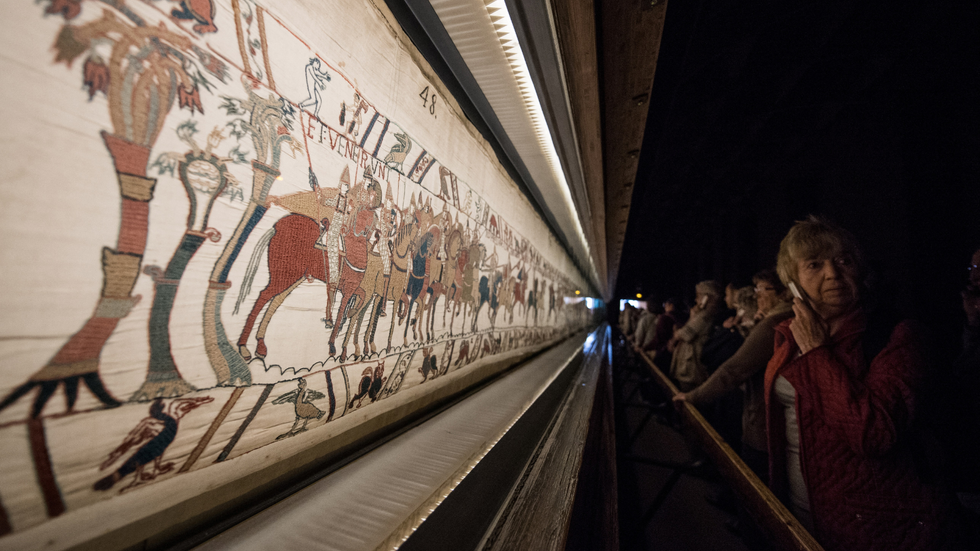
A University of Bristol historian believes he has cracked the mystery surrounding the Bayeux Tapestry's origins
|GETTY
Some scholars maintain that Bishop Odo, the half-brother of William the Conqueror, commissioned the piece for his cathedral in Bayeux in 1077.
But Prof Pohl disputes this interpretation, insisting it was always meant for St Augustine's.
His theory suggests the tapestry may have spent its first four to five decades simply stored away in a box at the abbey, awaiting a home that took far longer to construct than anyone anticipated.
"If my theory is right, then the refectory was meant to be built in the 1080s under Abbot Scolland of St Augustine's, who died in 1087 before the building work could commence," Prof Pohl explained.
HISTORY MYSTERIES - READ MORE:
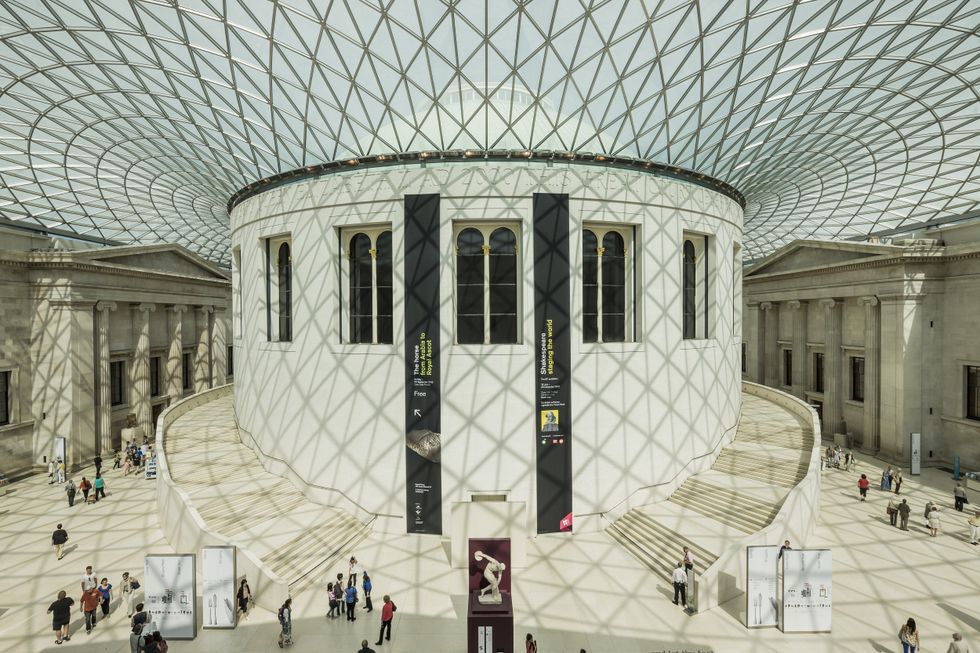
The iconic artwork will travel to the British Museum next year
|GETTY
The dining hall was eventually constructed by Abbot Scolland's successor, Abbot Hugh, following the original plans, around 1120 or shortly afterwards.
"At the time of Scolland's death, nobody could have foreseen that it would take almost 50 years for the refectory to by completed, so the plan might well have been to only keep it in storage for a few years," Prof Pohl added.
The tapestry eventually crossed the English Channel to the Norman commune that now bears its name, though precisely when this journey occurred remains unknown.
Prof Pohl noted there is a "remarkable lack of records attesting to" the artwork's whereabouts "or even to its very existence" before the fifteenth century.
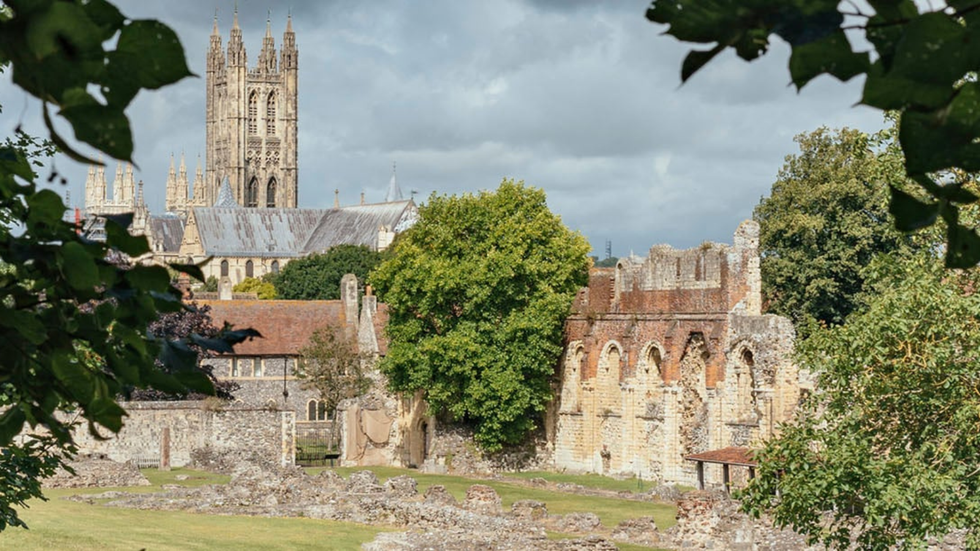
According to Prof Pohl's research, St Augustine's Abbey represents the most likely birthplace of the tapestry
|ENGLISH HERITAGE
The earliest written reference to the tapestry dates from 1476, when it was documented at Bayeux Cathedral.
"One would think that with an artefact this big and, as far as we know, unique somebody would have seen it on display and commented on it between the 1080s and 1476, which is when it is first mentioned in writing," he observed.
St Augustine's Abbey itself was established in 598 and operated as a monastery until Henry VIII's dissolution of the monasteries in 1538.
The remarkable 230-foot long tapestry features more than 600 figures, 190 horses, 37 ships, buildings and Latin inscriptions.