









Archaeologists have confirmed a fragment of elephant bone unearthed in West Sussex as one of the world's oldest tools fashioned from such material.
The discovery, made decades ago at Boxgrove, near Chichester, dates back 480,000 years and surpasses any comparable European artefact by more than 30,000 years.
The triangular bone fragment, measuring approximately 11 centimetres in length and six centimetres in width, was originally excavated during digs in the 1990s.
Researchers initially believed it might have been an accidental by-product of butchery activities.
TRENDING
Stories
Videos
Your Say
However, a recent analysis using 3D scanning technology and electron microscopes has revealed intentional modification marks on the bone's surface.
The examination, published in the journal Science Advances, uncovered distinctive notches indicating deliberate shaping for tool use.
Ancient inhabitants of southern England, likely Homo heidelbergensis or early Neanderthals, crafted and wielded the hammer tens of thousands of years before modern humans arrived in Britain.
The implement functioned as a specialised retoucher, serving to restore sharpness to dulled flint handaxes and other stone implements.
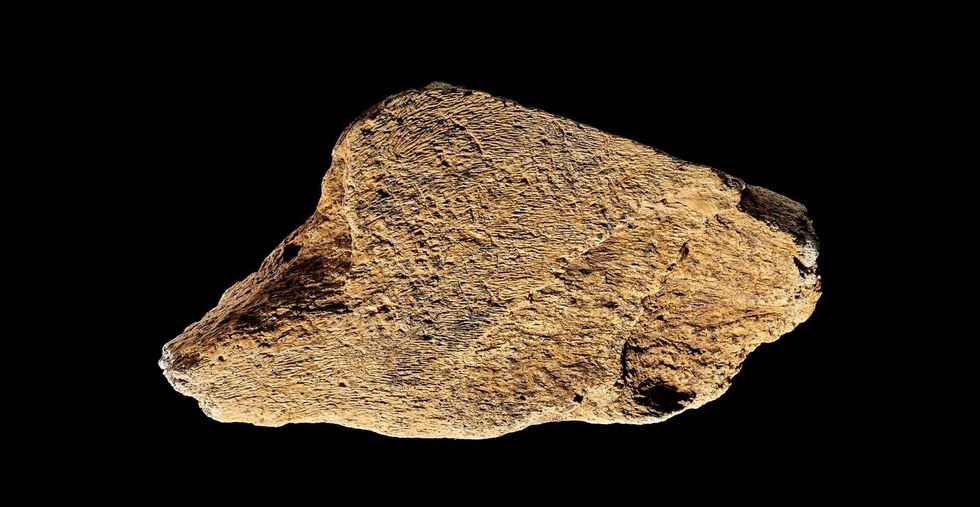
Initially mistaken for a bone fragment, new research reveals this elephant bone hammer was carefully shaped to sharpen other tools
|THE TRUSTEES OF THE NATURAL HISTORY MUSEUM
This represented a precision technique in which the bone hammer struck against stone edges to remove small flakes, a process archaeologists term knapping.
Microscopic examination revealed fragments of flint still embedded within the bone's impact marks, providing concrete evidence of repeated use in tool maintenance.
A grouped pattern of these impact areas suggests the retoucher was employed numerous times over a relatively brief period.
Dr Silvia Bello, a human evolution researcher at London's Natural History Museum, explained organic materials like elephant bone possess advantages over stone for detailed work.
"Softer substances like elephant bone and antlers have a more elastic structure than rock, making it easier to control the stone-working process," she noted.
The bone's exceptional density and thickness indicate it originated from either a straight-tusked elephant or mammoth, though insufficient evidence remains to determine the precise species.
Its structural resilience made elephant bone particularly effective for withstanding the repeated impacts required in tool sharpening.
Simon Parfitt, the study's lead author from University College London, emphasised the rarity of the material in prehistoric England.
"This remarkable discovery showcases the ingenuity and resourcefulness of our ancient ancestors," he said.
MORE SCIENCE NEWS:
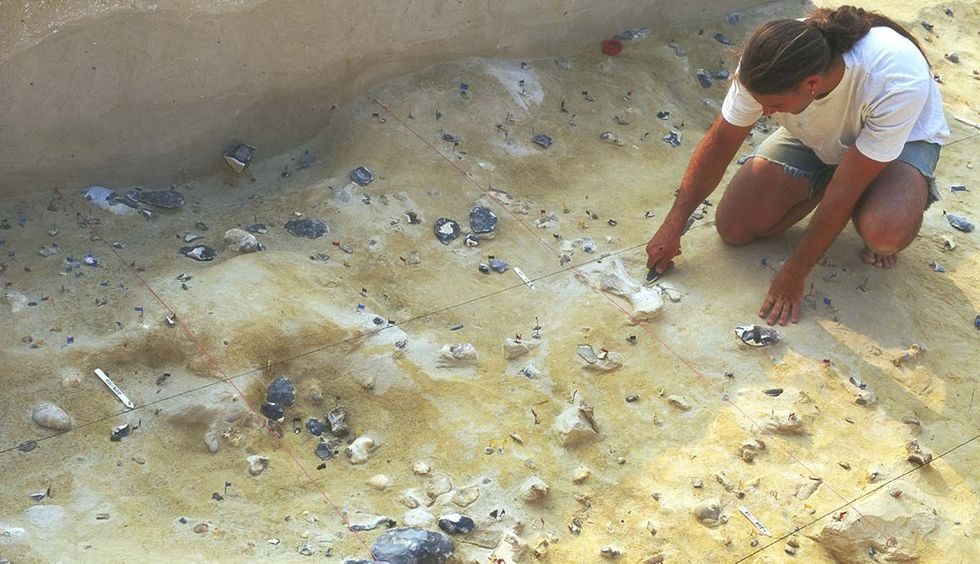
Elephant bone is rare at Boxgrove, making the tool
|BOXGROVE PROJECT/UCL
"They possessed, not only a deep knowledge of the local materials around them, but also a sophisticated understanding of how to craft highly refined stone tools."
Mr Parfitt added that elephants and mammoths were uncommon in the region, meaning "elephant bone would have been a rare but highly useful resource, and it's likely this was a tool of considerable value."
The absence of other elephant bone fragments in the immediate vicinity of the retoucher suggests the site's inhabitants deliberately sought out and preserved this superior material for portable toolkits.
Highlighting the cognitive implications of this behaviour, Dr Bello said: "Collecting and shaping an elephant bone fragment and then using it on multiple occasions to shape and sharpen stone tools shows an advanced level of complex thinking and abstract thought.
"They were resourceful gatherers of available materials, and savvy about how best to use them."
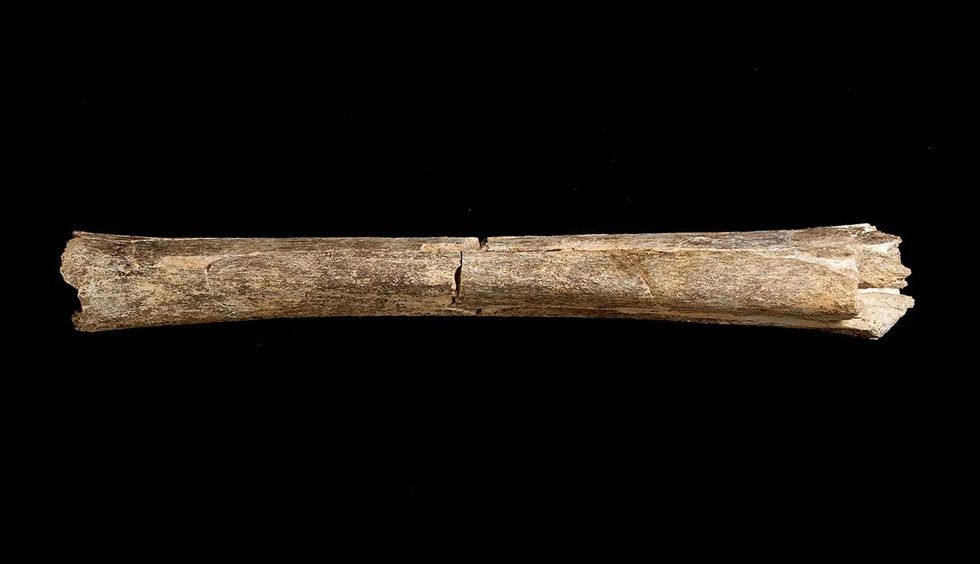
Some of the oldest physical evidence of humans in Britain comes from the Boxgrove archaeological site
|THE TRUSTEES OF THE NATURAL HISTORY MUSEUM
The Boxgrove site has been under excavation since the 1970s and ranks amongst the world's most significant locations for understanding human life from half a million years ago.
Previous discoveries there include the earliest human remains found in Britain, Europe's oldest bone tools, and thousands of butchered animal remains.
The ancient inhabitants employed the hammer whilst processing carcasses of giant deer, horses, and rhinoceroses, using it to maintain the sharpness of their butchery implements.
Evidence shows the bone was shaped and utilised whilst still fresh, indicating the toolmakers recognised the material's properties and acted upon opportunities to acquire it.
The retoucher's ultimate fate remains puzzling to researchers as despite being in serviceable condition, the tool was left behind and never recovered by its users.
"It's possible that it was accidentally lost, and that its owner was never able to find it again," Dr Bello said.
"Alternatively, it might have been discarded intentionally but why such a useful object would have been left behind is a mystery."