










Historians have identified the first known visual depiction of a woman battling wild animals in a Roman amphitheatre, marking a significant breakthrough in understanding female participation in ancient blood sports.
The remarkable image comes from a mosaic dating back approximately 1,700 years, originally unearthed in the French city of Reims.
It shows a bare-chested woman armed with a whip, engaged in combat with a leopard.
"Women fighting beasts in arena games are attested by the written sources, but no visual source is known to show their image," wrote researcher Alfonso Mañas in the International Journal of the History of Sport.
TRENDING
Stories
Videos
Your Say
"Evidence is presented proving that she (the person in the mosaic) is a woman, and she is a beast fighter."
The discovery demonstrates women took part in arena spectacles for considerably longer than scholars had previously believed.
The artwork was first discovered in 1860 in Reims, which served as a major administrative and cultural centre during Roman times with a population reaching 100,000.
Measuring roughly 11 by 9 metres, the mosaic featured an elaborate arrangement of medallions depicting amphitheatre scenes, including gladiators, wild beasts and staged hunts.
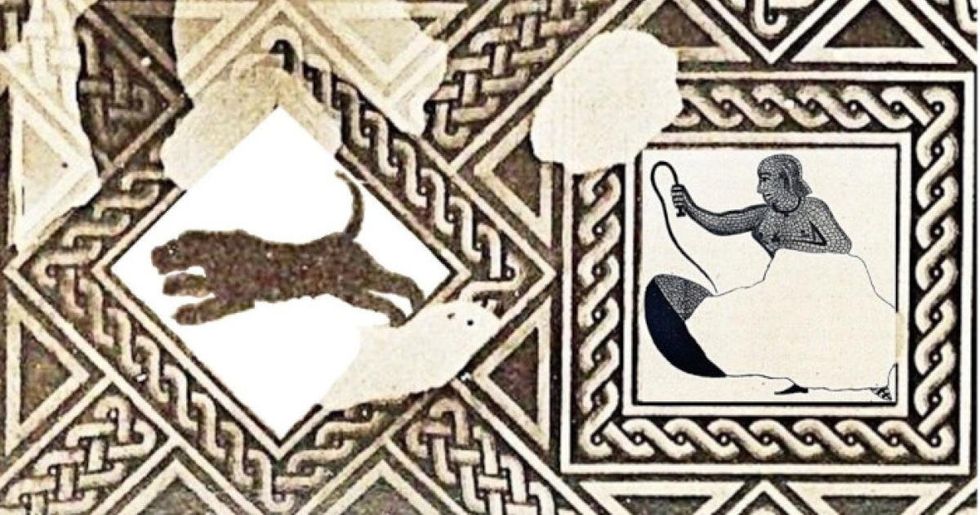
The remarkable image comes from a mosaic dating back approximately 1,700 years, originally unearthed in the French city of Reims
|SUPPLIED
Tragically, bombing during the First World War in 1917 destroyed the original piece.
Fortunately, the archaeologist who initially uncovered it, Jean-Charles Loriquet, had documented the artwork in detailed drawings published in a book.
For decades, the mosaic received scant scholarly attention until Alfonso Mañas from the University of California, Berkeley, recently examined the surviving illustrations.
His findings, published in The International Journal of the History of Sport, identified a figure earlier researchers had mistakenly classified as a male performer or comic gladiator.
LATEST DEVELOPMENTS

Records show traditional female gladiators who fought other humans were banned across the Roman Empire in 200 AD
| IMAGINE CRUISINGThe figure in the mosaic holds a weapon and appears to be driving the leopard towards another hunter, indicating she was a trained professional rather than a condemned prisoner.
Mr Mañas argues her gender is unmistakable due to clearly depicted breasts and the fact she is the only figure shown without a shirt.
"The evidence of the breasts, especially the right one, is clear," he wrote. "That it is a woman is also supported by the fact that she is the only person with a whip represented without a shirt."
The woman appears to have been a venatrix, or female beast hunter, specifically a succursora whose role involved herding animals towards other fighters for the killing blow.
This required considerable skill and training, distinguishing her from victims of public executions.
Prior to this discovery, historians believed female beast hunters existed only briefly, primarily from the reign of Nero in the first century to the early second century.
The Reims mosaic, dating to the third century, pushes this timeline forward by at least a hundred years.
Historical records show traditional female gladiators who fought other humans were banned across the Roman Empire in 200 AD, yet this artwork suggests women continued battling animals after prohibition.
"It seems that female beast hunters would (nearly) always fight topless, with bare breasts, because contrariwise spectators from the stands would have had problems to notice that they were actually women," Mr Mañas explained.
"To arouse an erotic effect on those spectators, to excite them sexually, was one of the aims sought by their performance."
Our Standards: The GB News Editorial Charter