










Research into the mysterious Shroud of Turin has taken a new twist after analysis of the Christian artefact found "multiple sources" of human DNA on the cloth.
The linen relic, which appears to show Jesus Christ on its front and back, has not been seen by the public in more than a decade.
While the Vatican has not made any declaration of the authenticity of the shroud, believers say it was used to wrap the body of Christ after his crucifixion and left a bloody imprint on the fabric.
Researchers from the University of Padova found DNA from several sources, including multiple humans, plants and fungi on the sheet.
They said: "This research provides original insights into the diversity of DNA extracted from samples collected in 1978 from the Turin Shroud, revealing its biological complexity through rigorous DNA and metagenomic analyses.
"Our findings highlight its preservation conditions and environmental interactions, offering valuable perspectives into the identified genetic variants, which originated from multiple biological sources."
Researchers have engaged in the analysis to determine the "true nature" of the shroud, currently housed at the Cathedral of St John the Baptist in Turin.
Leading the research, Gianni Barcaccia, said: "The true nature of the shroud has been highly debated among historians, theologians, and scientists."
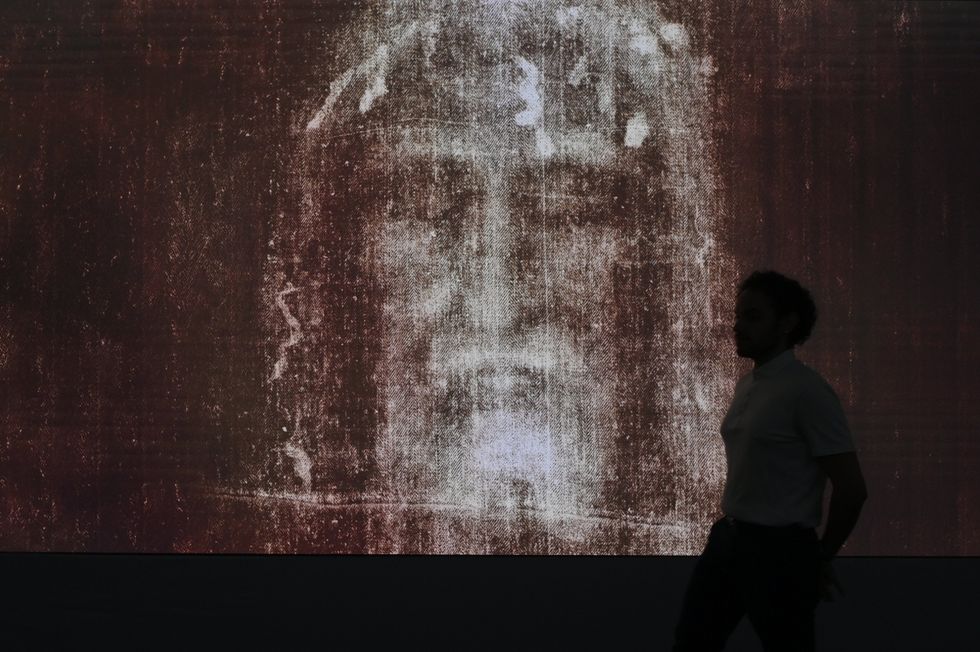
While not displayed in person, the Shroud of Turin was displayed digitally in 2025, seen here
|GETTY
She added that while "several hypotheses" had been proposed, no one theory had been able to establish its origin with "any degree of certainty when and where this textile originated from".
DNA was analysed from 12 samples collected from the shroud in 1988.
While there was some modern DNA contamination due to how many people have handled the fabric, some older human DNA was found.
Researchers shared that DNA from Western Eurasia and the Near East was found on the garment.
ARCHAEOLOGY BREAKTHROUGHS - READ MORE:
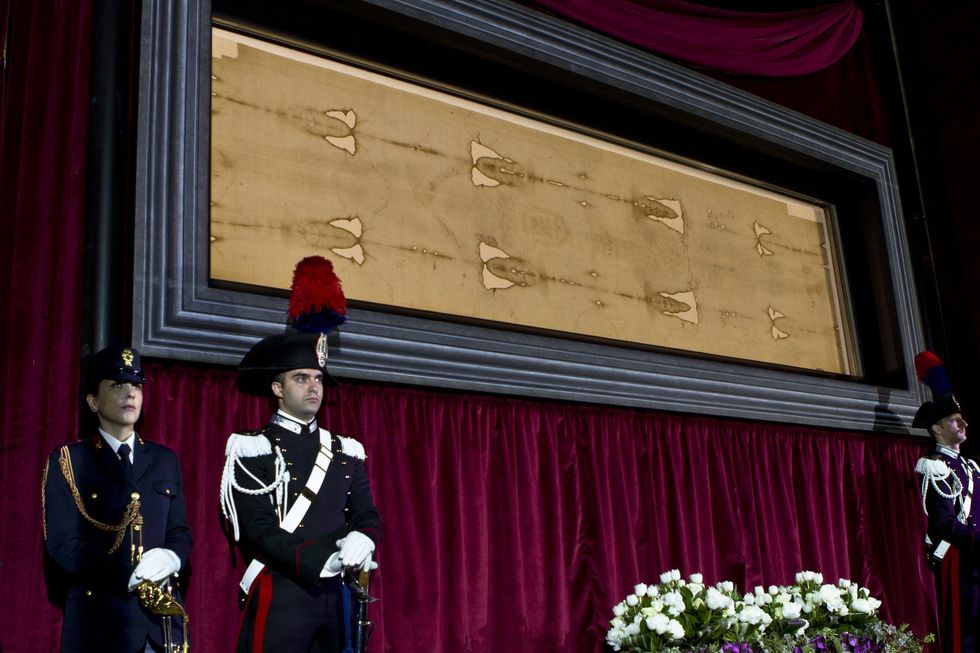
Multiple human DNA sources were found on the Shroud of Turin, seen here at its last in-person display
|GETTY
It is likely the shroud's real origins may never be discovered - but the study could help unravel the mystery of its journey.
The presence of an "unusually high number of human heteroplasmies" and multiple sources of human DNA confirmed the Shroud of Turin "came into contact with multiple individuals, thereby challenging the possibility of identifying the original DNA of the Shroud".
The DNA from animals including dogs, cats, chicken, and cows, suggest the linen travelled through the Mediterranean or had Mediterranean origins.
Plant DNA such as carrots and cereals were also found on the shroud.
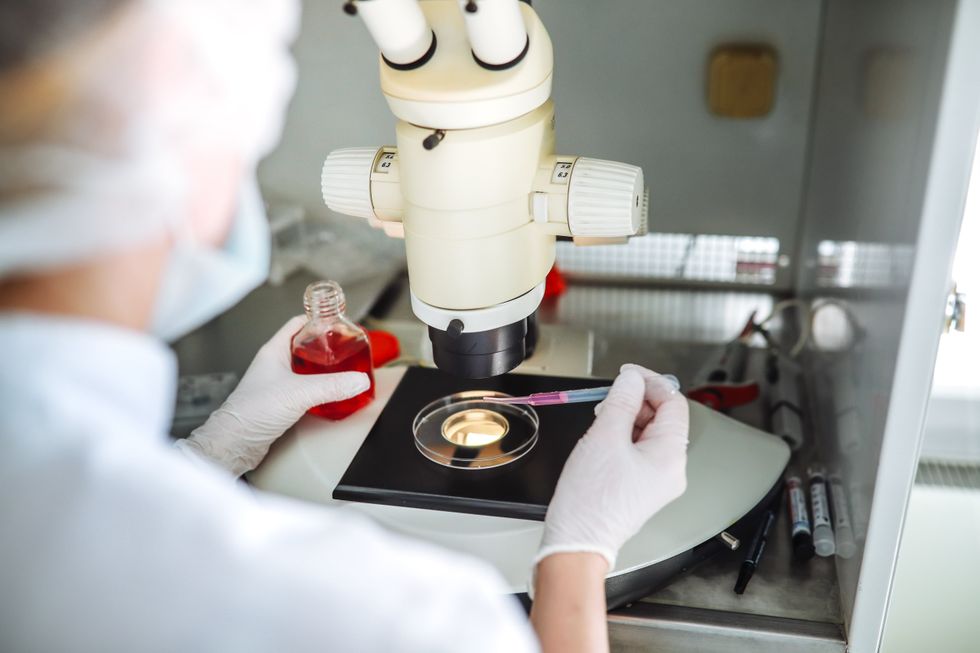
DNA analysis found plants, animals, and multiple humans on the shroud, which may reveal the journey it took (file photo)
|GETTY
The researchers added: "The prevalence of Mediterranean crops and the absence of typical Middle Eastern flora raise questions about the agricultural landscape when the Shroud was created or used as a burial cloth."
Millions of Christians flocked to see the the shroud of Turin when it was last on display to the public.
The documented history of the cloth dates back to 1354, when it was first unveiled in Chambery, France - the former seat of the House of Savoy before they moved to Turin in northern Italy.
In 1988, radiocarbon dating said the garment dated back to the Middle Ages, between 1260 and 1390.