










Excavations off the coast of Japan have uncovered a 745-year-old shipwreck that sunk as a result of a "divine wind".
The newly-discovered ship, found in Japan's Imari Bay near Takashima Island, is tied to the 1281 Mongol invasion of Japan and is the third shipwreck found there in the last 15 years.
Underwater archaeologists examining a timber hull and sunken ceramics place it within the Jiangan Army, one of 4,400 ships that partook in Kublai Khan's invasion.
Two fleets of ships, the Eastern Army, which departed from the Korean Peninsula, and the Jiangan Army, which set sail from southern China, were set to invade Japan in the Koan War.
The plan was for the two naval armies to converge at Iki Island before continuing on to port city Hakata.
But the Jiangan Army was delayed, and by the time the fleet gathered near Takashima, a typhoon, otherwise known as a "kamikaze" or "divine wind", destroyed many ships.
In a study published in Yearbook Japan, archaeologists explored how the ship, titled Ship No3, was found.
Acoustic seabed scanning found the ship in 2023, just 165 feet from the second shipwreck discovered in 2014.
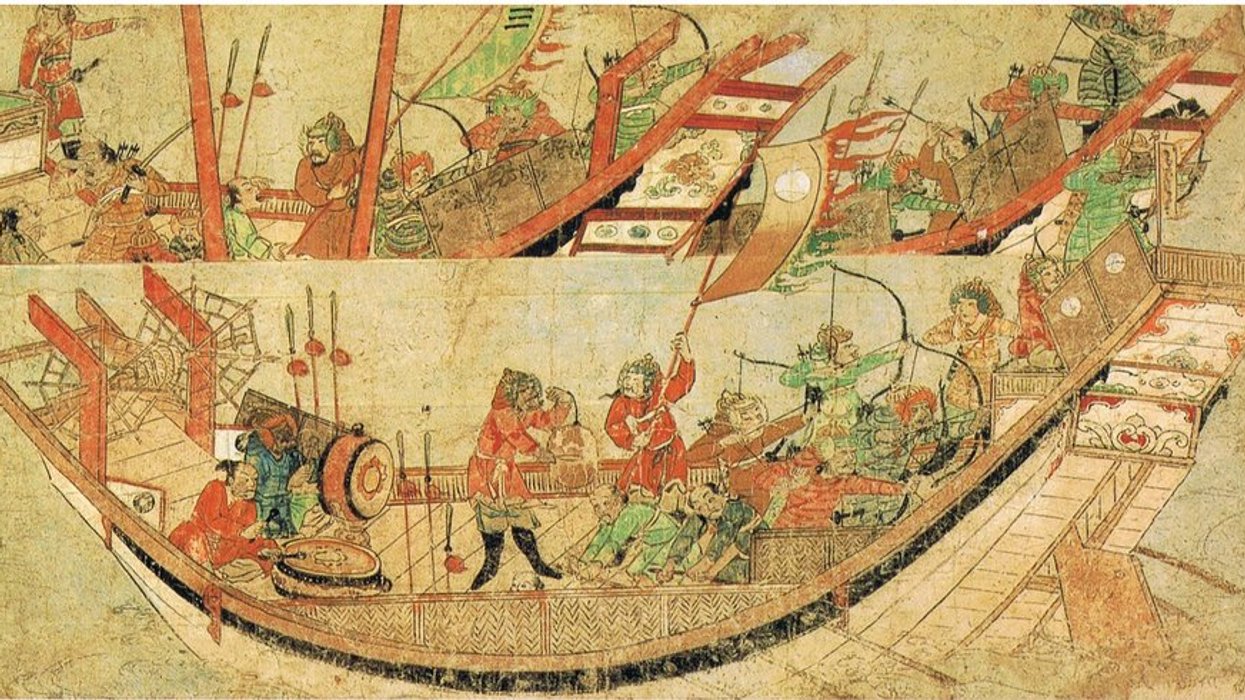
Artwork from the period shows the Japanese ships attacking the invading Mongol ships
The first ship was found in 2011, and all three vessels were found buried at a depth of 65 feet.
Now, the vessels sit roughly three feet below the ocean floor.
Searches for the ship have been ongoing since the 1980s, and there was a history of local fishermen finding Chinese ceramics and Korean porcelain in their nets before that.
As recorded in the 1369 book the History of Yuan, the commanders abandoned their troops and fled when the typhoon came.
Many soldiers died in the typhoon, and those who made it ashore were then killed by the Kamakura Shogunate.
LATEST ARCHAEOLGICAL DISCOVERIES:
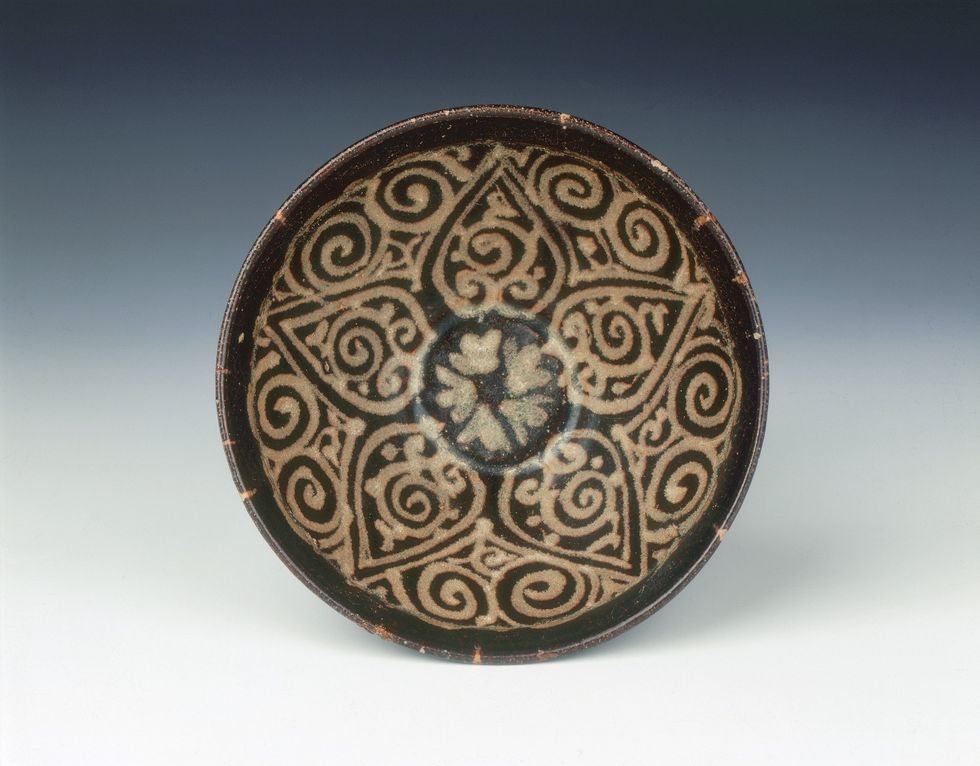
An example of Chinese ceramics from the period, similar to those found in the shipwreck
|GETTY
They left behind artefacts including a bundle of arrows, a short sword still in its scabbard, and pair of metal engraved chopsticks.
Ceramics found in the wreck matched artefacts made in Jiangsu Province, neighbouring Zhejiang Province, where the ship was likely constructed.
Other items also found in the wreck were stone cannonballs, bronze Buddhist statues, anchors, and mirrors.
Carbon dating of different wood samples showed the timber had been fell around 1253, about three decades before the ship succumbed to the elements.
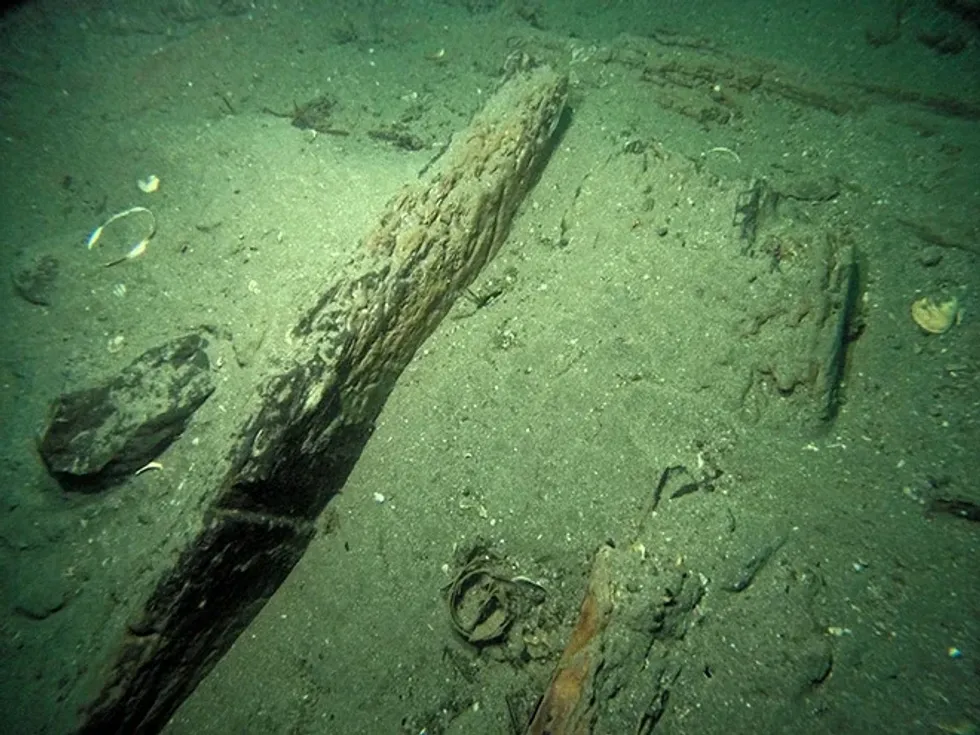
PICTURED: A wooden structure believed to be a bulkhead of the most recently discovered Mongolian ship
|MUNICPAL EDUCATION BOARD OF MATSUURA
Researchers also used acrylic sampling tubes to extract soil from directly above the hull's lower planks.
These deposits contained undecomposed organic matter, such as parts of wooden tools, chopsticks, and fish bones from meals eaten on the ship.
The authors of the study said the find was a source of information to learn about "the naval history of the region, the technological level of shipbuilding, and the dynamic interaction of the peoples of East Asia".
Artefacts from all three shipwrecks can be found in three locations in Japan, the Matsuura City Buried Cultural Properties Center, the Nagasaki Museum of History and Culture, and the Kyushu National Museum.