










Renovation work at Durham Castle has uncovered a remarkable piece of medieval artwork hidden for seven centuries behind wall panelling and plaster.
The painting, which shows a red flower with its stem, is believed to date from the late 13th or early 14th Century, according to experts examining the find.
Academics have concluded that a Bishop of Durham most likely commissioned the decorative piece during the medieval period.
"The idea that the decoration from 700 years ago would still be there was just absolutely phenomenal," said Andrew Ferrara, a researcher at Durham University who made the discovery.
Mr Ferrara explained that the refurbishment project had provided researchers with an opportunity to examine how the historic building was constructed.
The team removed small portions of plaster from various walls to analyse their composition.
"I took off this layer and then suddenly I saw these little red lines," he recalled of the moment he spotted the artwork.
The discovery came down to pure chance, with Ferrara noting that shifting the investigation point by just a foot in either direction would have meant missing the painting entirely.
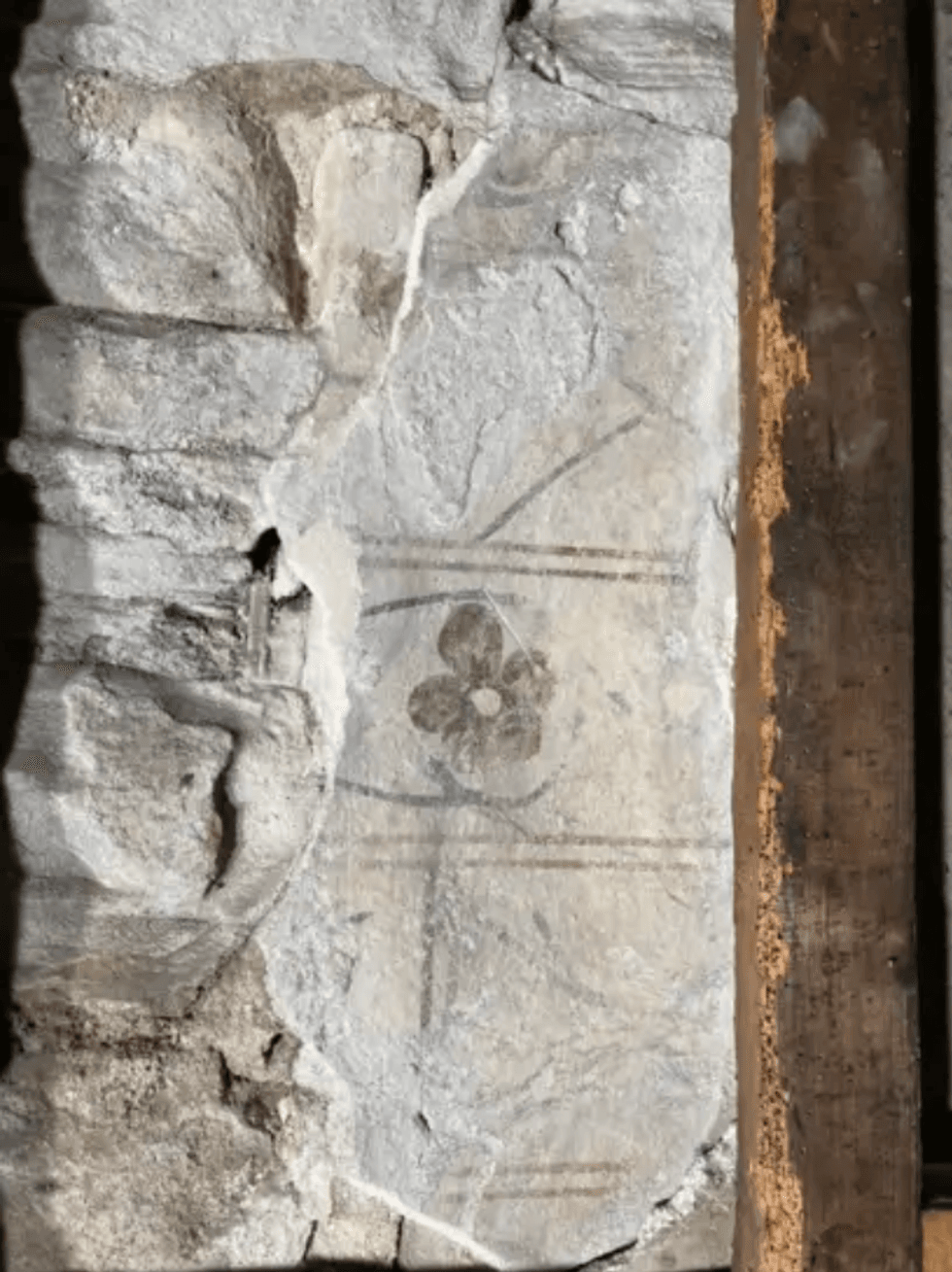
It is believed that the painting once covered the entire room
|DURHAM UNIVERSITY
"A foot to the left or a foot to the right - we would have missed it. We struck gold," he said.
The artwork's preservation over the centuries was largely a matter of fortune, according to Mr Ferrara, who explained that the original plasterwork proved particularly resistant to removal during subsequent alterations to the building.
While medieval wall paintings exist at various locations throughout Britain, Mr Ferrara described this particular find as "exceptional" given the extensive modifications Durham Castle has undergone over the years.
Researchers established the painting's age through comparative analysis with other artworks from the same era.
LATEST DEVELOPMENTS
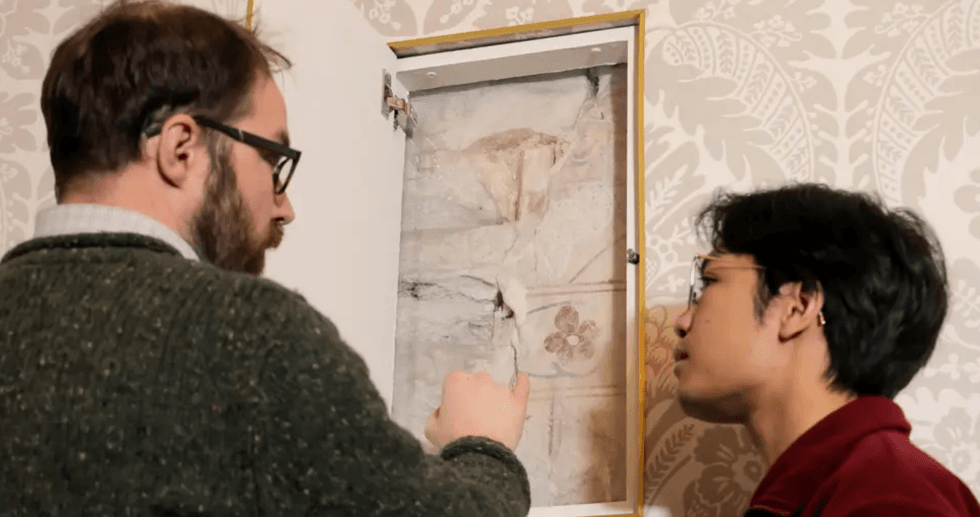
Mr Ferrera (left) said the finding was 'phenomenal'
|DURHAM UNIVERSITY
The discovery suggests the decoration once extended far beyond the surviving fragment, potentially covering the entire chamber in vivid colours.
Though the specific Bishop of Durham who ordered the work remains unknown, Ferrara believes the artwork would have originally adorned the entire room.
"You have to imagine going into a huge room and it would have been covered in this really incredible and bright coloured wall decoration," he said.
"It really underscores that sort of power and status the Bishop of Durham had during the medieval period."
The chamber has now been fitted with new panelling, though a small opening has been created to allow the painting to remain visible.
Durham University, which owns the castle, is currently considering whether to incorporate the medieval artwork into public tours of the site.