










Britons gazing skyward may spot an enchanting, luminous circle encircling the moon — a spectacle that astronomy specialists say functions as nature's own weather alert system.
This captivating optical display, nicknamed a lunar halo, frequently materialises in the hours preceding an incoming weather front carrying rain or snow.
Alan Jones, an astronomy expert from 365 Astronomy, notes these radiant rings serve a purpose beyond their visual appeal, with strong connections to approaching precipitation systems.
Curiosity surrounding unusual celestial events has been growing substantially across Britain, prompting experts to urge the public to observe these glowing formations and understand their meteorological significance.
TRENDING
Stories
Videos
Your Say
The science underpinning this atmospheric phenomenon involves millions of minuscule ice crystals floating at high altitude, typically within wispy cirrus clouds positioned roughly 20,000 feet above ground level.
Mr Jones explains: "A lunar halo is a large, pale ring of light that appears around the moon, usually with a soft white glow and faint hints of colour.
"They form when moonlight passes through millions of tiny ice crystals suspended high in the atmosphere, usually in thin cirrus clouds around 20,000 feet above the ground.
"The light bends at a precise 22-degree angle, creating that perfect circular ring."
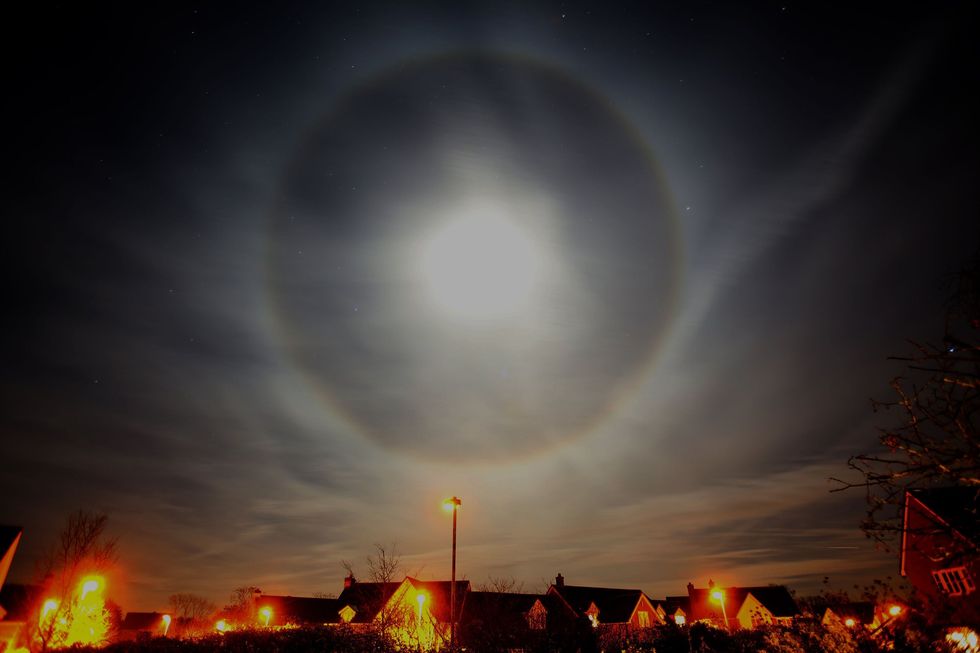
A lunar halo can be seen in the skies above Cambridgeshire
|PA
This precise angular refraction produces the distinctive circular shape that observers witness surrounding the moon.
These ethereal rings frequently herald the arrival of wet weather within a 12 to 36-hour window, making them a valuable forecasting tool that has been relied upon for generations.
Alan Jones explains the connection: "In many cases, those high cirrus clouds are the first sign that a large weather system is approaching.
"That's why farmers, sailors and weather-watchers have used lunar halos for centuries as a natural storm warning."
LATEST DEVELOPMENTS
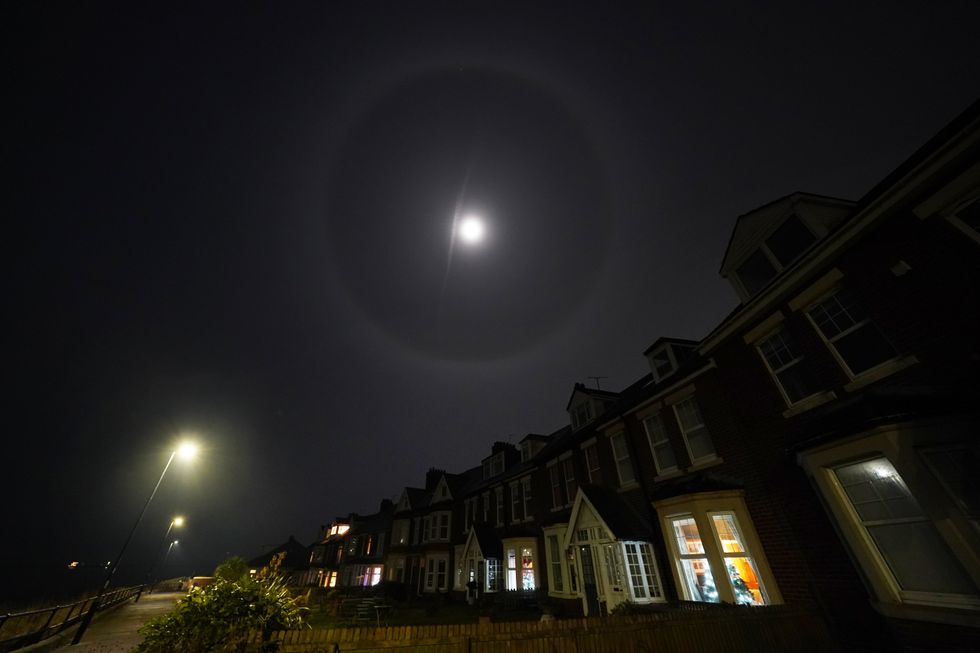
Lunar halos can be seen when ice crystals in the atmosphere refract light
|PA
The seasonal timing also influences what type of precipitation follows.
During winter months, halos tend to precede snow or sleet, whilst summer appearances more commonly signal steady rainfall approaching.
Mr Jones added: "Not every halo ends in a storm.
"But far more do than people realise. Seeing one should at least make you check the forecast more carefully."
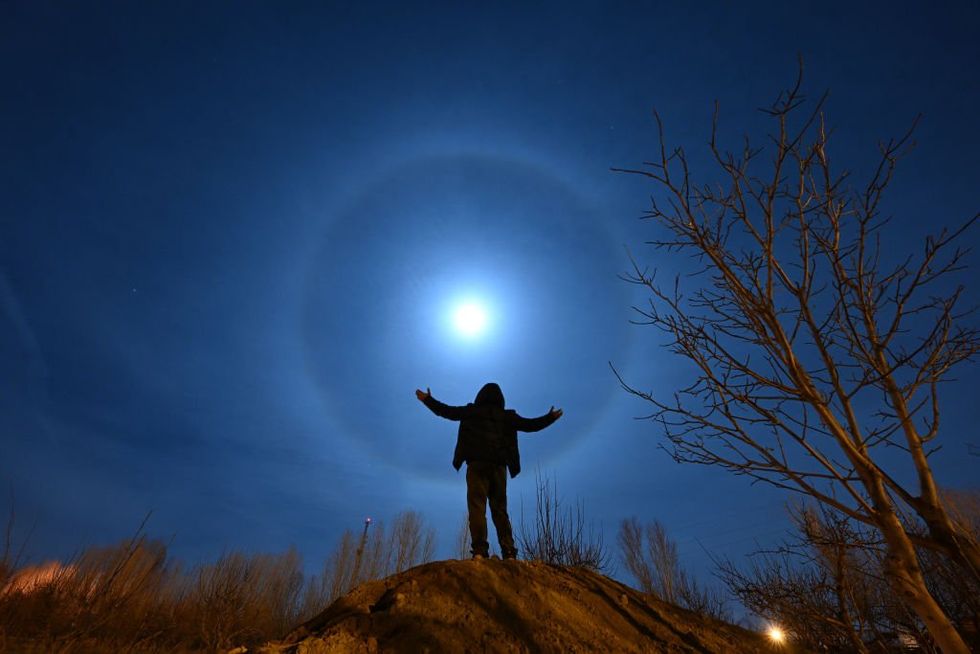
Lunar halos can be seen in colder weather
|GETTY
For those hoping to witness this celestial spectacle, certain conditions significantly improve the chances of a sighting.
A moon approaching full brightness offers the best opportunity, combined with thin, elevated cloud cover rather than dense lower formations. Minimal light pollution also enhances the contrast needed to observe the halo clearly.
Capturing the phenomenon on a smartphone is entirely achievable with proper technique. Mr Jones recommends utilising night mode or extended exposure settings whilst keeping the device completely still, ideally mounted on a tripod.
He said focusing on the sky itself rather than nearby structures produces superior results, and avoiding streetlights prevents the image from becoming washed out.
Our Standards: The GB News Editorial Charter