










Scientists working in Laos may have just solved one of the longest-running mysteries in Asian archaeology.
For decades, the Plain of Jars in Xiangkhoang Province has baffled researchers who have tried to work out the purpose of the site.
The site consists of giant stone containers scattered across the uplands of northern Laos, with some weighing several tonnes.
Now, a new study has found the remains of at least 37 people inside a massive stone jar northeast of the town of Phonsavan.
Radiocarbon dating on bone and tooth samples recovered from the jar revealed they were placed there between the 9th and 12th centuries CE.
Scientists found deposits did not occur all at once, with the jar being used repeatedly over roughly 270 years.
The team leading the research, Dr Nicholas Skopal of James Cook University and Lao heritage specialist Souilya Bounxayhip, ruled the practice involved secondary burial rites.
They concluded bodies were first left to decompose elsewhere before selected bones were transferred into the stone jar.
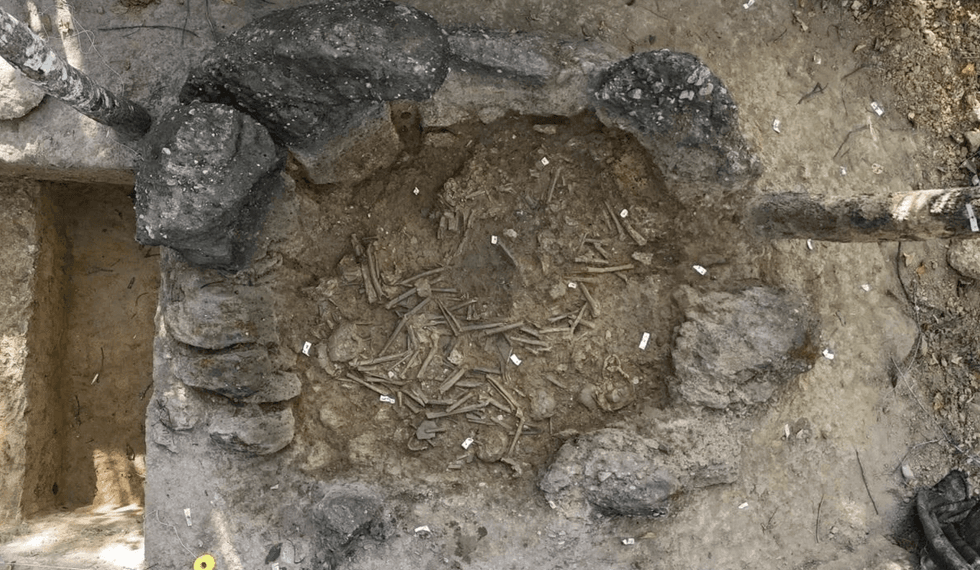
The bones were found by researchers working in Laos
|DR SKOPAL
Dr Skopal told Live Science: "The current evidence suggests this was a collective mortuary space used repeatedly over generations, potentially by extended family or community groups.
"Ancient DNA will hopefully allow us to investigate biological relationships between individuals....We have not yet completed the ancient DNA analysis, although this is one of the major next steps in the project."
Alongside the remains were glass beads recovered from inside the jar which traced their origins to South India and Mesopotamia.
Scientists believe this suggests trade networks connected the Laotian highlands with distant parts of Asia and Western Asia during the same period the jar was used for burial activity.
LATEST DEVELOPMENTS:
- Archaeologists uncover marble artefact in ‘cradle of Christianity’ that may alter baptism history
- Archaeology breakthrough could rewrite British history as key moment in Battle of Hastings deemed 'implausible'
- Archaeologists make remarkable biblical disovery which could solve mystery in story of Moses
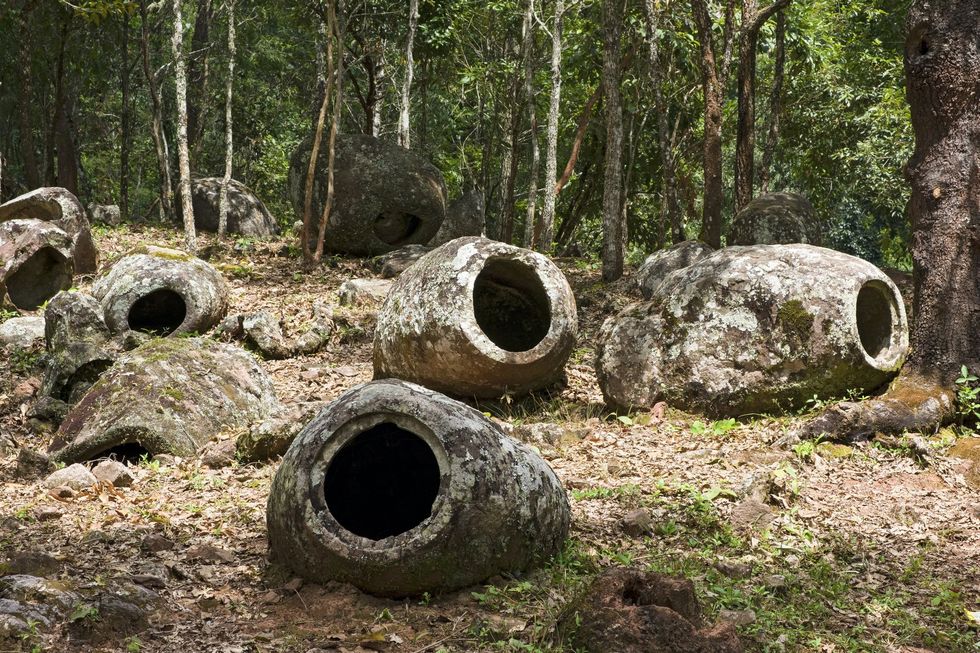
Rock jars at the Plain of Jars in Xieng Khouang Plateau, Laos
|GETTY
Archaeologist at Australian National University Don Matthews, who was not involved in this particular study but had done work on the jars before said: "Certainly there has been deliberate human burial recorded outside the jars, but none inside the jars until now."
Fellow researcher Anna Pineda, who was also not involved in the study, added: "The functions of the stone jars were always speculated.
"To finally find human bones in situ inside the jars finally definitively answers one of those uses: as a mortuary container for secondary burials."
However, they were quick to point out it was not yet known whether all of the jars functioned in the same way or whether this particular jar was part of an unusual or local custom.
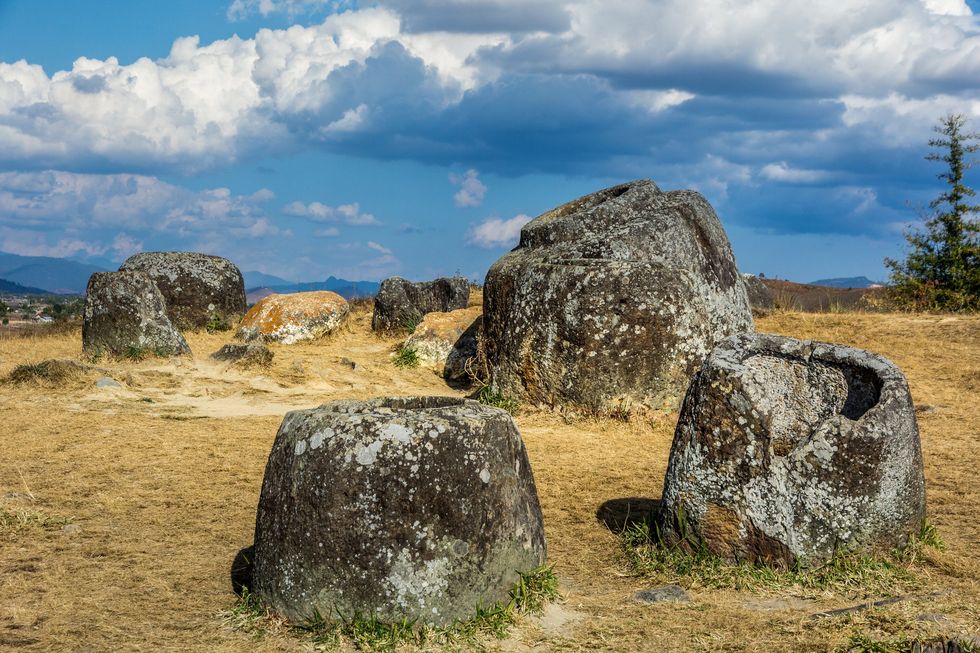
The Plain of Jars in Xieng Khouang Plateau, Laos has long puzzled researchers
|GETTY
Mr Matthews said: "The discovery of human remains inside a large stone jar is a new and significant addition to the Plain of Jars research but needs to be tempered until wider research and excavations observe similar burials within the Plain of Jars."
Researchers were also adamant the location of the jar played a big part in its preservation, as they said the jar and its contents remained largely undisturbed.
The preservation allowed the team to document burial practices in unusual detail.
The question also remains of who created the stone vessels or how communities transported them into the mountainous landscape centuries ago.
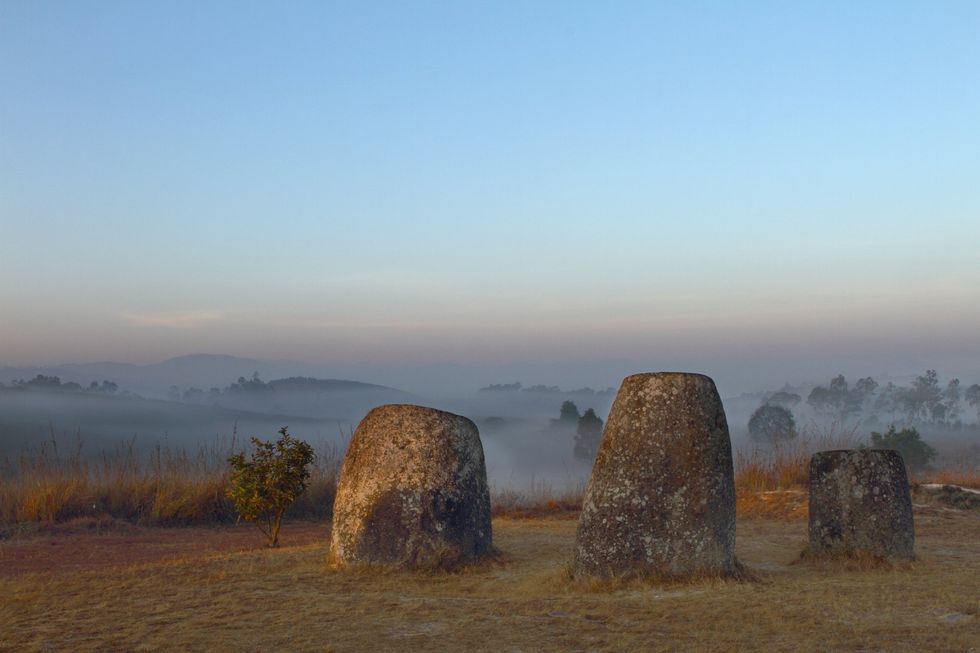
The Plain of Jars in Xieng Khouang Plateau,
|GETTY
Ms Pineda said: "The concentration of beads and objects within Jar 1 suggests these items were likely important components of the final mortuary ritual and ancestral commemorative practice.
"It is always good to be reminded that communities in the past were globally well-connected, while still understanding that local customs, including mortuary practices, were being observed."