






Archaeologists in Egypt have unearthed a fragment of an ancient statue believed to represent Ramesses II, the ruler many experts connect to the mysterious pharaoh in the biblical account of Moses.
The discovery was made at Tel Faraoun in Egypt's eastern Nile Delta, situated just northwest of the Red Sea.
Excavations at the site are being conducted by the country's Supreme Council of Antiquities.
The statue portion, which includes the legs and base, stands approximately seven feet tall.
According to the Book of Exodus, Moses confronted a pharaoh who refused to release the Israelites from bondage, triggering the events of the Exodus story.
Officials estimate the fragment weighs between five and six tonnes.
Despite visible wear and tear, researchers have identified enough detail to connect the sculpture to royal artwork from Egypt's New Kingdom era, spanning roughly 1550 to 1070 BC.
Initial analysis suggests the statue was not originally carved to be displayed where it was eventually found.
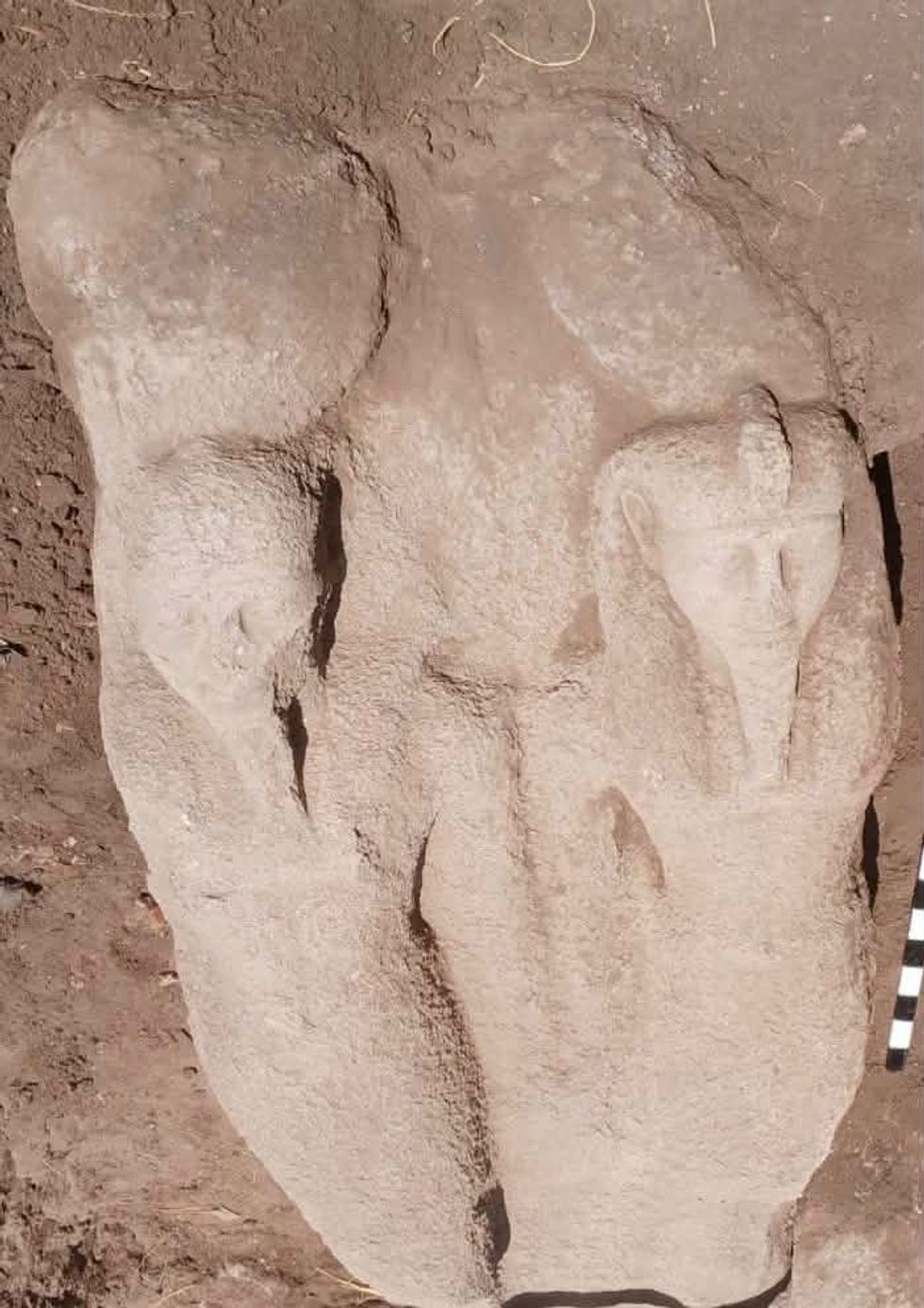
Officials estimate the chunk weighs between five and six tonnes
|MINISTRY OF TOURISM AND ANTIQUITIES
Experts believe it may have been transported from Pi-Ramesses, the grand royal capital established by Ramesses II in the Nile Delta.
The statue was likely later relocated to Tel Faraoun, known in ancient times as Emet, where it may have been repurposed within a temple complex.
Ramesses II, who reigned from 1279 to 1213 BC, commanded an army of approximately 100,000 soldiers and was renowned for his military prowess.
Scholars frequently identify him as the biblical pharaoh largely because Exodus 1:1 describes Hebrew slaves constructing the city of "Raamses" or Pi-Ramesses, which Ramesses II built during the 13th century BCE.
BIBLICAL BREAKTHROUGHS - READ MORE:
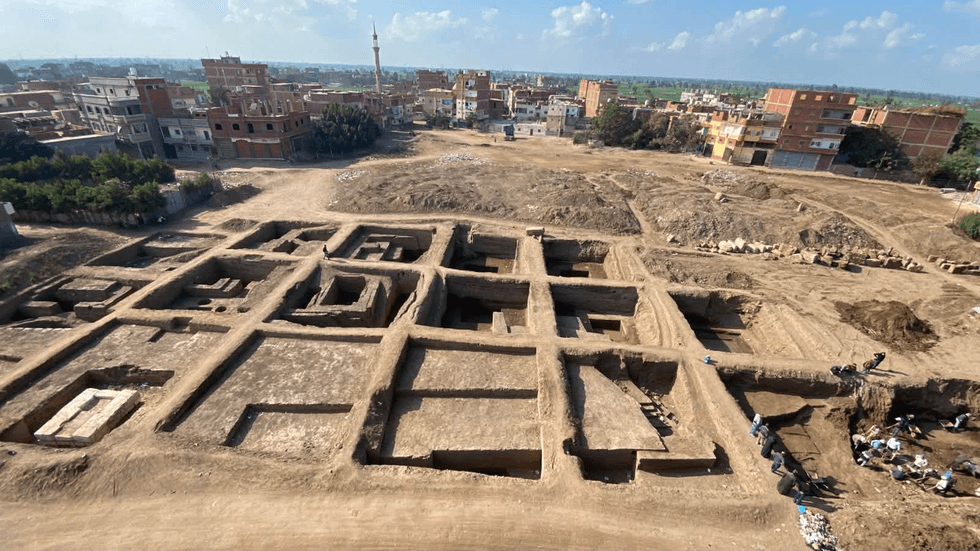
The statue was likely later relocated to Tel Faraoun, known in ancient times as Emet (pictured)
|MINISTRY OF TOURISM AND ANTIQUITIES
This geographical connection, alongside his lengthy and dominant rule during the 19th Dynasty, has made him a popular historical candidate.
The ancient city he constructed is thought to have been located in the same eastern Nile Delta region where the statue fragment emerged.
However, historians caution that no direct archaeological evidence confirms the identity of the Exodus pharaoh, and the biblical text names no specific ruler.
A related discovery in 2024 saw archaeologists uncover an ancient bronze sword bearing the markings of Ramesses II at a military fort in Housh Eissa, south of Alexandria.
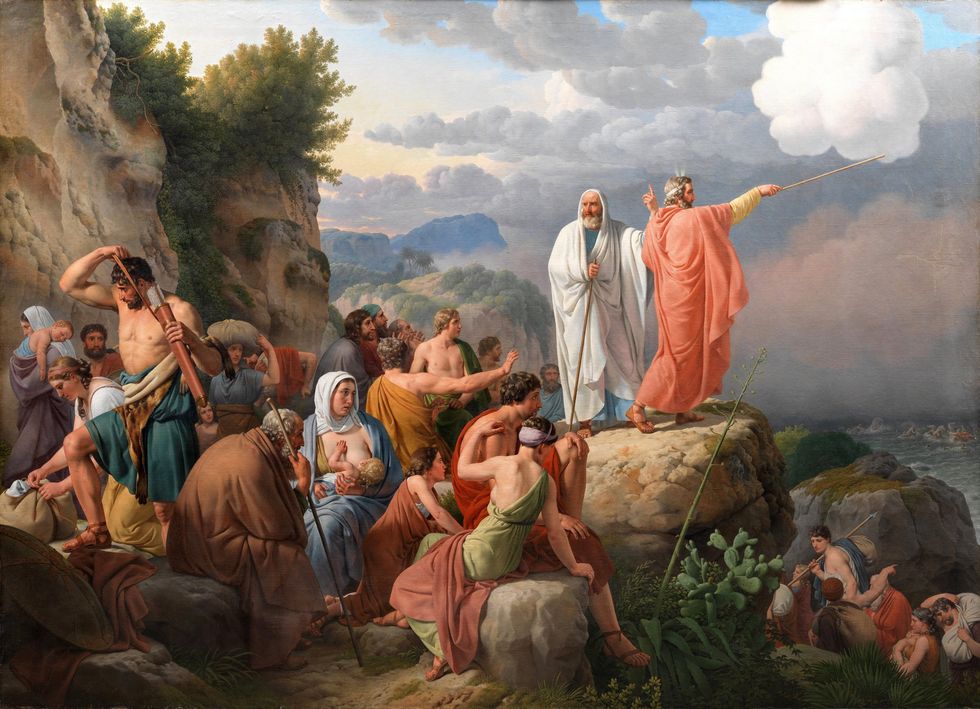
The discovery could shed light on exactly which pharaoh appears in the story of Exodus
|GETTY
The blade, estimated to be around 3,000 years old, was found at Tell Al-Abqain, described as a crucial military outpost.
Experts believe the weapon belonged to a soldier stationed at the fort rather than the king himself.
Elizabeth Frood, an Oxford University Egyptologist not involved in the excavation, told The Washington Post: "An object to bear the cartouches of Rameses II would suggest to me that it belonged to someone of relatively high rank."
She added: "To be able to display such an object, even though it would have been presumably in a scabbard, was a marker of status and prestige."