









Archaeologists have unearthed three ancient "piggy banks" packed with tens of thousands of Roman coins in a village in northeastern France.
The discovery was made by researchers from the National Institute for Preventive Archaeological Research (Inrap) in Senon.
The vessels, known as amphorae, had been buried in pits beneath a house floor approximately 1,700 years ago.
Experts believe the containers may have served as a form of safe for their owners.
The total haul could exceed 40,000 coins, making it a significant find for understanding Roman-era life in the region.
The first amphora was full of coins - which in total weighed as much as 38 kilograms.
Vincent Genevieve, a numismatist - or coin expert - with Inrap analysing the hoards, told Live Science this "corresponds to approximately 23,000 to 24,000 coins".
Researchers then weighed the second vessel - its contents tipped the scales at about 50 kilograms.
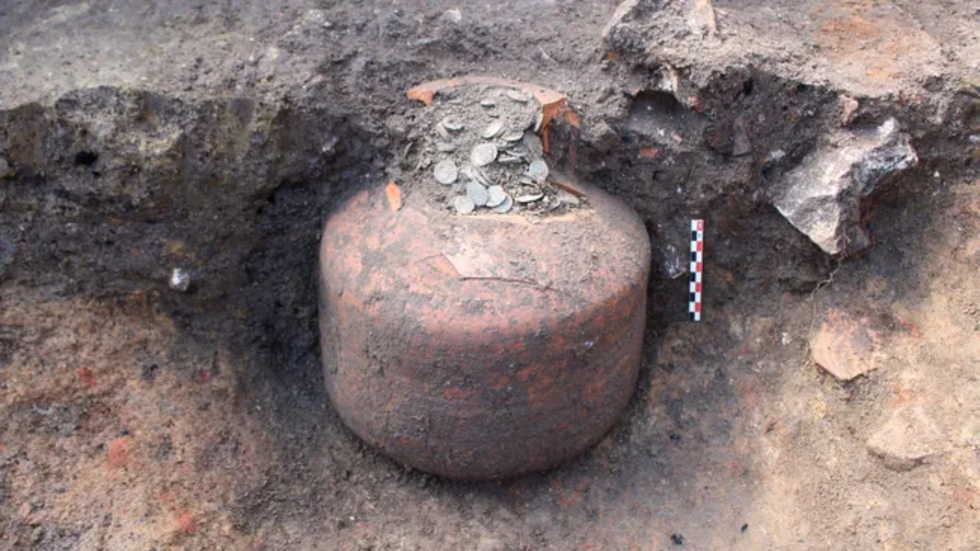
The first amphora was full of coins - which in total weighed as much as 38 kilograms.
|INRAP
Ms Genevieve said that "based on the 400 coins recovered from the neck, which was broken at the time of discovery, it could contain 18,000 to 19,000 coins".
A third jar, however, had been pulled up from the ground centuries before the French team arrived, leaving just three coins behind in the pit where it once sat.
Around 30 coin hoards have already been documented in this area of France.
The coin-filled amphorae were deliberately placed in carefully constructed pits within a residence's living area.
ARCHAEOLOGY UPDATES - READ MORE:
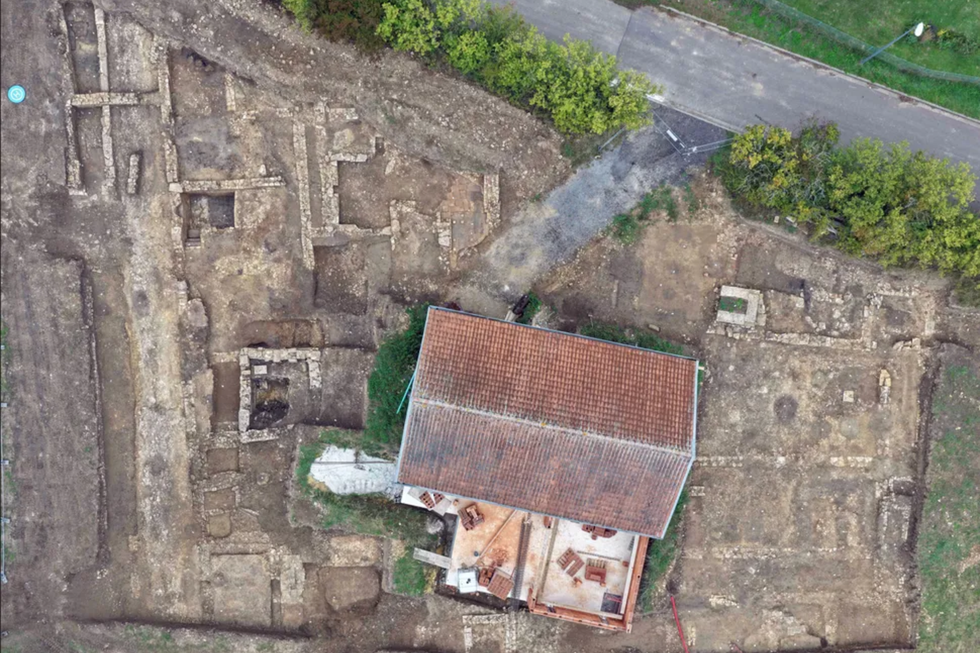
PICTURED: A bird's-eye view of the excavated area in Senon, France
|INRAP
Their openings sat level with the floor, allowing easy access for deposits over time.
Inrap detailed how "in two cases, the presence of a few coins found stuck to the rim of the jar clearly indicate that they were deposited after the vase was buried, when the pit had not yet been filled with sediment".
This suggests the containers functioned as long-term savings rather than hastily concealed wealth.
The coins date from between AD 280 and 310, featuring emperors of the Gallic Empire including Victorinus, Tetricus I, and his son Tetricus II.
The Gallic Empire ruled Gaul and neighbouring provinces independently from Rome between 260 and 274 AD, before Emperor Aurelian brought it back under central control.
The residential district where the coins were found contained stone buildings equipped with underfloor heating, basements and workshops featuring stoves.
A Roman fortification stood nearby.
At the start of the fourth century, a major fire razed the settlement.
Although inhabitants rebuilt the community, a second blaze caused its permanent abandonment.
The coin deposits remained buried and forgotten for nearly two thousand years until INRAP's recent excavations brought them back to light.