








A Roman mosaic found in Britain has revealed a version of the Trojan War that was previously lost to history.
According to new research from the University of Leicester, the mosaic, found in Rutland, draws upon an alternative telling of the ancient Greek myth, one first made popular by the playwright Aeschylus, rather than the epic poet Homer.
The Ketton Mosaic, found near Stamford, and its surrounding villa complex have been designated a Scheduled Monument due to their exceptional national importance.
It is regarded as one of the most significant Roman discoveries in Britain for a century, was initially thought to illustrate scenes from Homer's Iliad when it was first excavated in 2020.
TRENDING
Stories
Videos
Your Say
In the mosaic, there are three dramatic panels portraying key moments from the legendary conflict between Greek and Trojan forces.
These scenes show the fatal combat between the Greek warrior Achilles and Hector, prince of Troy, followed by Achilles dragging his defeated opponent's corpse behind a chariot, and finally King Priam ransoming his son's body by weighing it against gold.
While Romans would have known several versions of the Trojan War story, the villa's owner apparently chose to display imagery from Aeschylus's tragedy Phrygians, a more obscure retelling that has since vanished from the historical record.
The elaborate panels once formed the floor of a dining room in the main villa building, which archaeologists believe date to the third or fourth century AD.
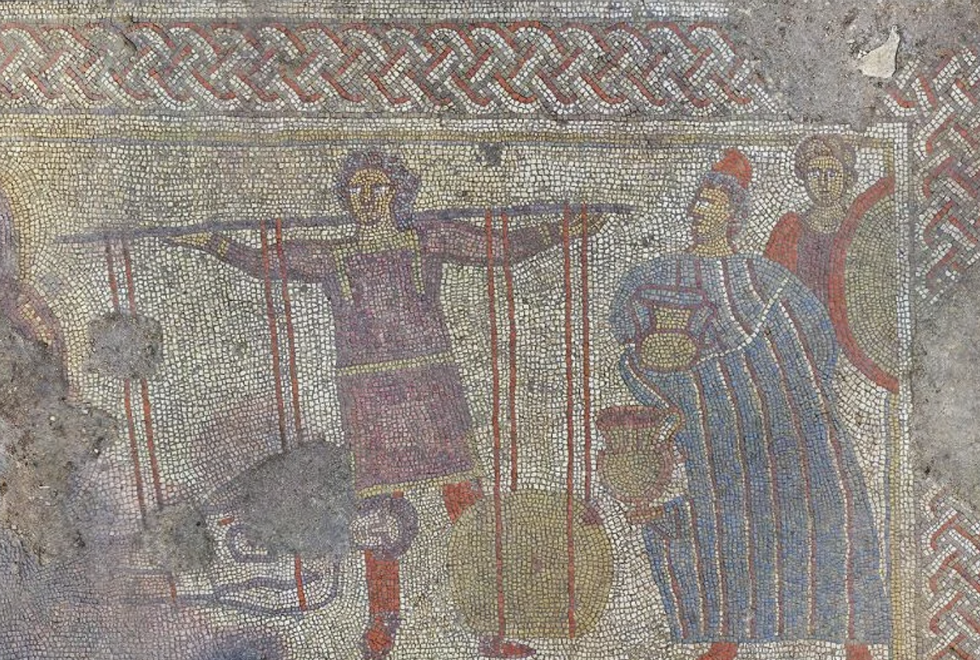
The key section of the mosaic depicted the alternate telling of the legendary story
|UNIVERSITY OF LEICESTER
The research also uncovered how the mosaic's creators drew upon artistic traditions stretching back centuries across the ancient Mediterranean world.
Dr Jane Masséglia, lead author of the study and Associate Professor in Ancient History at the University of Leicester, said: "In the Ketton Mosaic, not only have we got scenes telling the Aeschylus version of the story, but the top panel is actually based on a design used on a Greek pot that dates from the time of Aeschylus, 800 years before the mosaic was laid."
She added: "Romano-British craftspeople weren't isolated from the rest of the ancient world, but were part of this wider network of trades passing their pattern catalogues down the generations.
"At Ketton, we've got Roman British craftsmanship but a Mediterranean heritage of design."
LATEST DEVELOPMENTS
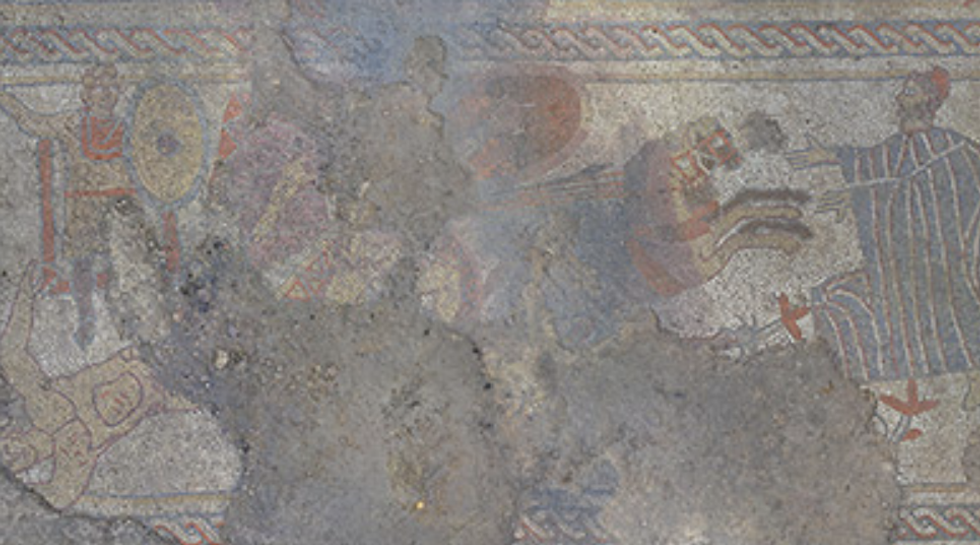
Jim Irvine first discovered the artwork on his family farm over lockdown
|UNIVERSITY OF LEICESTER
The mosaic was first spotted during the Covid-19 lockdown by local resident Jim Irvine on his family's farm.
It prompted a major excavation led by University of Leicester Archaeological Services with funding from Historic England.
Mr Irvine said: "Jane's detailed research into the Rutland mosaic imagery reveals a level of cultural integration across the Roman world that we're only just beginning to appreciate.
"It's a fascinating and important development that suggests Roman Britain may have been far more cosmopolitan than we often imagine."
He added: "The new paper is a suspenseful and thrilling narrative in its own right which deserves recognition."
Historic England and the university conducted collaborative excavations at the site in 2021 and 2022, with work ongoing to publish the full findings from those investigations.
Rachel Cubitt, Post-Excavation Coordinator at Historic England, said: "Working in collaboration with the University of Leicester brings an added dimension to investigations at the Ketton villa site.
"This fascinating new research offers a more nuanced picture of the interests and influences of those who may have lived there, and of people living across Roman Britain at this time."
Professor of Roman Archaeology at the University of Reading Hella Eckhardt who was not involved in the study, called it an "exciting piece of research."
She said: "This is untangling the ways in which the stories of the Greek heroes Achilles and Hector were transmitted not just through texts but through a repertoire of images created by artists working in all sorts of materials, from pottery and silverware to paintings and mosaics."