










Scientists working in southern Italy have found a "sumptuous" collection of frescoes buried by the eruption at Mount Vesuvius.
The catastrophic eruption in 79 buried the city beneath layers of ash and volcanic material, inadvertently preserving the ancient Roman settlement for nearly two millennia.
The destruction extended well beyond the city itself, blanketing Italy's Campania region with smoke, gas and pumice.
Researchers working in the suburbs surrounding Pompeii have now made remarkable progress at an exclusive residential property situated close to Torre Annunziata, south of Naples.
TRENDING
Stories
Videos
Your Say
The Archaeological Park of Pompeii has been working at the Villa of Poppaea.
This grand residence may once have belonged to Poppaea Sabina, who was married to the infamous Roman emperor Nero
Construction of the estate dates back to the mid-first century BCE, featuring fantastic interior design, private bathing facilities and extensive gardens throughout the grounds.
The sprawling complex commanded sweeping vistas across the Bay of Naples from its position in Oplontis, a coastal retreat favoured by Rome's wealthy elite.
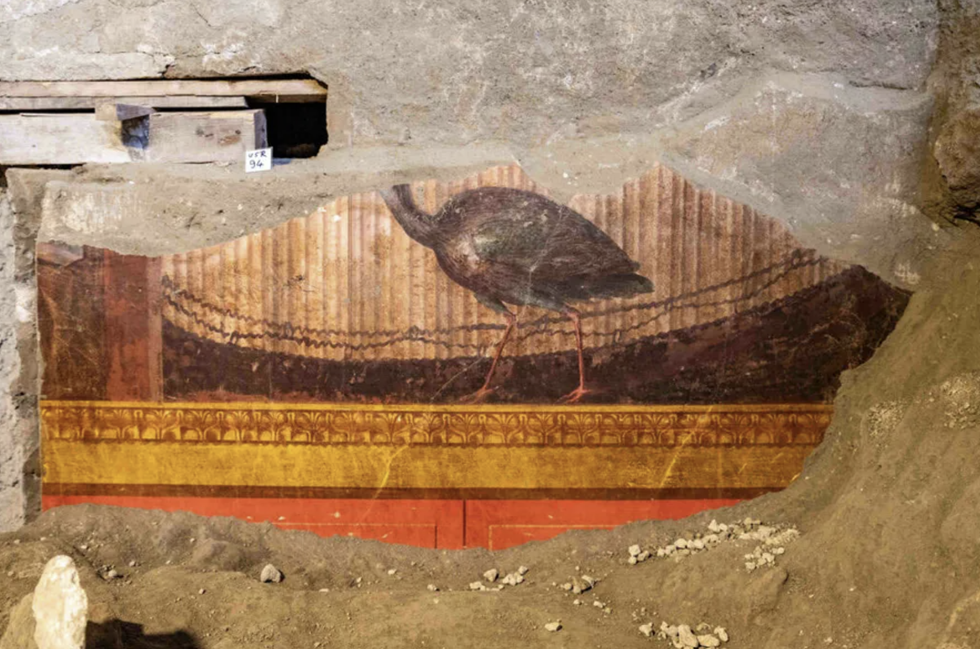
The fresco displayed the body of a peahen
|ARCHAEOLOGICAL PARK OF POMPEII
Around the middle of the first century CE, the property underwent significant expansion, with additions including a swimming pool, winter gardens and guest accommodation.
Despite its grandeur, experts believe the villa stood empty after the erruption.
The residence boasted an impressive array of amenities befitting its likely imperial connections, though its inhabitants had apparently departed before disaster struck.
Within a spacious chamber known as an oecus, the team has uncovered "sumptuous" frescoes featuring a peahen and a theatrical mask.
LATEST DEVELOPMENTS
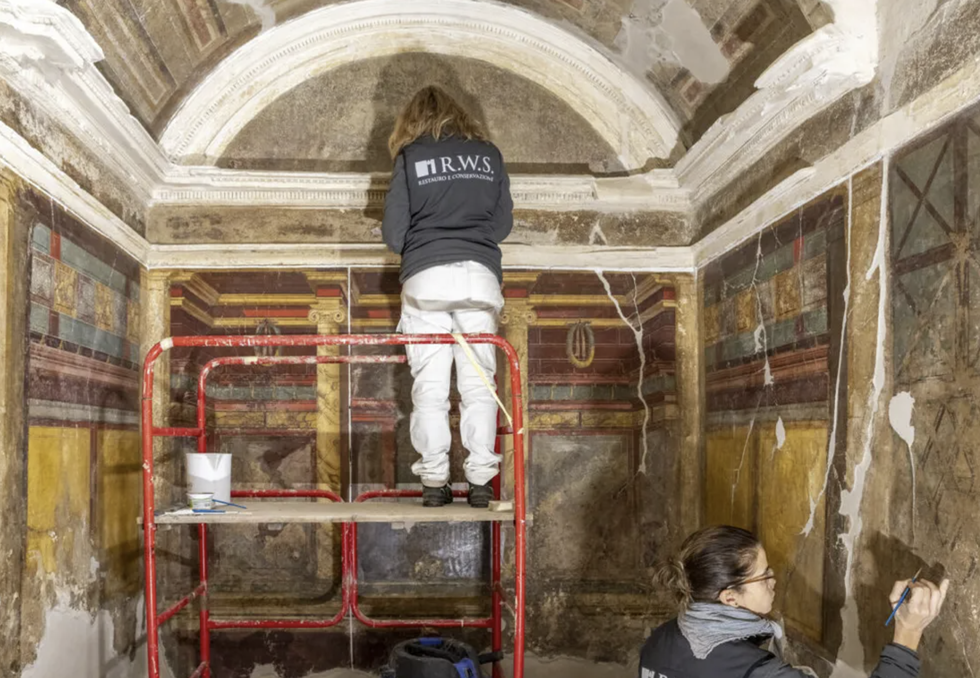
While excavations continue, workers are also restoring two small bedrooms at the villa
|ARCHAEOLOGICAL PARK OF POMPEII
The peahen serves as a mirror image to a peacock depicted elsewhere on the same wall.
The mask represents Pappus, a character from an Atellan Comedy, described as "a doddering old fool who tries to play the part of a young lad but always ends up being mocked and derided."
This comedic figure stands in stark contrast to the tragic masks discovered elsewhere in the room.
Gabriel Zuchtriegel, director of the archaeological park, said the current research may "clarify the situation and also reveal new decoration with extraordinary details and colors, of which we have already had a tantalizing foretaste."
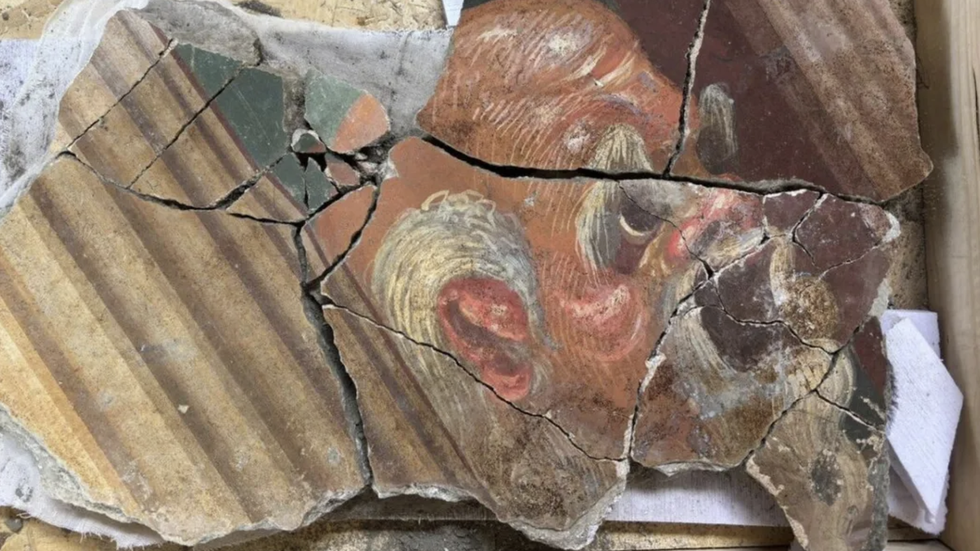
Researchers unearthed a theater mask
|ARCHAEOLOGICAL PARK OF POMPEII
The excavations have additionally uncovered four previously unknown rooms, one potentially forming part of a bathing complex, raising the total count to 103.
Restoration efforts have progressed simultaneously at two compact bedrooms overlooking the property's southwestern aspect.
These chambers display elaborate ornamentation comprising stuccoes, frescoes, mosaic flooring and painted vaults rendered in numerous hues, including Egyptian blue.
One bedroom evidently underwent refurbishment when the eruption occurred, showing multiple stages of incomplete work. The unfinished decorative scheme incorporated floral designs set against single-colour backgrounds.
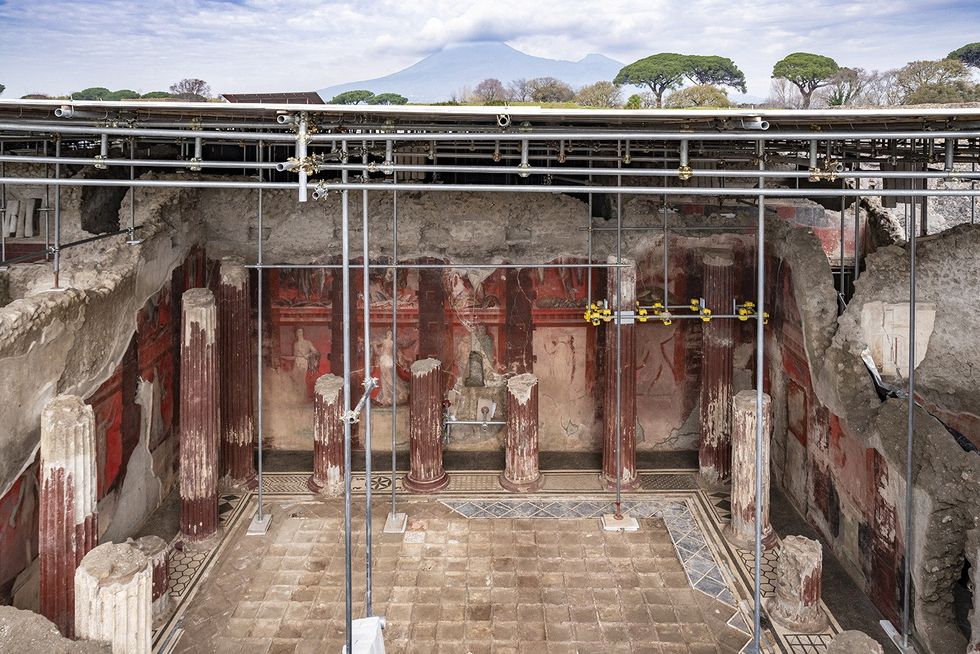
Excavations in Pompeii in the shadow of Vesuvius
| REUTERSSpecialists have created plaster casts of the shutters that originally covered doorways and windows, capturing impressions of the ancient timber.
The restoration process, involving cleaning, removal of degraded material and paint retouching, has exposed colours and details previously hidden from view.
Plaster casting techniques have also revealed the precise positioning of trees in the villa's garden, arranged in a deliberate ornamental pattern mirroring the columned south portico.
Our Standards: The GB News Editorial Charter