










Archaeologists have uncovered an ancient Roman port on Israel’s coast believed to match a grand city described in the Bible.
Caesarea Maritima, situated approximately 28 miles north of modern Tel Aviv, was constructed by King Herod between 22 and 10 BC as a grand maritime hub.
The Jewish historian Josephus Flavius recorded that Herod created a vast artificial port designed for vessels travelling to Egypt, featuring underwater breakwaters, imposing imperial statues, and a prominent lighthouse.
Today, the site's surviving structures offer a remarkable window into Roman-era life, with its harbour, water channels, amphitheatre and stadium still visible.
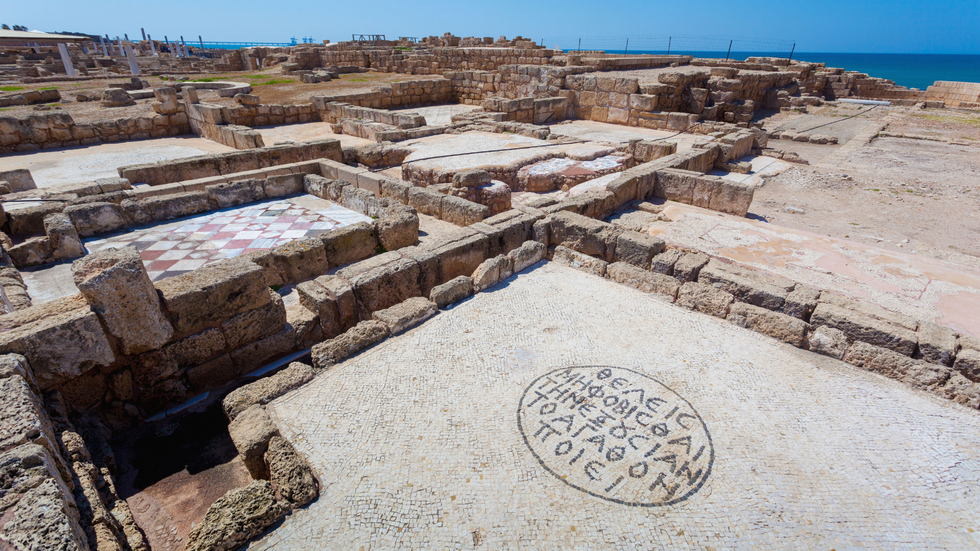
Caesarea Maritima was constructed by King Herod between 22 and 10 BC as a grand maritime hub
|GETTY
According to archaeologists, the ruins and artefacts recovered from Caesarea represent some of the most compelling physical evidence corroborating Biblical accounts of people, locations and events.
Perhaps the most remarkable find at Caesarea is the Pilate Stone, unearthed in June 1961 during excavations of a Roman theatre.
This carved limestone slab represents the first direct archaeological confirmation that Pontius Pilate, the Roman official who presided over Jesus' trial, actually existed.
Prior to this discovery, knowledge of Pilate came solely from written accounts, including the New Testament and brief references by Josephus and the Roman author Tacitus.
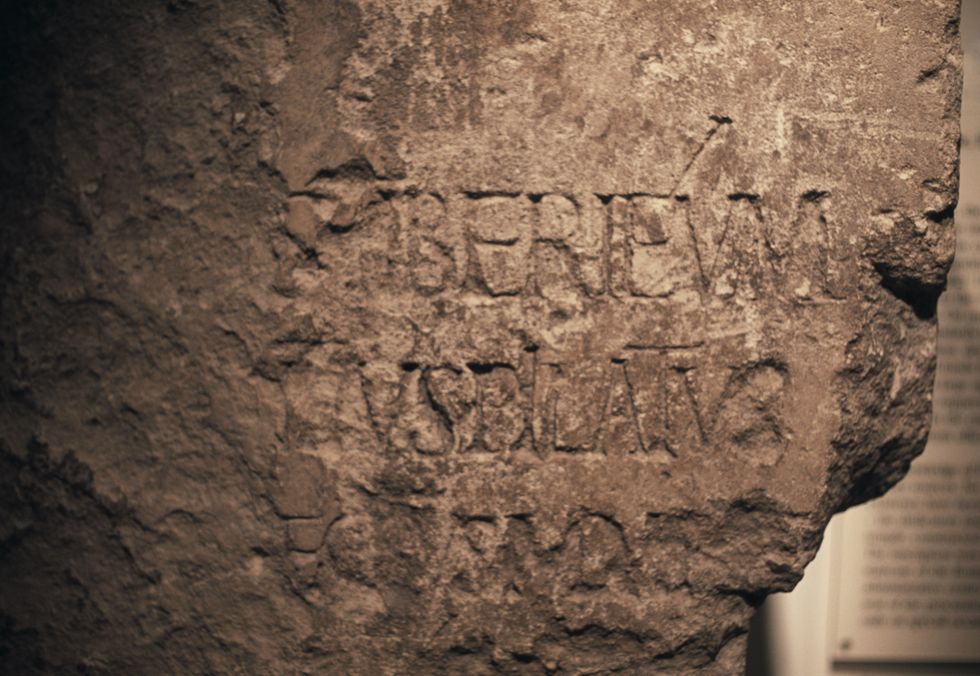
The Pilate Stone was unearthed at the site in June 1961 during excavations of a Roman theatre
|GETTY
The partially preserved inscription identifies Pilate as "prefect of Judea" and originally formed part of a dedication to Emperor Tiberius Caesar.
It reads: "To this Divine Augusti Tiberieum, Pontius Pilate, prefect of Judea, has dedicated this."
The artefact dates from Pilate's governorship between 26 and 36 AD, precisely the period described in the gospels.
The original stone now resides in Jerusalem's Israel Museum, whilst a replica stands at the Caesarea archaeological park.
ARCHAEOLOGICAL BREAKTHROUGHS - READ MORE:
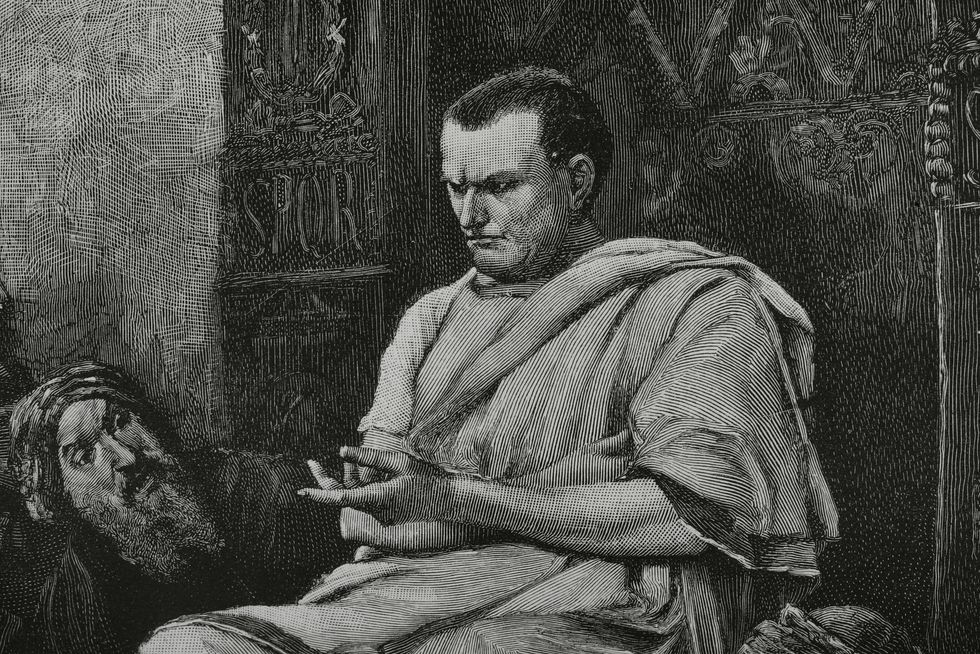
The artefact dates from Pilate's governorship between 26 and 36 AD, precisely the period described in the gospels
|GETTY
Caesarea features prominently in the New Testament, with the Book of Acts referencing the city approximately 15 times.
The site served as a major centre of Roman administration and early Christian activity, according to Biblical accounts.
It was here that the apostle Peter reportedly baptised the first Gentile convert, a watershed moment in Christianity's expansion beyond its Jewish origins.
The city also witnessed the apostle Paul's two-year detention and subsequent legal proceedings before Roman authorities, events detailed in Acts.
The Gospel of Luke places Pilate's governorship in historical context, stating: "Now in the fifteenth year of the reign of Tiberius Caesar, Pontius Pilate being governor of Judaea, and Herod being tetrarch of Galilee."
Pilate appears at least 50 times throughout Biblical texts as the official who delivered Jesus for crucifixion.
Excavations at Caesarea have revealed ancient mosaics bearing quotations from Paul's letters, with inscriptions dating to the second century AD that rank among the earliest known New Testament texts.
One such mosaic features Romans 13:3, which reads: "Do you want to have no fear of authority? Do what is good, and you will have praise from the same."
Researchers have also uncovered Roman-era structures including a governor's residence and praetorium, reflecting the judicial settings described in scripture.
The third-century scholar Origen is thought to have resided at Caesarea, where he produced his influential Hebrew and Greek edition of the Old Testament.
Following the city's destruction in 1265, the ruins lay largely abandoned until excavations commenced in the 1950s.
Caesarea Maritima now operates as an extensive archaeological park, drawing visitors worldwide who seek to explore the intersection of Roman history and Biblical narrative.
Our Standards: The GB News Editorial Charter