










Interstellar visitor 3I/ATLAS will make its closest approach to Earth on Friday, offering space agencies an unprecedented opportunity to test planetary defence measures.
This distance, around 170 million miles away, poses no collision risk whatsoever, officials have confirmed.
Nevertheless, the European Space Agency (ESA), Nasa and over 23 countries have seized upon the object's transit to launch the most extensive planetary defence exercise ever undertaken.
The multinational drill will run through January 2026, with participating nations using the suspected comet's journey through our solar system to refine their ability to track potentially hazardous objects from deep space.
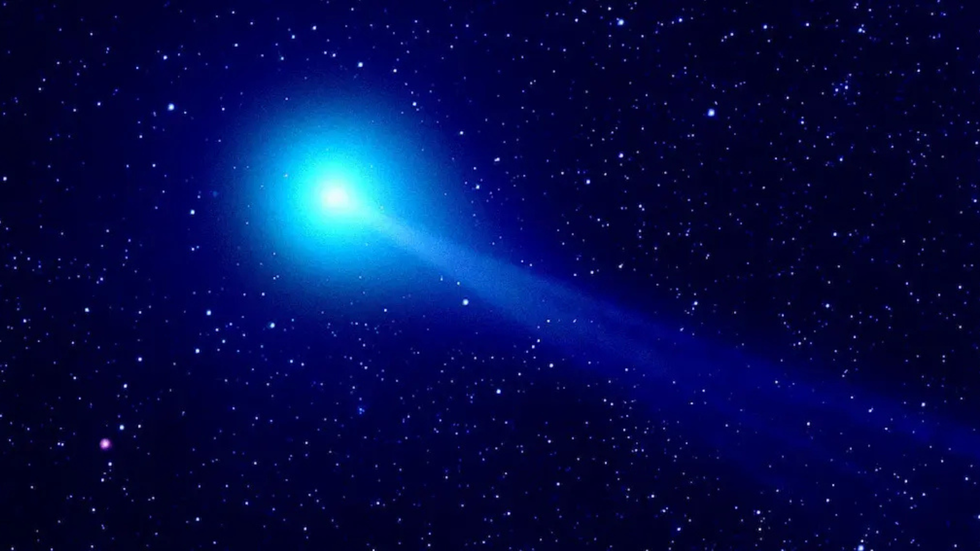
Interstellar visitor 3I/ATLAS will make its closest approach to Earth on Friday
| GETTYThe exercise serves a critical purpose: honing detection systems for fast-moving near-Earth objects that could potentially strike our planet in future.
ESA's planetary defence specialists have been gathering observations from ground-based telescopes positioned across Hawaii, Chile and Australia since late November.
These terrestrial readings are being combined with data from spacecraft including Mars Express, the ExoMars Trace Gas Orbiter and the Juice probe currently en route to Jupiter.
Nasa's Mars Reconnaissance Orbiter, equipped with its powerful HiRISE camera, has also contributed to the global tracking effort.

ESA's planetary defence specialists have been gathering observations from ground-based telescopes
| WIKIMEDIA COMMONSScientists have employed triangulation techniques, observing 3I/ATLAS from multiple vantage points both on Earth and in orbit around Mars, to calculate its precise trajectory and confirm it presents no threat to our world.
At the core of ESA's protective infrastructure are two complementary computer systems designed to identify cosmic threats across different timescales.
Meerkat operates as a round-the-clock sentinel, continuously analysing fresh telescope data to detect newly discovered objects that might pose an immediate danger within days or weeks.
The system functions autonomously and dispatches rapid alerts to astronomers whenever it identifies a potentially hazardous object.
SPACE - READ THE LATEST:
Working alongside Meerkat, the Aegis system takes a longer view, processing orbital calculations for thousands of known asteroids and comets to forecast collision probabilities stretching up to a century ahead.
Aegis also maintains a publicly accessible register of objects requiring ongoing monitoring.
Together, these systems represent what ESA describes as essential tools for safeguarding Earth from celestial hazards.
The passage of 3I/ATLAS serves as crucial preparation for what lies ahead, with several near-Earth objects expected to approach our planet over the coming decade.

The passage of 3I/ATLAS serves as crucial preparation with several near-Earth objects expected over the coming decade
| WIKICOMMONSMost notably, the asteroid Apophis will make an exceptionally close flyby in 2029, passing near enough to be visible without telescopes across Europe.
"The entire world will be watching when the Apophis asteroid passes by very, very close to Earth in 2029. Observable with the naked eye in Europe, public interest in planetary defence capabilities will be immense," ESA explained.
Space agency officials have emphasised that developing asteroid deflection technology is now a necessity rather than science fiction.
"It is no longer sci-fi, it is a skill we must hone before it is needed," the agency said.
NASA has determined that 3I/ATLAS is a comet originating from a distant solar system, showing no evidence of artificial construction or extra-terrestrial life.
Our Standards: The GB News Editorial Charter