







Nasa has made a significant breakthrough in understanding how life may have originated on our planet after identifying crucial sugars on an ancient asteroid located 200 million miles from Earth.
The five-carbon sugar ribose, along with six-carbon glucose, were detected in samples from the space rock, which is called Bennu.
This represents the first occasion such sugars have been identified in material collected directly from an extraterrestrial source.
A research team from Tohoku University in Japan led the analysis. Their work offers fresh insights into one of science's most enduring mysteries - how life first emerged on Earth.
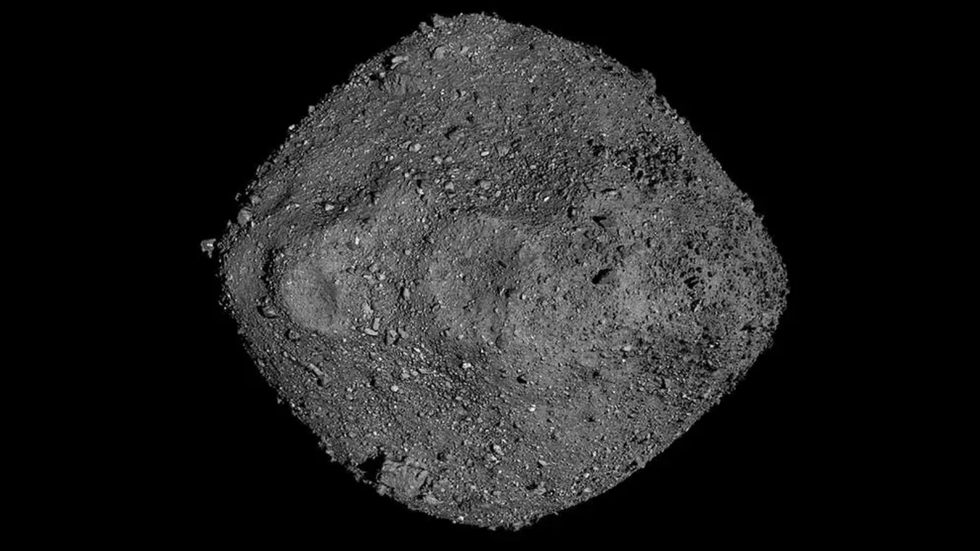
The five-carbon sugar ribose, along with six-carbon glucose, were detected in samples from the space rock
|NASA
The OSIRIS-REx spacecraft gathered material from Bennu during a close approach in 2020. These precious samples arrived back on Earth on 24 September 2023, following a three-year journey home.
Bennu itself is composed of rocks that came together nearly 4.6 billion years ago. The asteroid measures roughly 500 metres across and passes within 186,000 miles of our planet every six years.
Researchers have been examining the returned material to better understand conditions that existed in our solar system billions of years ago.
The Tohoku University team specifically investigated whether Bennu harboured the fundamental components necessary for life.
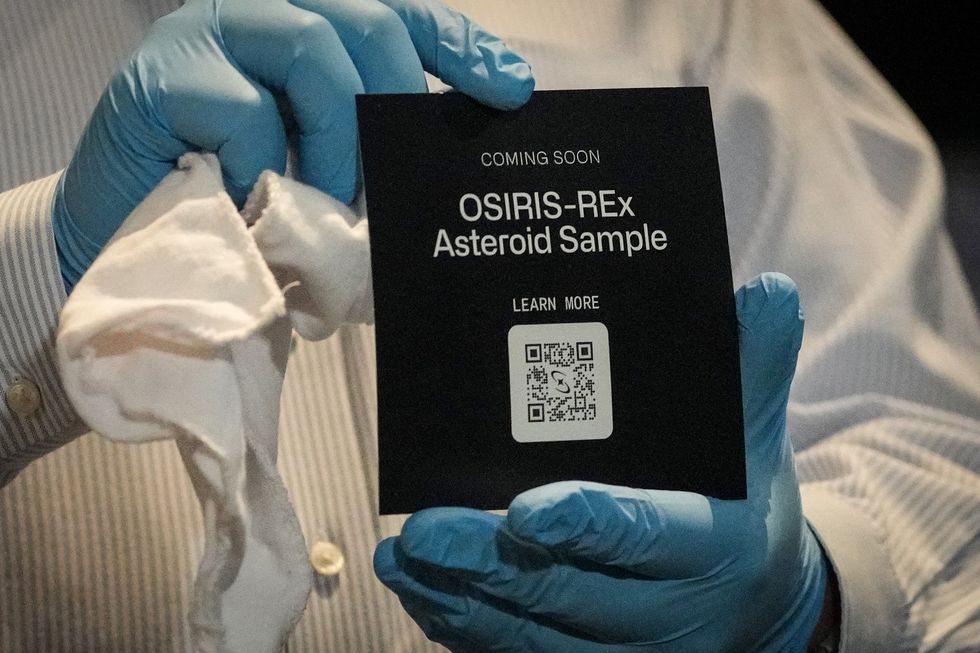
The OSIRIS-REx spacecraft gathered material from Bennu during a close approach in 2020
|GETTY
On Earth, ribose and deoxyribose serve as essential components of RNA and DNA respectively. DNA carries genetic information within cells, whilst RNA fulfils multiple vital functions.
"All five nucleobases used to construct both DNA and RNA, along with phosphates, have already been found in the Bennu samples brought to Earth by OSIRIS-REx," said Dr Yoshihiro Furukawa, who led the new study.
"The new discovery of ribose means that all of the components to form the molecule RNA are present in Bennu.
"Notably, deoxyribose was absent from the Bennu samples."
SPACE - READ THE LATEST:
This suggests ribose may have been more prevalent than deoxyribose in early solar system environments.
The findings bolster the RNA world hypothesis, which proposes that primitive life forms depended on RNA as their primary molecule for storing information and driving essential chemical reactions.
"Present day life is based on a complex system organised primarily by three types of functional biopolymers: DNA, RNA, and proteins," explained Dr Furukawa.
"However, early life may have been simpler."
This suggests ribose may have been more prevalent than deoxyribose in early solar system environments
|GETTY
The detection of glucose on Bennu marks another milestone.
It provides the first evidence that a key energy source for living organisms existed in the early solar system.
The Japanese-led team stressed these sugars do not constitute proof of extraterrestrial life.
Rather, their presence alongside amino acids, nucleobases and carboxylic acids demonstrates that the building blocks of biological molecules were distributed widely across the solar system during its formative period.
Our Standards: The GB News Editorial Charter