











The conflict in Iran exposes the fact Ed Miliband's Net Zero drive is going "seriously wrong", according to a new report.
The think-tank Onward said nearly a third of a typical energy bill is made up of a range of green levies and taxes, thanks to a “war on gas”.
Charges on gas-generated electricity, which is subject to VAT and carbon taxes, add 15 per cent to energy costs, researchers say.
Removing these particular levies would require “political will” from Labour, but it could result in an immediate £140 a year saving to consumers.
TRENDING
Stories
Videos
Your Say
Gas is still a vital component in the UK electricity supply and is needed 97 per cent of the time on the grid, the authors wrote.
High electricity prices are affecting businesses as well as domestic consumers, with UK costs for industrial electricity among the highest in the world.
Onward’s Head of Political Economy Gavin Rice, lead author of the report, believes the UK’s decarbonisation strategy “has relied heavily on suppressing domestic production and increasing costs, contributing to higher bills, industrial decline and import dependency”.
As war in the Middle East plays havoc with the markets, “these policy choices have left the UK unnecessarily exposed to energy shocks”, Mr Rice wrote in the report, Cooking on Gas: How Green Taxes are Driving up Britain’s Energy Bills.
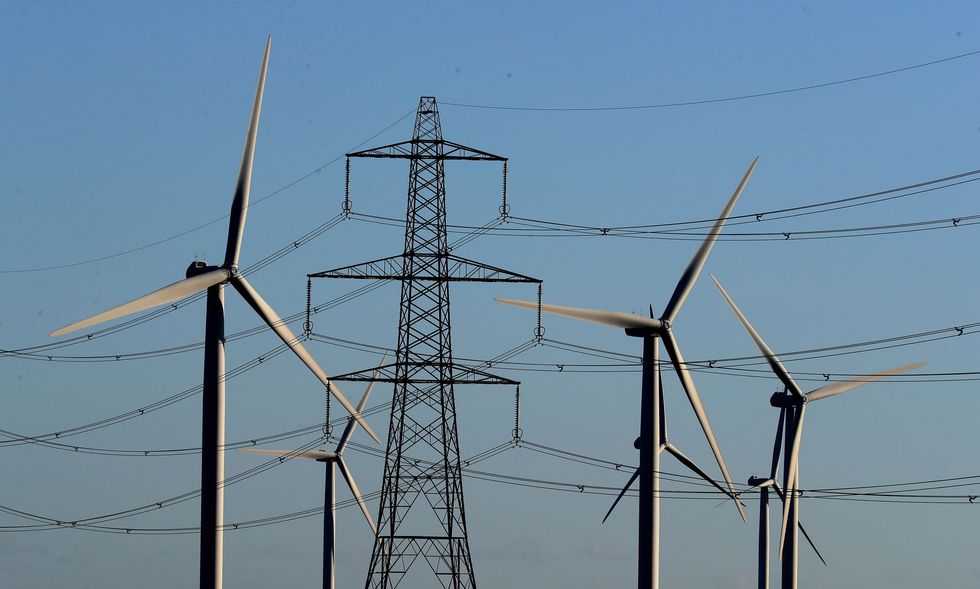
Net Zero has gone 'seriously wrong', Onward said
| PAOnward director Sir Simon Clarke says the Iran conflict “exposes and accelerates the brutal truth that the drive for Net Zero has gone seriously wrong”.
On top of tackling domestic costs, the researchers call for carbon charges to be completely removed from energy-intensive industries.
This would “decelerate de-industrialisation" in the UK.
They also said windfall taxes on North Sea Oil companies should be removed.
Currently, the headline tax for North Sea producers stands at 78 per cent.
LATEST DEVELOPMENTS

Sir Simon Clarke worked at the Treasury
| PAThe Treasury has been in talks with industry leaders this week about relieving this burden.
“Policy decisions targeting Net Zero have undermined production in the North Sea before Britain has sufficient nuclear, renewable power and grid capacity to replace it”, the report found.
Mr Rice said: “A significant share of Britain’s high energy costs is the result of explicit policy choices. Nearly one third of a typical household bill reflects taxes, levies and subsidy schemes imposed by the state, and the war on gas has left Britain needlessly import-exposed.”
He pointed out gas-fired power attracted VAT, carbon price support – a levy on generators using fossil fuel – and charges from the emissions trading system (ETS), a scheme that caps emission levels.
These could be lifted immediately with the right “political will”, he said.
He said: “Removing VAT, Carbon Price Support and UK ETS from gas-fired power alone would cut 15% from energy bills. None of these changes require new infrastructure - they require political will and a recognition that gas will be essential for the foreseeable future.”
Shadow Energy Secretary Claire Coutinho, who wrote the foreword to the report, said high energy prices were “damaging vital industries” and hurting families.
She said: “The cost of energy is one of the biggest economic challenges facing families and businesses today. Britain now has among the most expensive industrial electricity prices in the developed world, deterring investment and damaging vital industries. This report shows clearly that the state adds around a third to household bills through taxes and levies that could be reversed. We need a new approach that maximises domestic oil and gas, backs nuclear, and delivers an economically viable path for renewables without loading the cost of intermittency and subsidies onto consumers.”
The report makes a number of key recommendations, beginning with an end to charges for gas-generated electricity.
To reduce consumer costs further, it calls for levies such as feed-in tariffs and the Renewables Obligation, which subsidise the renewables market, to be removed from energy bills.
Contracts for difference – which offer a guaranteed electricity price for wind and solar companies – should be halted, leaving green firms to compete on a market basis, they wrote.
Carbon pricing for energy-intensive businesses should be lifted completely to decelerate electricity.
And taxes on North Sea Oil companies – which currently total 78 per cent – should be reassessed.
Sir Simon said: “War in the Middle East exposes and accelerates the brutal truth that the drive for Net Zero has gone seriously wrong – it has become less a graduated energy transition than a needlessly hard landing for our economy. Those of us who advocated that next-generation nuclear and renewables should step up to meet demand as oil and gas were phased back have to accept that a major reset is needed. In particular, things have worsened dramatically under Ed Miliband, who is killing off our domestic production decades before we are going to be in a position to rely on alternative sources of energy.”
A spokesman for the Department of Energy Security and Net Zero said the Government’s “number one priority” was affordability and pledged that the Net Zero drive would get the UK “off the rollercoaster of fossil fuel prices”, adding: “Tackling the affordability crisis is the Government’s number one priority. That is why we are acting to bring bills down now and for the long term. “We’ve taken an average of £150 of costs off energy bills from April and our mission for clean power by 2030 will get us off the rollercoaster of fossil fuel prices, to cut bills for businesses and households for good.”
Our Standards: The GB News Editorial Charter
More From GB News