










Britain could bask in a hot summer with above-average temperatures tipped to last until the end of the year.
The forecasted warm weather is expected to persist due to a natural weather phenomenon in which parts of the Pacific Ocean become unusually warm, disrupting global temperatures.
The event, known as a "super" El Niño, is expected to materialise before the end of this year, according to climate projections.
There is an 80 per cent probability of a "strong" event forming by late 2026, according to models produced by the European Centre for Medium-Range Weather Forecasts and the US National Oceanic and Atmospheric Administration.
The likelihood of an extreme "Super" El Niño stands between 20 and 25 per cent, according to the latest analysis.
Current forecasts from the US Climate Prediction Centre indicate that El Niño conditions will likely develop during the June to August period, with a 62 per cent chance of emergence.
These conditions are expected to continue through at least December 2026.
Scientists classify a Super El Niño when sea surface temperatures in the central-eastern Pacific exceed the long-term average by more than 2.0 to 2.5 degrees Celsius.

Britain could see a 'super' El Niño materialise before the end of this year, according to climate projections
|GETTY
The phenomenon develops when unusually warm water accumulates in the eastern Pacific near the equator, and El Niño conditions are officially declared when temperatures rise 0.5 degrees above normal.
ECMWF analysis suggests this year's event could develop at a remarkable pace, potentially unmatched since modern monitoring began.
Researchers attribute this rapid progression to exceptionally warm water beneath the surface in the western Pacific, combined with vigorous westerly winds that push this heat upwards.
Given that ocean temperatures already sit at record levels, surpassing readings from the same period last year, these compounding factors could produce an extraordinary climatic event.
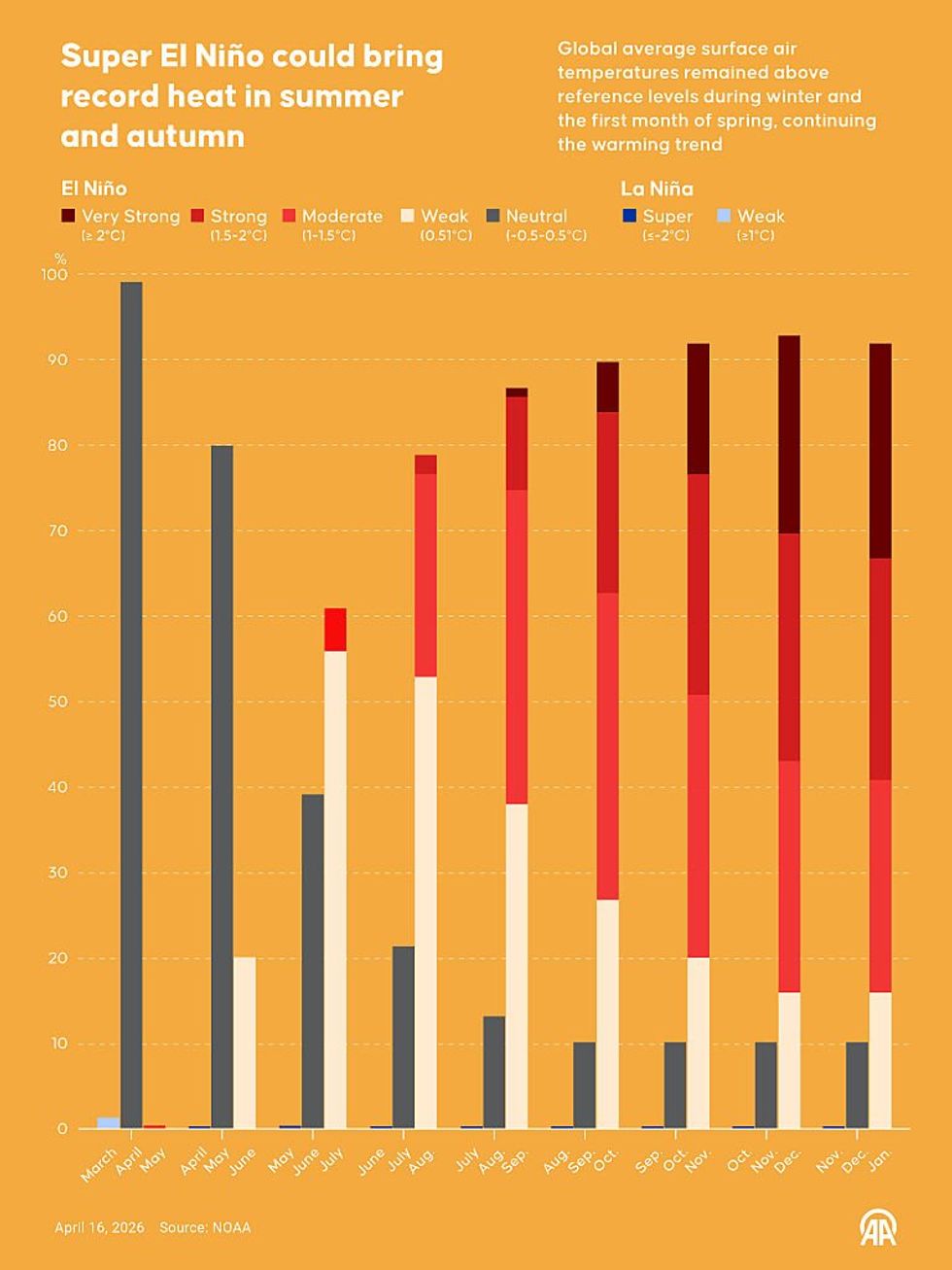
Conditions are expected to continue through at least December 2026
|GETTY/NOAA
LATEST DEVELOPMENTS
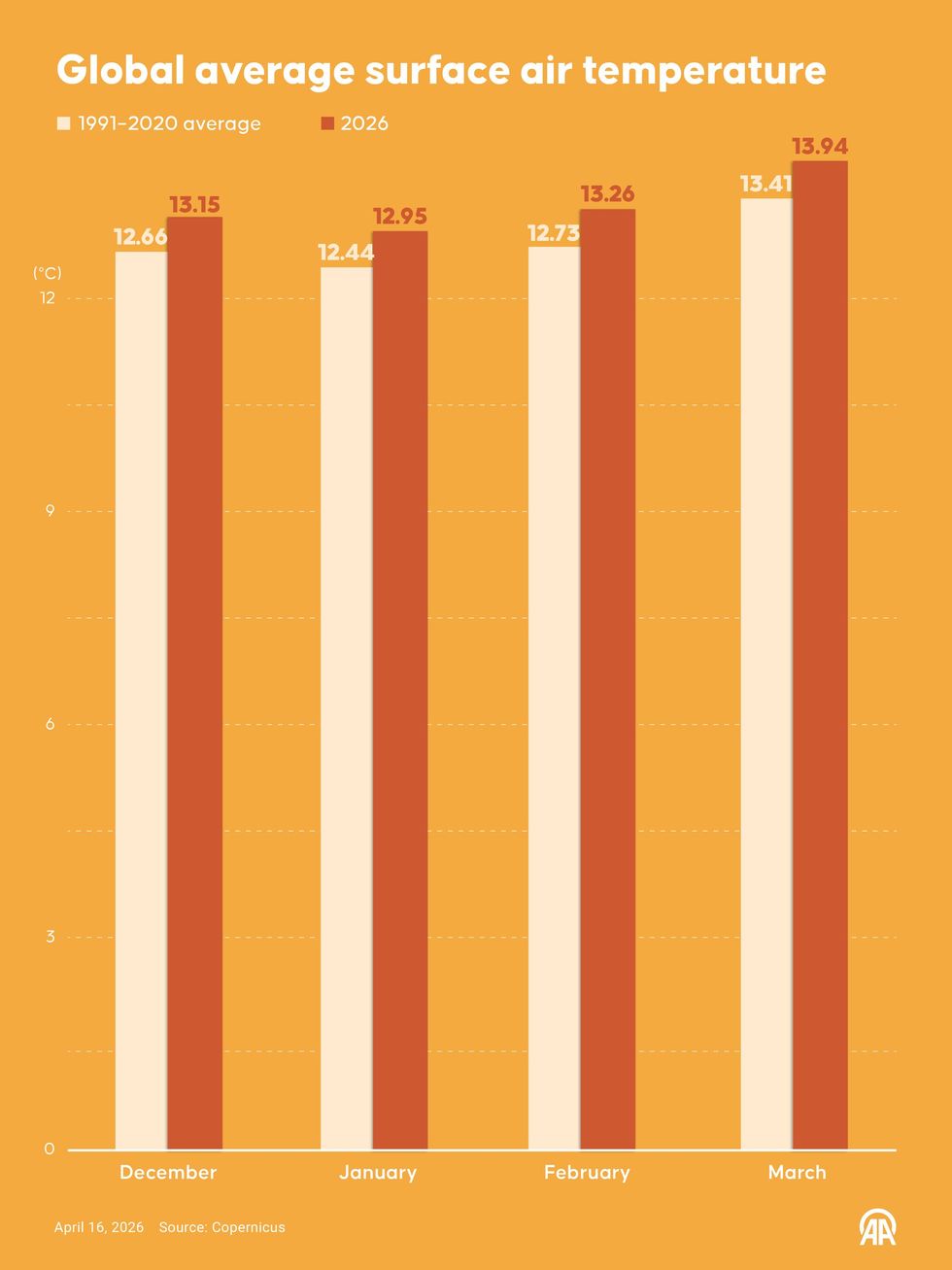
Global temperatures are forecast to be above average
|GETTY/COPERNICUS
The warming effect of El Niño typically reaches the atmosphere with a delay of several months, meaning the full temperature impact of a late 2026 event would likely manifest the following year.
Should a strong El Niño emerge as predicted, 2027 could rank among the warmest years ever documented.
Some modelling scenarios project global temperatures reaching 1.7 degrees Celsius above pre-industrial levels during that period.
The phenomenon releases accumulated oceanic heat into the atmosphere, driving global temperatures higher.
Previous Super El Niño episodes have consistently contributed to record-breaking heat, alongside severe droughts and flooding across different regions.
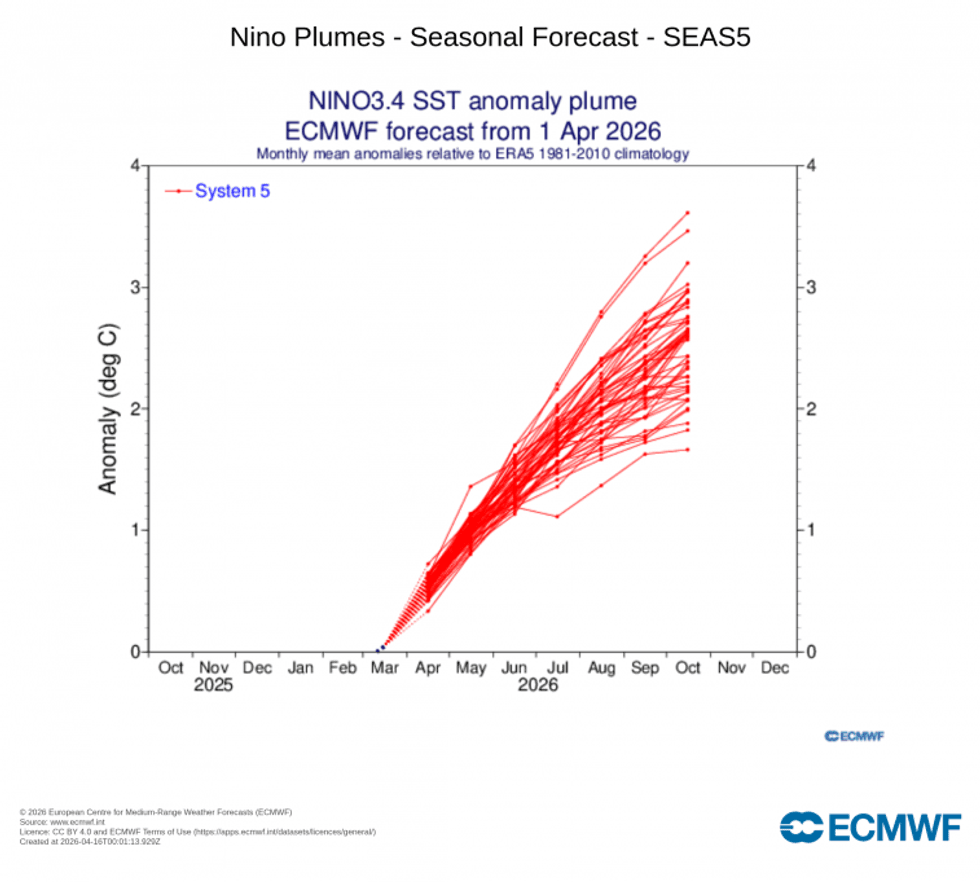
ECMWF analysis suggests this year's event could develop at a remarkable pace, potentially unmatched since modern monitoring began
|ECMWF
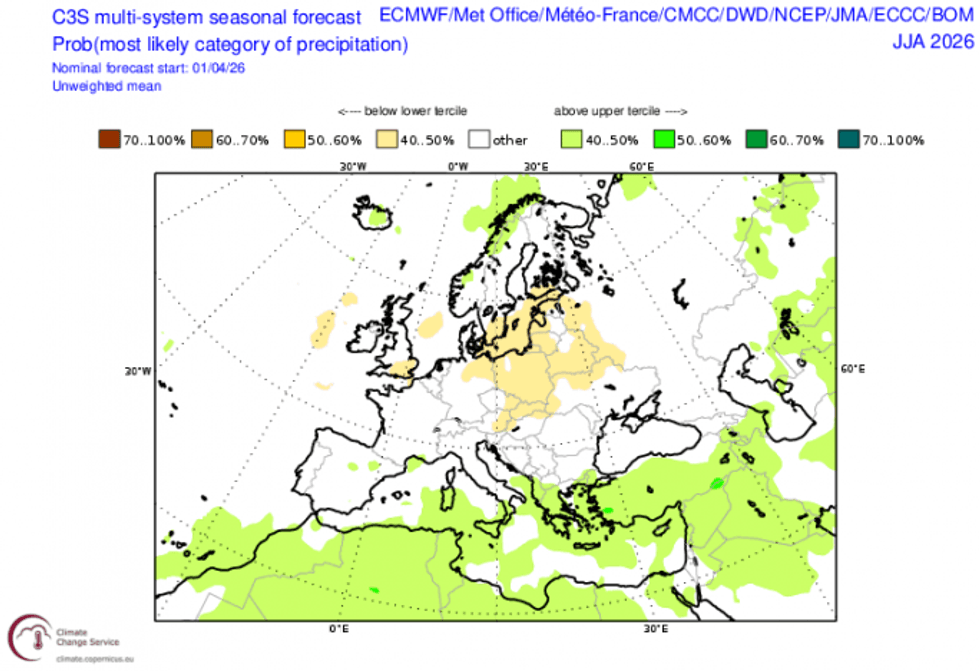
Drier conditions are expected in northern Europe, while average wetter weather is expected in southern regions
|CLIMATE CHANGE SERVICE
For Europe, the broader pattern points to warmer-than-typical conditions, occasionally accompanied by heightened storm activity.
Spain faces particular vulnerability to prolonged extreme heat during the summer months.
Britain and Ireland present a less predictable picture, with previous El Niño development summers in 1997, 2015 and 2023 delivering varied conditions, though each featured notable warm spells.
Weather prediction models currently indicate above-average temperatures across the continent this summer.
Drier conditions are expected in northern Europe, while average wetter weather is expected in southern regions.
Our Standards: The GB News Editorial Charter