











The crisis in the Strait of Hormuz has exposed how the UK’s decision to push ahead with "energy austerity” risks playing into China's hands, a top industry strategist has told GB News.
Chris Johnson, president of the American Energy Leadership Institute, predicted the global oil price volatility will calm soon, adding the impression that it will go on long-term is “bizarre”.
He suggested the crude crisis will be abated due to the US’s military might dwarfing Iran’s capabilities.
Speaking to The People’s Channel, Mr Johnson said: "I already had the assumption that this was going to get resolved relatively quickly.
TRENDING
Stories
Videos
Your Say
“When you compare just military strength on military strength, Iran isn't even close to the ability to compete with us, so they're always going to have to give in at some point and allow oil through the Strait."
However, he remained sceptical about the reality of an agreement ever being reached and warned further “kinetic” action is likely to continue.
Mr Johnson, who advises Republican policymakers on energy, said: “Unless there is new leadership [in Iran] that is aligned with the West, aligned with the US, ideally aligned with the UK as well, there's going to have to be some sort of kinetic effort.
“I would be amazed if there is some kind of agreement that both sides agreed to, unless one side completely got rolled by the other, and I don't see this administration as being willing to get rolled by a much smaller, much weaker country like Iran."
The top energy strategist’s prediction came shortly before the US Navy struck an Iranian vessel on Monday as it attempted to surpass America’s blockade on the strait.
The closure of the world's most important oil transit chokepoint and the wider conflict in the Middle East appear to have strained the “special relationship” between the UK and the US.
Sir Keir Starmer, who has faced a string of public insults from US President Donald Trump, has reiterated the conflict is "not our war".
Alongside Britain’s European allies, the Prime Minister has refused to send warships to protect the shipping lane, despite President Trump beckoning them to come to support the war effort.
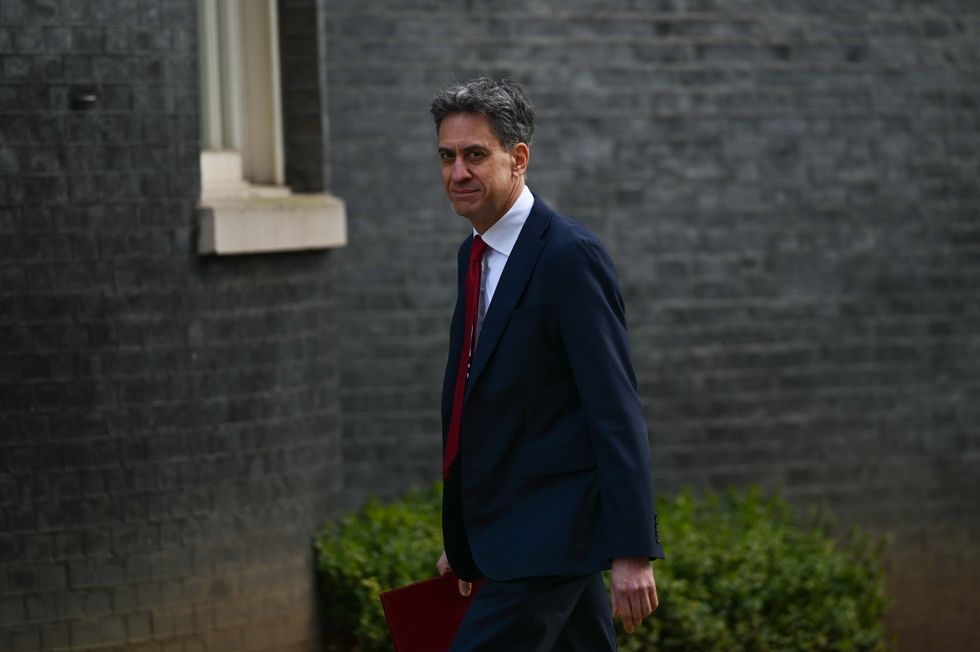
Ed Miliband, Secretary of State for Energy Security and Net Zero, has resisted calls to grant more gas and oil exploration licences
|GETTY
However, Mr Johnson did not think the overall relationship was deteriorating – despite President Trump’s “no Churchill” attack on Sir Keir – viewing the conflict as more of a “blow-up fight” between a married couple, which might yet result in a “breakthrough”.
Optimistically, he hoped the UK and the US would “fall more deeply in love than before”.
He said: “I think this shake-up was genuinely necessary. It feels alarming from the outside, like the special relationship is in danger, but it's really more like a marriage.
“You can have a big blow-up fight, argue fiercely with one another, and then break through to what the real underlying issue actually was.
“You communicate better from that point on, and you fall more deeply in love than before.”
Despite the optimism, the security of the Strait of Hormuz remains fragile, with Mr Johnson warning that if the critical waterway remains closed for a prolonged period, states which have not “priced in” for a “long-term supply crunch” will face serious economic consequences.
The global price of oil has been volatile since Iran officially closed the Strait of Hormuz on March 2, with the price of Brent crude oil often tipping over the $100-a-barrel mark.
While countries such as Ireland, Australia and India have taken precautions to mitigate the financial burden of raising oil prices, such as cutting fuel duty or introducing subsidies for those hit hardest, the UK Government has not offered such assurances.
LATEST DEVELOPMENTS
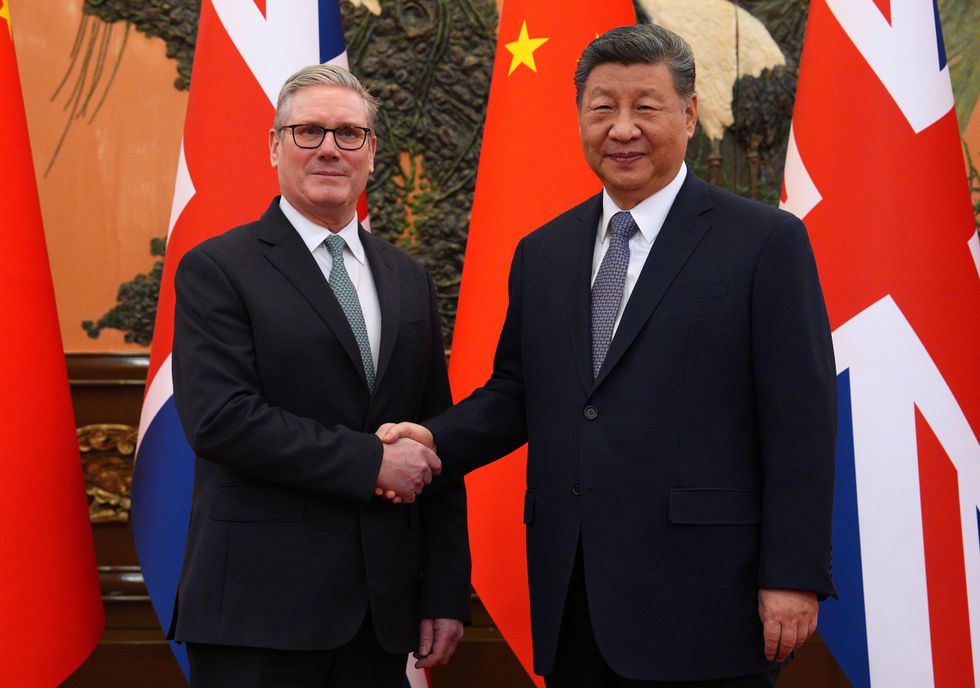
Chinese-manufactured renewable energy technologies might allow Beijing to monitor the UK's grid, a top US energy strategist has warned
|GETTY
The UK instead said it will step in if petrol retailers start to profiteer from global oil price fluctuations.
Fending off calls from the Conservatives and Reform UK to invest in domestic fuel production to protect Britons from spiralling fuel prices, the Labour Government remains undeterred in sticking to its Net Zero policies, spearheaded by Ed Miliband, who has resisted granting more oil and gas exploration licences.
Despite the Government’s drive for cleaner energy, 70 per cent of the UK’s energy is generated through the burning of oil and gas.
Mr Johnson said the UK’s Net Zero ambitions contribute to a broader “managed decline”.
"The UK's per capita GDP has been basically stagnant for the last 20 years,” Mr Johnson pointed out.
“A lot of that is because energy, and the productivity that comes from energy development, is not being implemented into the economy. And then when you have a crisis like this, it gets even worse."
"The stance in the UK has been one of managed decline.
“You're not going to get fully on board with all the Net Zero stuff, but you're basically allowing the Left to drive it anyway, just maybe at a slower pace."

Chris Johnson, president of the American Energy Leadership Institute, said the UK's ban on fracking 'blew [his] mind'
|LINKEDIN / CHRISTOPHER JOHNSON
Mr Johnson explained that energy production does not need to be a “zero-sum game”, with non-renewables and renewables instead being explored in tandem.
However, he accused the UK and the EU of pursuing so-called “energy austerity”.
“In a world with increasing energy demand, you can do both,” he said.
“What ends up happening is you get a zero-sum mentality made even worse by the Left's view that any new energy production is somehow bad for the environment."
He concluded that North Sea drilling must happen and was perplexed as to why it was not already taking place.
The UK has “the skills and know-how", with companies like BP having “been doing this for a long time”, Mr Johnson told GB News.
He also called for the UK to lift its fracking ban, saying: “Finding out that ban exists blew my mind.”
The US energy guru warned that simply going down “the renewables route” would likely create a further overreliance on China and possibly greater fracturing of the “special relationship” between the UK and the US, which could lead to “geopolitical disasters… far bigger than just the Iran situation”.
He said: "If you go just the renewables route, you're going to become further intertwined with the Chinese economy and less intertwined with ours, and that leads to geopolitical disasters in the future far bigger than just the Iran situation."
China dominates in renewable energy technology manufacturing – producing 80 per cent of the world’s solar panels and 60 per cent of the globe’s wind turbines.
It also refines roughly 90 per cent of rare earth minerals, which are used in the production of wind turbines and electric vehicles (EVs), as well as crucial metals for battery production, such as lithium and cobalt.
Mr Johnson described Beijing as having a “chokehold” over Western nations when it comes to renewable energy investment, offering cheap technologies to those who want to quickly transition to cleaner energy.
He warned that purchasing and installing Chinese-made renewable technology could mean the UK is openly giving Beijing access to Britain’s own grid, emphasising that “there’s a geopolitical disaster waiting to happen”.
As a solution, the energy strategist suggested the UK should be looking into domestic energy production or "friend-shoring" – importing from allies, such as the US, to ensure you “negate that risk entirely”.
Mr Johnson believes there will be a multiplier effect if the UK invested in domestic energy production, with the hope that this would reverse the UK’s manufacturing decline more broadly and “grow your economy as a whole”.
He acknowledged that while “folks in the UK and the EU don’t like learning from Americans”, admitting people from the US are “very obnoxious about our jingoism”, Western nations could benefit from a more US-style “energy dominance approach”.
"I know a lot of folks in the UK and the EU don't like learning from Americans, I get that we're very obnoxious about our jingoism, but we are the fastest-growing economy in the West, and that is not an accident,” he said.
"It is largely due to taking the all-of-the-above, energy dominance approach: nuclear, geothermal, oil, natural gas.”