










Taxpayers who rely on HM Revenue and Custom's (HMRC) Self-Assessment calculator risk being penalised for errors caused by the Government's own outdated system, The Telegraph understands.
The tax authority has acknowledged that its online tool fails to incorporate the capital gains tax (CGT) rises announced by Rachel Reeves during her maiden Budget in October 2024.
Despite this flaw originating from official software, HMRC has indicated it may still pursue fines against those who underpay their CGT as a result, in a blow to taxpayers.
The Chancellor raised the basic CGT rate from 10 per cent to 18 per cent, while the higher rate jumped from 20 per cent to 24 per cent for non-residential property assets.

Britons could be hit with fines due to HMRC's own calculator
|GETTY
These changes, which were announced by the Government in October 2024, create a mid-year rate shift that the standard self-assessment form cannot automatically calculate.
With the January 31 deadline now just over three weeks away, HMRC warned on Monday that more than five million self-employed workers have still not submitted their returns.
The revenue authority has stated it will assess inaccurate CGT declarations on an individual basis, though this does not rule out penalties for those who get their calculations wrong.
A notice on HMRC's website cautions users that the Self-Assessment return "will not automatically calculate at the new main rates for the 2024 to 2025 tax year" and that filers may need to manually adjust the figures produced by the system.
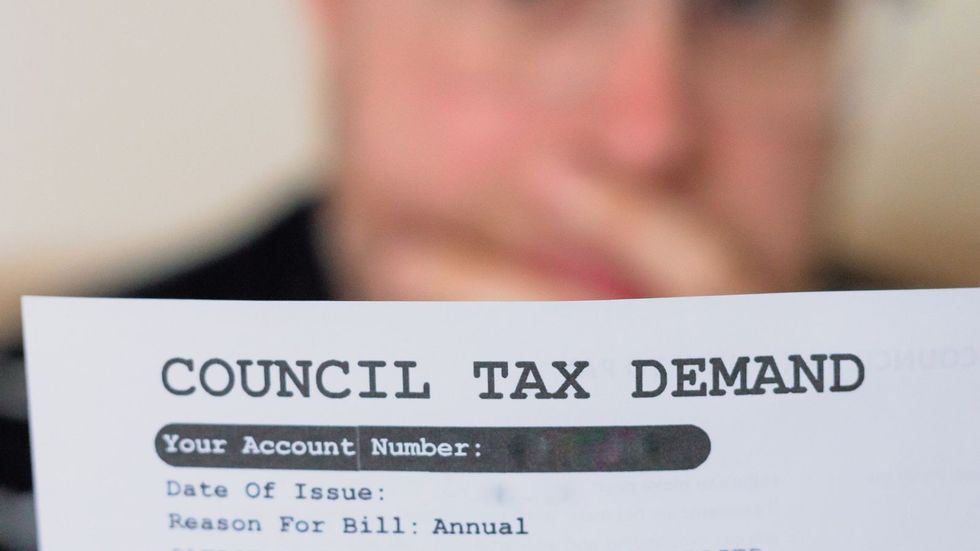 Britons are already paying more of their hard-earned cash to other tax bills | GETTY
 The Government maintains that taxpayers have "everything they need" to file correctly, with online users directed towards a separate CGT calculator published last year that accounts for the mid-year rate adjustment.
Charlene Young, a savings expert at investment platform AJ Bell, has issued a warning regarding significant risks for those who disposed of assets around the Budget date.
Ms Young explained: "There were lots of sales just ahead of and just after the Budget, and it may not be clear to some whether they made a gain before or after the Budget."
She noted that shrinking allowances have pulled increasing numbers of people into the CGT net, amplifying the potential for widespread confusion.
The Chancellor raised capital gains tax
| PAMs Young suggested HMRC's failure to update its system may reflect the broader push towards Making Tax Digital, with the authority potentially allowing its own software to become obsolete as it forces taxpayers onto paid third-party platforms.
From April, self-employed individuals and landlords earning above £50,000 must purchase commercial software rather than use HMRC's tools.
Those earning £30,000 or more will be brought under the Making Tax Digital requirements from April 2027.
Laura Cumins, the chief technical officer at Low Incomes Tax Reform Group, cautioned:
LATEST DEVELOPMENTS
Taxpayers are being reminded of the upcoming Self Assessment deadline
| GETTYShe explained: "There is a risk that the adjustment process may be confusing for some unrepresented taxpayers, while some may not realise they even need to do this.
"This may lead to some taxpayers inadvertently under-declaring capital gains tax, potentially leading to penalties later down the line."
Ms Cumins urged affected taxpayers to exercise particular care when completing the CGT sections of their returns, while emphasising they should not delay filing and risk late submission penalties.
Current rules impose a 3 per cent penalty after 15 days of late payment, a further 3 per cent at 30 days, and an additional 10 per cent charge by day 31.