










The inheritance tax threshold for Agricultural and Business Property Reliefs will rise from £1million to £2.5million from April 2026, the Government has confirmed.
The move comes after months of pressure on Labour from farmers and business groups following last year's Budget changes.
Following changes to Agricultural Property Reliefs (APR) and Business Property Reliefs (BPR) announced in the 2024 Budget, the Government said it has listened to concerns raised by farmers and business owners.
After reviewing that feedback, ministers said they are going further to protect more farms and businesses, while maintaining the principle that the largest and most valuable estates should not benefit from unlimited inheritance tax relief.
By raising the threshold, far fewer farms and business owners will face higher inheritance tax bills, with the reforms now more tightly focused on the biggest estates.
Under the revised plans, the number of estates claiming APR, including those also claiming BPR, affected by the changes in 2026–27 will fall from 375 to 185.
Ministers said this will significantly reduce the number of families caught by the reforms, with many seeing inheritance tax bills cut by hundreds of thousands of pounds.
TRENDING
Stories
Videos
Your Say
The number of estates affected that claim only BPR, excluding those holding only Alternative Investment Market (AIM) shares, is also expected to fall by around a third, reducing complexity and ensuring support is better targeted.
Overall, around 85 per cent of estates claiming APR in 2026–27, including those also claiming BPR, are forecast to pay no additional inheritance tax as a result of the changes.
Environment Secretary Emma Reynolds said: "Farmers are at the heart of our food security and environmental stewardship, and I am determined to work with them to secure a profitable future for British farming.
"We have listened closely to farmers across the country and we are making changes today to protect more ordinary family farms. It’s only right that larger estates contribute more, while we back the farms and trading businesses that are the backbone of Britain’s rural communities."
The National Farmers’ Union President Tom Bradshaw said the change would come as a "huge relief" to family farms, after what he described as a "long-fought campaign" to soften the impact of last year’s Budget reforms.
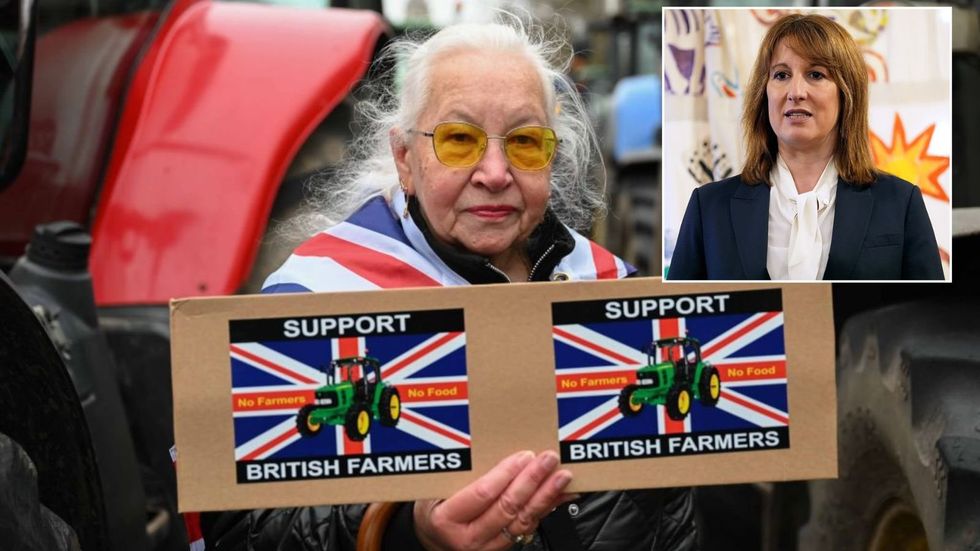
The number of estates claiming agricultural property relief (including those also claiming business property relief) affected by the reforms in 2026-27 halves from 375 to 185
|GETTY
"While there is still tax to pay, this will greatly reduce that tax burden for many family farms, those working people of the countryside," he said.
Mr Bradshaw described the original proposals as a "shock to the farming community" and warned they created a "pernicious and cruel tax" that trapped "the most elderly and vulnerable people and their families".
He said farmers had previously been advised to hold on to their land until death to pass it on tax-efficiently, advice that was upended by the reforms.
Mr Bradshaw welcomed what he called a return of "common sense", thanking Prime Minister Sir Keir Starmer and the Chancellor for listening, and highlighting the importance of the new spousal transfer rules.
"From the start the Government said it was trying to protect the family farm and the change announced today brings this much closer to reality for many," he said.
LATEST DEVELOPMENTS:

Most estates will benefit, with inheritance tax cut by hundreds of thousands of pounds for many families
| X / National Farmers' UnionMr Bradshaw also praised Labour backbench MPs who raised concerns, opposition parties for applying pressure, and more than 270,000 members of the public who backed the campaign, adding: "In the end, it was well-reasoned and rational argument that won through."
John O’Connell, Chief Executive at TaxPayers' Alliance said: "The changes are OK - but it’s not good enough. We have to keep fighting back against these tax hikes that not only create economic havoc, but upend an entire way of life for British people. Eventually, Inheritance Tax should be scrapped entirely."
To implement the change, the Gvernment will amend the Finance Bill 2025 to raise the threshold for full Agricultural Property Relief and Business Property Relief from £1million to £2.5million per estate. Qualifying assets above that level will continue to receive 50 per cent relief.
Because the allowance can be transferred between spouses or civil partners, a surviving partner will be able to pass on up to £5million of qualifying agricultural and business assets without paying inheritance tax, in addition to existing nil-rate bands.
This will also apply to people who were widowed before the policy comes into force.
The Government said it remains committed to making the tax system fairer by scaling back generous inheritance tax reliefs for the largest agricultural and business estates, while still recognising the vital role farms and businesses play in local communities and the wider economy.
Under the revised approach, qualifying agricultural and business assets will continue to be taxed at a much lower effective rate than most other assets.
Ministers said the changes reflect concerns raised by the farming and business sectors, while preserving most of the revenue from the reforms to help reduce debt, curb borrowing and fund public services.
The cost of the changes will be included in the next Office for Budget Responsibility forecast.
Responding to the news Liberal Democrat Environment, Food and Rural Affairs Spokesperson, Tim Farron MP, said: "It is utterly inexcusable that family farmers have been put through over a year of uncertainty and anguish since the Government first announced these changes.
"Liberal Democrats were the first to call out and oppose the unfair family farm tax in last years Budget and we have been proud to stand alongside our farming communities to campaign against it ever since. This concession has been hard won, and I am so grateful to all the farmers who have fought tirelessly to achieve this.

The government said it remains committed to making the tax system fairer by scaling back generous inheritance tax reliefs for the largest agricultural and business estates
| GETTY"This is about justice and security - if we undermine British farming then we also undermine our ability to provide us with the food we need to keep us secure in an uncertain world. Yet many family farms will still find themselves financially crippled and barely making the minimum wage.
"We demand that the government scraps this unfair tax in full and if they refuse to, Liberal Democrats will submit amendments in the new year to bring it down."
The announcement also follows the Government's pledge to create a new Farming and Food Partnership Board, bringing together senior figures from farming, food production, retail, finance and government to strengthen food production through a practical, partnership-led approach from farm to fork.
It builds on recent planning reforms under the National Planning Policy Framework aimed at cutting red tape and making it easier for farmers to expand their businesses, including simpler approvals for farm reservoirs, greenhouses, polytunnels and farm shops, in a move ministers say will support rural growth and boost food production.
More From GB News