








An emerging eyesight issue linked to everyday driving behaviour has been found to cause a growing number of road collisions.
It comes after scientists warned that talking while driving can significantly delay how quickly motorists spot danger.
Researchers in Japan have found that the simple act of speaking, even in casual conversation, can impair the eyes' ability to detect hazards, potentially leaving drivers blind to threats that develop just seconds ahead of them.
The study, conducted by scientists at Fujita University, monitored 30 participants as they followed visual targets on a screen designed to simulate the rapid eye movements required when driving.
TRENDING
Stories
Videos
Your Say
Participants were tested under different conditions, including remaining silent, listening to an audiobook, and answering general knowledge questions aloud.
The results showed "clear and consistent delays" in how quickly their eyes moved to new targets and how long it took their gaze to stabilise once focused.
By contrast, participants who were listening, or had no distraction at all, showed no measurable impairment, suggesting that speaking places a unique cognitive burden on the brain that interferes with visual processing.
The findings raise serious concerns about how conversations inside a vehicle may be contributing to road collisions, particularly when drivers believe they are fully in control.
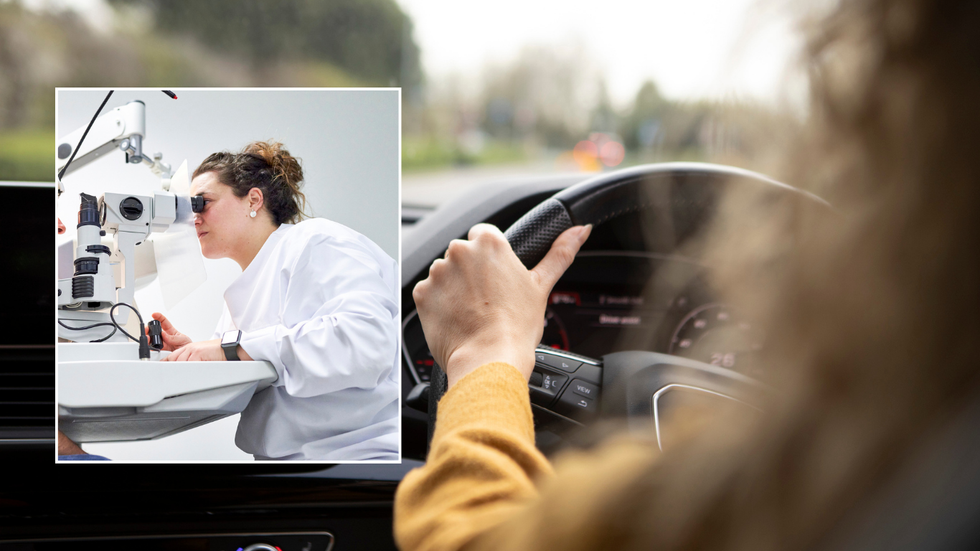
An RAC report found more than four out of 10 drivers admitted to being distracted behind the wheel
|GETTY
The research was also backed by an RAC survey conducted earlier this year, which revealed that more than four in 10 drivers admitted to making mistakes while chatting to passengers.
Those errors ranged from missing junction exits and drifting into the wrong lane to inadvertently breaking speed limits.
More worryingly, some motorists confessed to near-misses involving other vehicles, pedestrians and cyclists while engaged in conversation.
Almost two-thirds of motorists admitted to being distracted by something internal or external while driving, with daydreaming cited as the second most common cause of mistakes.
LATEST DEVELOPMENTS
Official figures from the Department for Transport underline the seriousness of the issue. In 2023, 940 people were killed or seriously injured in collisions where the driver was distracted by something inside the vehicle.
That compares with 280 fatalities or serious injuries linked to external distractions, meaning in-car diversions were responsible for more than three times as many casualties.
Associate Professor Shintaro Uehara, who led the Japanese study, said the findings highlight how cognitive distraction directly affects eyesight and motor behaviour.
"Visual information has been reported to account for 90 per cent of the information required to drive a vehicle, underscoring the importance of high-quality gaze behaviour," he said.
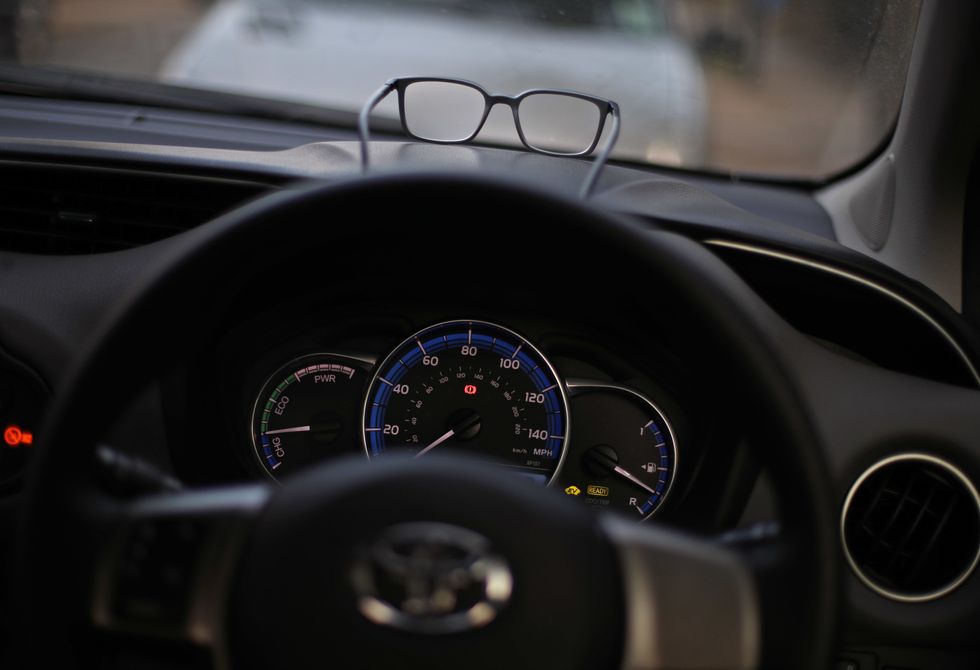
The report found that distracted driving led to strained eyesight
| PAHe explained that conversation disrupts the neural pathways responsible for initiating eye movements - the very first stage of reacting to danger on the road.
"Even small delays in eye movement can accumulate during real driving," Professor Uehara warned. "This can result in slower hazard recognition and delayed physical responses."
The researchers cautioned that even hands-free phone calls could impose enough mental strain to impair a driver's visual awareness.
Rod Dennis, road safety spokesperson for the RAC, said that drivers consistently underestimate the mental demands of driving. "Talking to passengers or daydreaming are so common that they aren't perceived as big distractions," he said. "But our research shows they are responsible for most of the errors drivers admit to."