








Ford has announced it expects to take significant hits to its profits due to plans to end several electric car projects, resulting in billions in losses.
The car giant revealed this week the impact would be around $19.5billion (£15.4billion) in charges, mostly linked to its electric vehicle operations.
The move represents one of the largest financial setbacks for the US car industry’s push into electric vehicles, which has been dropping since President Donald Trump returned to power in 2024.
As part of the restructuring, the company announced that it would end production of its fully electric F-150 Lightning pickup and shift its focus to hybrid vehicles and extended-range electric models that incorporate gasoline engines.
TRENDING
Stories
Videos
Your Say
Since 2023, Ford has accumulated $13billion (£10.3billion) in losses in its EV division, Model e. The company said it will now withdraw from unprofitable assets and redirect capital previously earmarked for electric vehicles into product lines that are more likely to generate profits.
"Instead of ploughing billions into the future knowing these large EVs will never make money, we are pivoting," said Jim Farley, Ford's chief executive.
Mr Farley explained that the company now has enough understanding of the American market to move forward with confidence in what he described as the "second inning" of reduced-emissions powertrains.
The high cost of EV batteries for large pickup trucks, combined with waning consumer enthusiasm after the pandemic, proved insurmountable for Ford's original strategy.
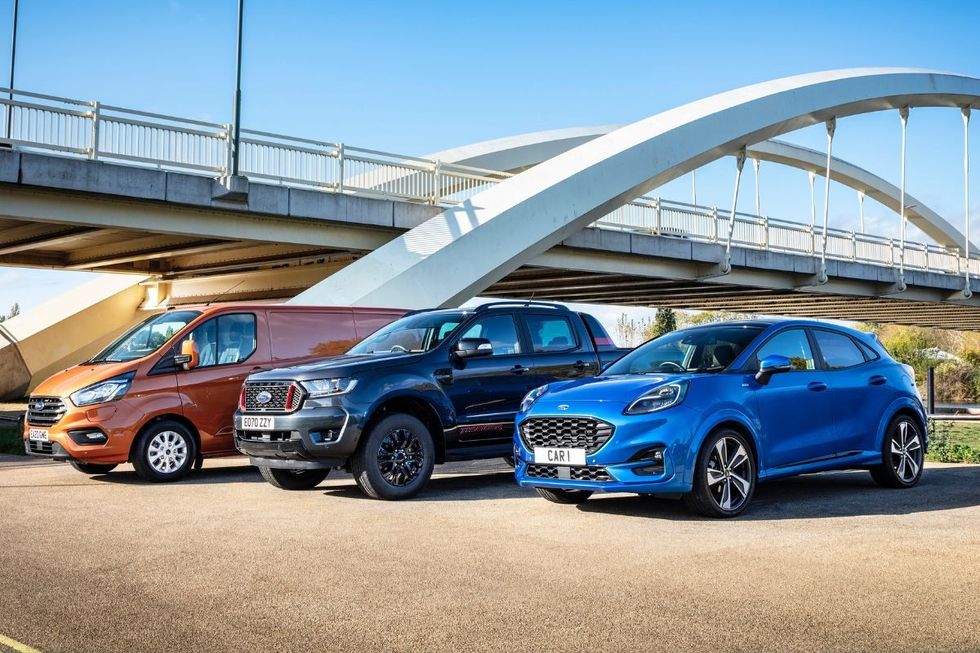
Ford said it would be focusing on hybrid cars as well as petrol and diesel vehicles
| FORDBut many American buyers remain hesitant about fully electric vehicles due to high prices, limited driving range, and sparse charging infrastructure. Pickup buyers, in particular, have not fully embraced electric models as the company had hoped.
"This is a better solution for customers," Mr Farley added. "None of us really know what the future is going to be, but Ford knows enough about the future to know that this mix is the right mix."
By 2030, Ford projects that hybrids, extended-range EVs, and fully electric vehicles will make up roughly half of its global sales, compared with just 17 per cent today.
As part of the strategic overhaul, Ford will repurpose its $6billion (£4.7billion) battery plant in Glendale, Kentucky, which was originally built in partnership with South Korea's SK Group.
LATEST DEVELOPMENTS
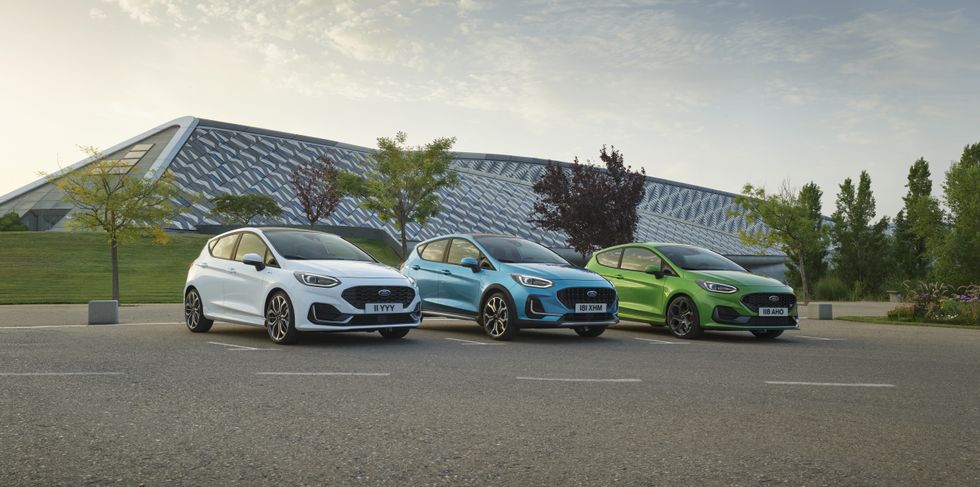 Ford remains one of the most popular brands in the United States | FORD
Instead of producing batteries for electric cars, the facility will manufacture large-scale energy storage systems for data centres, utilities, and industrial customers.
Production is expected to begin in 2027, with a target of at least 20 gigawatt-hours of annual capacity. The company revealed it also plans to invest approximately $2billion (£1.6billion) over the next two years to scale the new venture.
However, the conversion will result in the loss of around 1,600 jobs at the plant.
The Ohio Assembly Plant will focus on producing commercial vans and hybrid vehicles for Ford Pro, alongside Super Duty chassis cabs.
Despite the restructuring, Ford said it plans to hire thousands of new workers across the country in the coming years, reinforcing its position as the largest employer of hourly autoworkers in the US.
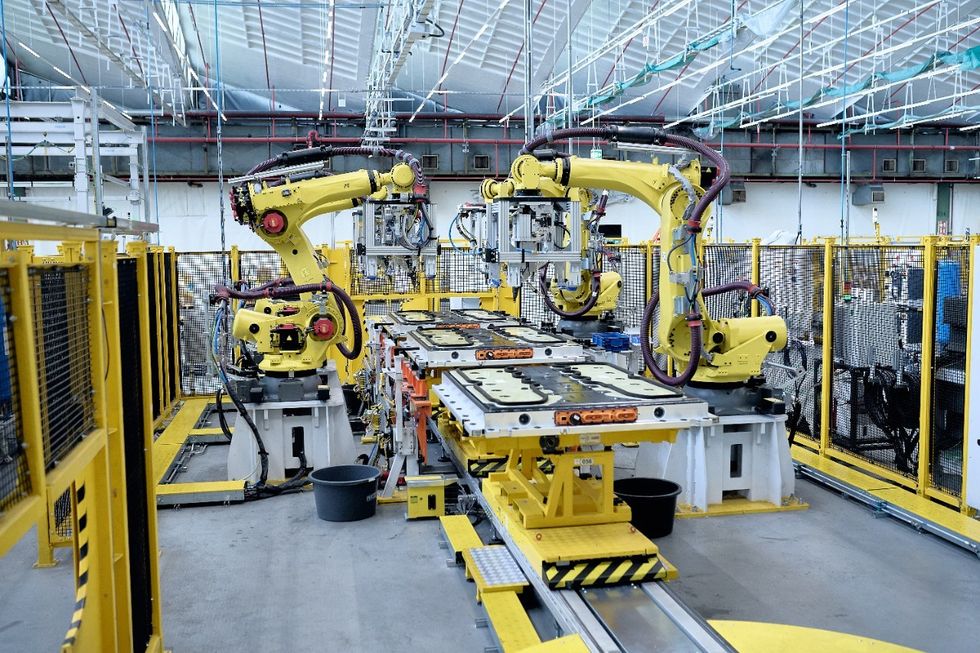
Ford said it will convert its electric car facility into a large-scale energy storage plant
| FORDBut Ford did note it will not be abandoning electric vehicles entirely. The company intends to launch a $30,000 (£23,700) electric pickup by 2027, which will be assembled at the Louisville Assembly Plant.
"Now this is the core of our EV strategy in America," Mr Farley said. "We've got to land the plane." Model e is now projected to become profitable by 2029, with improvements expected to begin in 2026.
Ford is not alone in scaling back its electric ambitions. General Motors has also retreated from plans to offer an exclusively electric lineup by 2035, recording $1.6billion (£1.3billion) in EV write-downs in the third quarter and signalling that further impairments may follow.
The move follows regulatory changes, including the rollback of some strict emissions and fuel economy rules, which have allowed US carmakers to adjust their EV strategies.