







A major investigation has uncovered that a sperm donor carrying a genetic mutation linked to a devastating cancer syndrome fathered at least 197 children across Europe through Denmark's European Sperm Bank.
Some of these children have already lost their lives to cancer, while the vast majority who inherited the dangerous variant face a lifetime of heightened risk.
The donor, who began giving sperm as a student back in 2005, remained healthy himself and passed all standard screening checks. His sperm was distributed to 67 fertility clinics spanning 14 countries over roughly 17 years.
The European Sperm Bank has expressed its "deepest sympathy" to affected families and acknowledged the sperm was used to create too many babies in certain countries.
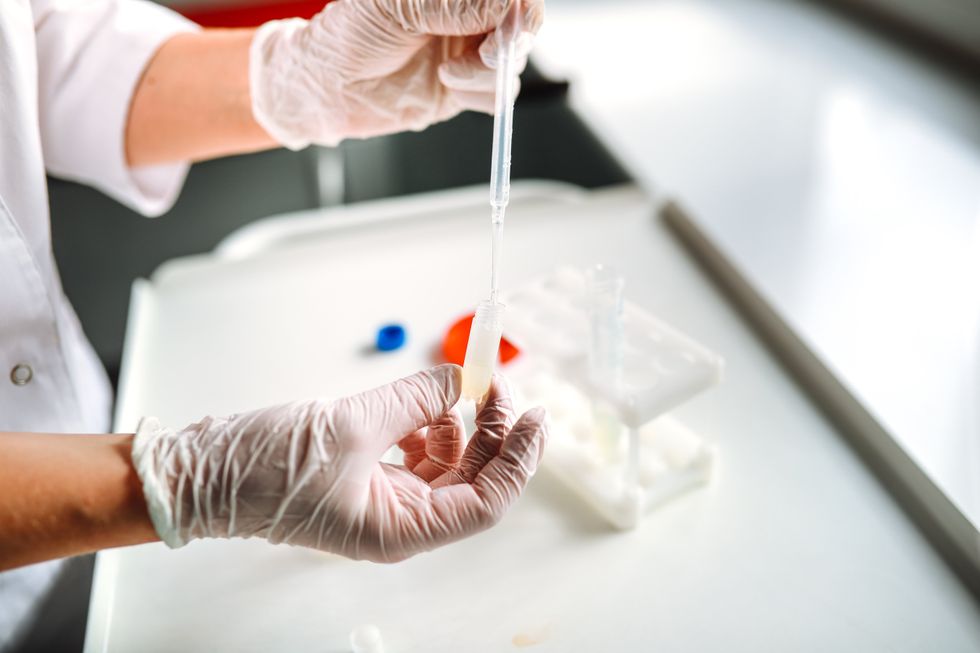
The genetic mutation affects a gene called TP53
|GETTY
The mutation affects a gene called TP53, which plays a vital role in stopping cells from becoming cancerous.
But most of the donor's body doesn't contain the harmful variant; up to 20 per cent of his sperm does. This means that any child conceived from affected sperm ends up with the mutation present in every single cell of their body.
The condition is known as Li Fraumeni syndrome, and it brings with it a terrifying 90 per cent likelihood of developing cancer, often during childhood or as breast cancer in later life.
"It is a dreadful diagnosis," Prof Clare Turnbull, a cancer geneticist at the Institute of Cancer Research in London, told the BBC. "It's a very challenging diagnosis to land on a family; there is a lifelong burden of living with that risk, it's clearly devastating."
While the sperm wasn't sold directly to UK clinics, it turns out a "very small" number of British families did use the donor's sperm after travelling to Denmark for fertility treatment.
Danish authorities notified the UK's Human Fertilisation and Embryology Authority on Monday about these cases, and those women have now been contacted.
Peter Thompson, the HFEA's chief executive, confirmed that affected families "have been told about the donor by the Danish clinic at which they were treated".
What remains unclear is whether any British women might have received treatment at clinics in other countries where the donor's sperm was distributed.
LATEST DEVELOPMENTS
Parents with concerns are being advised to reach out to the clinic they used and the fertility authority in that particular country.
The investigation also revealed serious breaches of donor limits in multiple countries.
In Belgium, regulations state that a single donor should only be used by six families. Instead, 38 different women conceived 53 children using this particular donor's sperm.
The European Sperm Bank has admitted these limits were "unfortunately" breached and confirmed it is "in dialogue with the authorities in Denmark and Belgium".
The UK caps donors at 10 families each, but there's no international law governing how many times a donor's sperm can be used globally.
Prof Allan Pacey, former head of the Sheffield Sperm Bank, explained the core problem: "We have to import from big international sperm banks who are also selling it to other countries, because that's how they make their money, and that is where the problem begins."
Prof Pacey, now deputy vice president of the Faculty of Biology Medicine and Health at the University of Manchester, noted half of the UK's sperm is currently imported from abroad.
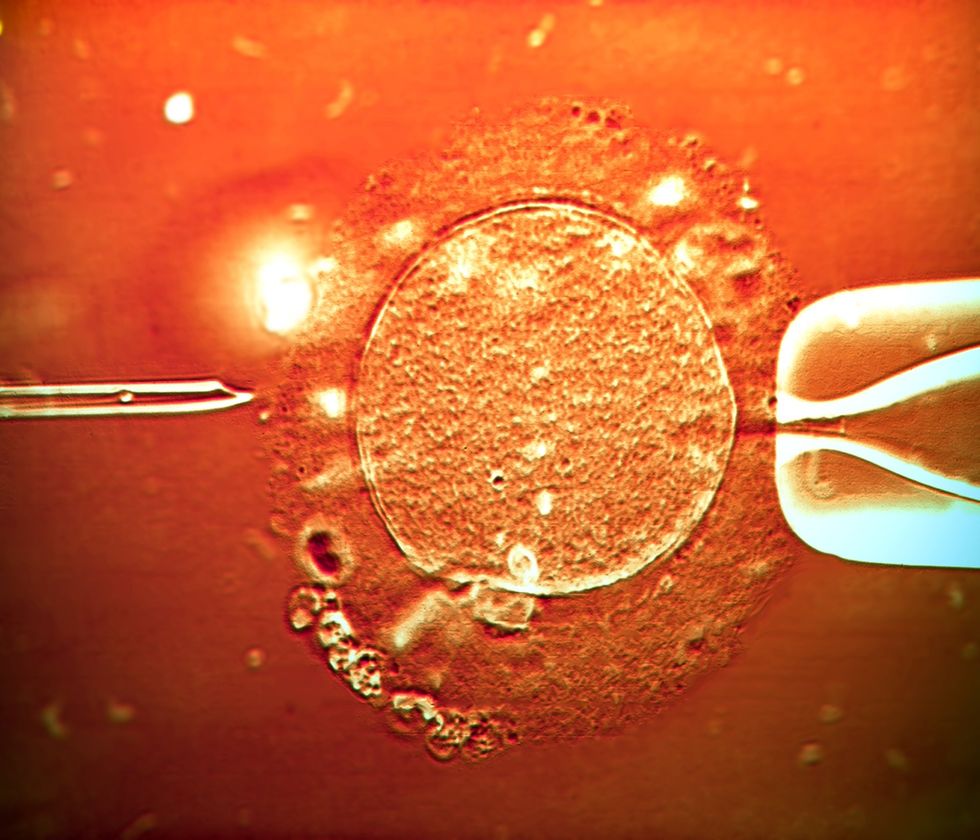
The European Sperm Bank has admitted these limits were "unfortunately" breached
|GETTY
He described the situation as "awful" for everyone involved but stressed that making sperm completely safe simply isn't possible.
"You can't screen for everything. We only accept 1 per cent or 2 per cent of all men that apply to be a sperm donor in the current screening arrangement, so if we make it even tighter, we wouldn't have any sperm donors. That's where the balance lies."
One French mother, whose daughter was conceived with the donor's sperm 14 years ago, said she holds "absolutely no hard feelings" towards the donor but found it unacceptable to receive sperm "that wasn't clean, that wasn't safe, that carried a risk".
Our Standards: The GB News Editorial Charter