








Health Secretary Wes Streeting addressed an audience at the University of East London today to celebrate a significant milestone in NHS recovery.
A survey conducted by the King's Fund and Nuffield Trust has revealed that public dissatisfaction with the health service has declined by its largest margin since 1998.
The British Social Attitudes research recorded a 5.6 percentage point rise in satisfaction levels, marking the first improvement since the coronavirus pandemic struck.
Mr Streeting attributed this turnaround to substantial government funding and modernisation efforts.
TRENDING
Stories
Videos
Your Say
A 5.6 percentage point rise in satisfaction levels was recorded
|GETTY
"The biggest drop in dissatisfaction since 1998 doesn't happen by accident," the Health Secretary stated. "It is thanks to the government's investment and modernisation - all of which has been hard fought but is now delivering results."
The government has pointed to a series of concrete improvements as evidence of its commitment to the health service.
An additional £26billion has been channelled into the NHS this year, while waiting lists have been trimmed by 374,000 patients since July 2024.
Some 2,000 extra general practitioners have joined the workforce, and Category 2 ambulance response times fell to their lowest level in five years during the winter months.
Mr Streeting expressed confidence that the service is heading in the right direction.
"Waiting lists are the lowest they've been in three years, more patients in A&E are seen within four-hours than for four years, and ambulance response times are the fastest for five years," he said.
"The NHS is on the road to recovery, but there's a lot of road ahead. My foot is pressing down on the accelerator and I won't stop until the job is done."
Despite the overall progress, the Health Secretary acknowledged that certain NHS trusts continue to struggle with entrenched difficulties.
A new NHS Intensive Recovery programme will commence in April, targeting providers at the bottom of recently published league tables.
LATEST DEVELOPMENTS
Five trusts have been identified for the initial phase of intervention: North Cumbria Integrated Care NHS Foundation Trust, Mid and South Essex NHS Foundation Trust, Hull University Teaching Hospitals NHS Trust, Northern Lincolnshire and Goole NHS Foundation Trust, and East Kent Hospitals NHS Trust.
These organisations face prolonged waiting times, ongoing financial troubles, and frequent changes in senior management.
Mr Streeting emphasised that the trusts in question are not underperforming due to inadequate effort from their workforce.
Rather, they are grappling with deep-seated structural constraints and financial imbalances that have persisted for years without proper resolution.
The programme represents a departure from uniform approaches to NHS management, instead offering bespoke support packages developed in partnership with local leadership.
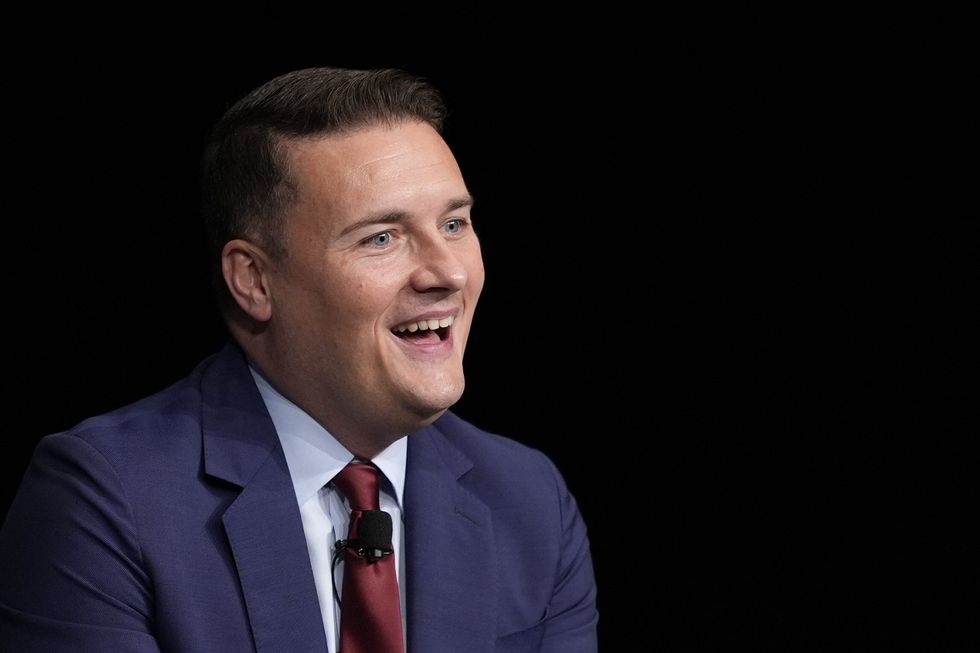
Wes Streeting credits government funding and modernisation for the shift
| PAMeasures under consideration include replacing senior figures at struggling trusts, deploying experienced NHS leaders with proven track records to underperforming areas, restructuring organisations through mergers or separations, and securing capital funding for deteriorating hospital buildings.
Mr Streeting made clear his determination to address longstanding failures.
"Right now, a cluster of high-performing Trusts is masking some chronic under-performance in other parts of the country," he said.
"Failure has been tolerated for too long. Staff know it. Patients feel it. And I won't stand for it."
The Health Secretary added: "No more turning a blind eye to failure."
Our Standards: The GB News Editorial Charter