









If you've been reaching for sugar-free sweets thinking they're the healthier choice, new research might make you think twice.
A study from Washington University in St. Louis, published in Science Signaling, has found that sorbitol – a sugar alcohol found in countless "low-calorie" products – isn't quite as harmless as we've been led to believe.
It turns out sorbitol is just "one transformation away from fructose," according to lead researcher Gary Patti.
This close relationship means sorbitol can trigger similar effects to fructose itself, which has already been linked to steatotic liver disease affecting roughly 30 per cent of adults globally.
TRENDING
Stories
Videos
Your Say
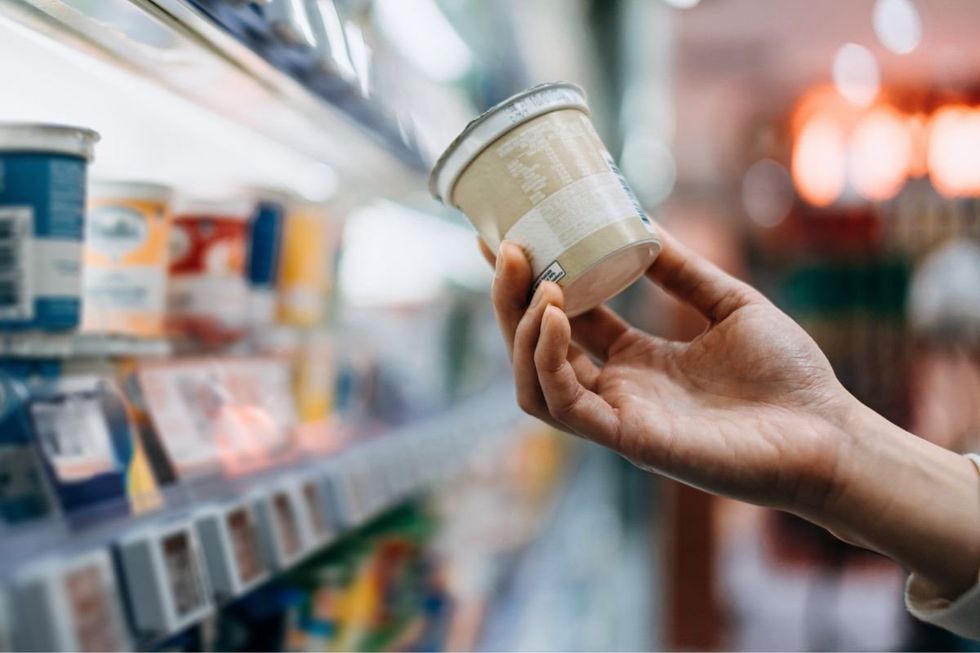
Dodging both sugar and its substitutes has become remarkably tricky
|GETTY
The research team used zebrafish to show how sorbitol works in the body, and the findings are quite surprising.
Enzymes in our gut can produce sorbitol naturally, which then travels to the liver, where it gets converted into fructose.
Previous studies have mainly looked at sorbitol production in diabetics, where high blood sugar drives the process.
But the zebrafish experiments showed that glucose levels in the intestine can spike high enough after a normal meal to kick off sorbitol production, even in healthy individuals.
"It can be produced in the body at significant levels," explained Patti.
The liver, it seems, can receive fructose through several different metabolic routes depending on what you eat and which bacteria live in your gut.
Fortunately, certain Aeromonas bacterial strains can break down sorbitol and turn it into something completely harmless.
"But if you have the right bacteria, turns out, it doesn't matter," Patti explained.
LATEST DEVELOPMENTS
The problem arises when those helpful microbes aren't present or can't cope with the load.
"However, if you don't have the right bacteria, that's when it becomes problematic. Because in those conditions, sorbitol doesn't get degraded and as a result, it is passed on to the liver," he said.
Once there, it transforms into a fructose derivative – not exactly what you want happening.
Even people with the right gut bacteria can run into trouble if they consume too much glucose or sorbitol, simply overwhelming their microbial helpers.
At lower levels, like those naturally occurring in whole fruits, gut bacteria typically handle sorbitol just fine.
But dodging both sugar and its substitutes has become remarkably tricky, as many processed foods now pack multiple sweeteners into a single product.

'Sorbitol given to animals ends up in tissues all over the body'
| GETTYPatti himself was taken aback to discover his favourite protein bar contained a hefty dose of sorbitol.
Scientists still need to work out exactly how gut bacteria clear the substance, but it's becoming increasingly clear that the old assumption that sugar alcohols simply pass through without causing harm may be wrong.
"We do absolutely see that sorbitol given to animals ends up in tissues all over the body," Patti noted.
The bottom line is that "there is no free lunch" when it comes to sugar alternatives.
Our Standards: The GB News Editorial Charter