



All products and promotions are independently selected by our experts. To help us provide free impartial advice, we will earn an affiliate commission if you buy something. Click here to learn more








With such a focus on security and privacy, you might be concerned about who can see your web browsing history.
If you missed the announcement, the UK Government is establishing a new National Police Service (NPS) designed to strengthen security across regional police forces and centralise certain national-level capabilities, particularly around serious organised crime, cybercrime, and national security threats.
As threats are increasingly digital, and policing becomes more technologically sophisticated, so must the British bobby's ability to investigate online activity. But with more eyeballs online, law-abiding citizens might be concerned about their data getting caught up in the investigations.
Thankfully, installing one of the best VPN deals with RAM-only servers adds a significant layer of protection.
Unlike traditional servers, which store information on hard drives, RAM-only servers operate entirely in volatile memory. This means no data is saved. At the end of each browsing session, all of the information entered into forms is automatically wiped whenever the server is rebooted, making it virtually impossible for authorities — even in the event of a physical server seizure — to recover historical logs.
When this technical approach is combined with strong encryption protocols and a verified no-logs policy, it significantly reduces the amount of information that could potentially be handed over during an investigation.
This is especially relevant in jurisdictions like the UK, which participates in the Five Eyes intelligence alliance. This alliance facilitates intelligence sharing between countries to help combat terrorism, cyber threats, and organised crime to keep you safe. However, VPN providers that use no-logs, RAM-only servers help ensure that your online activity is secure and isn’t captured or stored for future retrieval.
Below, we break down exactly how VPNs protect your privacy, why RAM-only servers matter, and what data UK authorities — including agencies operating under the new NPS framework — can legally access in the event of an investigation.
To jump straight to our recommendations for VPNs operating on RAM-only servers, click here.

In the United States, federal agencies such as the FBI have the authority to request certain user data from internet service providers (ISPs) and online platforms during investigations
|GETTY IMAGES
In the United States, federal agencies such as the FBI do have the authority to request certain user data from internet service providers (ISPs) and online platforms during investigations. This can include connection logs, account activity, metadata, and, in some cases, device information — particularly where criminal activity is suspected and proper legal processes, such as subpoenas or warrants, are in place.
The UK operates under a comparable legal framework. Law enforcement in the UK has the power to request certain information from internet service providers and online platforms, including connection data, account activity, and, in some cases, device information — especially if criminal activity is suspected.
Under legislation such as the Investigatory Powers Act, authorities can compel companies to retain and disclose specific communications data when legally authorised.

VPNs with RAM-only, no-logs servers, like ExpressVPN, make it technically impossible for police to retrieve your browsing history or connection logs from the VPN provider, even if requested
|EXPRESSVPN PRESS OFFICE
What can the FBI access when you use a VPN?
If the FBI is investigating someone, they can request information with a subpoena or warrant. That can include records from your VPN provider, your ISP, or the websites and apps you used.
However, a VPN keeps connection logs (like your real IP address and timestamps), and those logs can potentially link activity back to you. Some VPNs advertise “no logs,” but the accuracy of that claim depends on the company’s policies and whether they truly retain zero identifying data.
Even if one of the best cheap VPNs keeps no logs, law enforcement can still gather information from other sources — like Google, social media platforms, or your email provider.
There’s also device-level evidence to consider. A VPN does not protect the data on your device itself. The FBI and police can still access emails, messages, photos, or app data directly from your phone, computer, or tablet if they have a legal warrant. It's also worth noting that any illegal content stored locally or activity on unencrypted websites can still be discovered. Think of it like tinted windows on a car — people outside can’t easily see in, but if the car is lawfully searched, what’s inside is still accessible.
FBI investigations will also differ from those of the local police, which mostly come down to scope and resources. Local police investigate local crimes and typically need court approval to access digital records.
On the other hand, the FBI handles federal crimes, cybercrime, and national security issues. They also have specialised cyber divisions and international partnerships, giving them broader technical capabilities. In serious investigations — especially those involving multiple countries — federal agencies tend to take the lead.
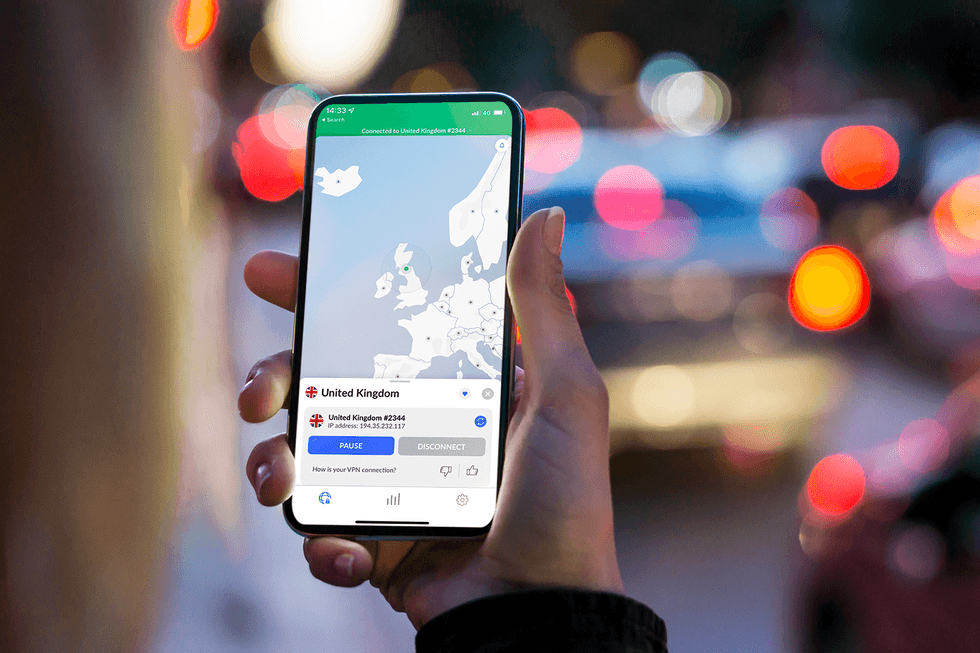 VPNs create an encrypted tunnel for everything you do online, keeping your personal data protected from cyber criminals, advertisers, and governments | NORDVPN PRESS OFFICE
 What is the Five Eyes intelligence alliance?
The Five Eyes is an international intelligence alliance made up of the United States, the United Kingdom, Canada, Australia, and New Zealand. These countries work closely together to collect and share signals intelligence, which can include emails, phone calls, and internet activity. Essentially, it’s a network designed to monitor and exchange information across borders for security and intelligence purposes to combat terrorism, cyber threats, and organised crime to keep you safe.
For residents in the UK, this means that your online activity could potentially be monitored or shared with other member countries. Even routine browsing or online communications could fall under this network’s reach if authorities choose to investigate.
This is where privacy tools like the best cheap VPNs or the best free VPNs with RAM-only, no-logs servers become important. Such VPNs encrypt your connection, hide your real IP address, and don’t store any activity logs, making it much harder for surveillance agencies — even within the Five Eyes alliance — to link online activity back to you.
If privacy is your top concern, combining strong encryption with RAM-only servers provides a powerful safeguard against this kind of monitoring.
What is a RAM-only server?
A RAM-only server is a type of VPN server that runs entirely in RAM (random-access memory), rather than storing data on traditional hard drives. RAM is a temporary form of memory, which means anything stored there is automatically erased whenever the server restarts. This makes it very different from regular servers, which can keep data on disk for weeks, months, or even indefinitely.
For VPN users, this is a big deal. Imagine your online activity — websites you visit, files you download, or even your IP address — being stored somewhere that could potentially be accessed by hackers or authorities. On a RAM-only server, that information doesn’t stick around. Even if a server is seized, there’s nothing to recover. In other words, it’s like writing in disappearing ink. Once the server reboots, your activity is gone forever.
VPN providers use RAM-only servers to enhance privacy and security by design. Many best VPNs, like ExpressVPN, NordVPN, Surfshark, and more, all run RAM-only servers.
This ensures that even under legal pressure, there is no data for authorities to seize. For example, if law enforcement were to confiscate a server, a VPN using RAM-only technology would have nothing to hand over, protecting users’ anonymity.
Proton VPN are one of the few providers that protect your information differently — using full-disk encryption with an AES-256 cypher instead, storing encryption keys off-site.
LATEST DEVELOPMENTS
How a VPN protects your privacy
A VPN protects your privacy by securing your online activity from being tracked by your Internet Service Provider (ISP) or other third parties. When you use a VPN, your real IP address is hidden, and your connection is encrypted, so websites you visit, files you download, and your browsing activity are not directly linked to you.
VPNs with RAM-only, no-logs servers, like ExpressVPN, make it technically impossible for police to retrieve your browsing history or connection logs from the VPN provider, even if requested. In short, a VPN shields your online activity from tracking, but it does not protect your device or local files from lawful police access.
The following VPNs not only protect your privacy, but they also operate with RAM-only servers.
VPNs that will protect your privacy with RAM-only servers
ExpressVPN: Get 4 months for FREE + 80% off

With its new multi-tier subscription structure, ExpressVPN has never been more affordable
If you want to unlock protection with a RAM-only server, the ExpressVPN Basic plan offers unlimited access to its award-winning reliable and ludicrously speedy VPN servers across the globe, it has cut monthly subscriptions by 80%. If you sign up for a 12-month plan, you'll be gifted with a generous 4 months of access to the award-winning VPN service for free. That equates to under 6 pence per day!
ExpressVPN Basic
$9.99
$1.99
You can feel supported and secure when you use a VPN with a RAM-only server like ExpressVPN.
Based in the British Virgin Islands — outside Five Eyes jurisdiction — it avoids mandatory data retention laws, which means that even if the company were collecting data (it's not), law enforcement from the UK and US would be unable to compel ExpressVPN to hand over any information about its subscribers.
ExpressVPN supports a wide range of devices, including smartphones, tablets, laptops, smart TVs, and routers. ExpressVPN stands out from the crowd and allows between 10 and 14 devices to be used at the same time, meaning internet users don’t need to worry about being limited to only one Windows 10, Windows 11, iPhone, Mac or Linux device.
ExpressVPN even offers a 30 day guarantee to first-time customers. Yes, ExpressVPN is so confident that you’ll love the services that it will give you your money back with no questions asked. It even offers 24/7 customer support, so you'll be able to talk to someone from any time zone to get a full refund if you're unhappy with the experience on your devices.
For Android and iOS users, ExpressVPN also offers a 7-day free trial, where you don’t need to worry about any money being taken from your accounts.
All you have to do is sign up for the 12-month plan and create your account to start your 7-day trial.
NordVPN: Get 3 months for FREE + 75% off

Get all the security and support from a VPN provider that uses a RAM-only server. For a limited time, NordVPN is offering a generous 75% discount on its VPN subscriptions. That drops the effective monthly price of this award-winner to just £2.29. Since you'll need to commit to a two-year plan to unlock the maximum savings, Nord offers a 30-day money-back guarantee on all subscriptions
NordVPN
$8.69
$2.29
On top of operating with a RAM-only server, all NordVPN subscribers will enjoy automatic malware scans to save you from dodgy downloads and alerts about leaked credentials on the Dark Web. Of course, NordVPN also offers access to 6,400 server locations across the globe with fast connection speeds.
NordVPN provides military-grade encryption, fast global servers, and protection on public Wi-Fi. With a strict no-logs policy, CyberSec malware-blocking, and multi-device support, NordVPN safeguards your internet activity while maintaining speed and reliability worldwide.
Surfshark: Get 3 months for FREE + 87% off

If you're looking for the most affordable monthly VPN subscription, look no further than this Surfshark deal. For a limited time, it's slashed 88% off its monthly cost and coupled that discount with three months of free access. You'll need to sign up for a two-year plan to unlock this saying, but with a 30-day money-back guarantee and 24/7 customer service, there's no risk for new customers
Surfshark
$12.29
$1.49
Surfshark boasts faster RAM-only servers in more than 100 countries. The provider offers packages with 24/7 data breach alerts that flag when a website that you rely on has been hacked, antivirus software, its CleanWeb adblocker, and Alternative ID that generate a new email and phone number to enter into online forms — with communication forwarded to your real details, which remain anonymous.
 A VPN creates a secure, encrypted connection between your device and the internet | SURFSHARK PRESS OFFICE
Are VPNs legal?
VPNs are legal. If you've been issued a company laptop to work remotely, the IT department will likely require you to use a VPN before you start a shift. Needless to say, this isn't against the law.
But while VPNs were once solely used in enterprise and government spheres, these apps are becoming increasingly popular with people across the world to improve personal online security. As all of us rely on the internet for more and more of our daily lives, VPNs are an essential way to enhance privacy, block advertisers from tracking your movements, unlock streaming TV shows and sports coverage, and even find cheaper flights.
VPNs, however, are illegal in 10 countries: China, Russia, Belarus, North Korea, Turkmenistan, Uganda, Iraq, Turkey, UAE, and Oman. If you're currently based in any of these nations or plan on visiting one soon, consider uninstalling any VPN apps from your devices.
Outside of these countries, VPNs are legal and can be used without restrictions.
But while it might be legal, it's worth noting that using a VPN might be against the Terms Of Service of some websites or mobile apps, so it's always worth checking the T&Cs to make sure you're in the clear.