







Think your broadband is slow? Spare a thought for the residents of Heol-Y-Fedw in Cymmer, Wales.
Extensive analysis of 145,926 speed tests nationwide pinpointed this Welsh street as the slowest in Britain when it comes to internet connections, with average download speeds crawling at just 0.81Mbps. For context, Netflix requires a minimum of 3Mbps or higher to watch its must-binge boxsets and blockbusters in High Definition (HD).
You'll need at least 15Mbps to watch its flagship 4K Ultra HD picture quality, which is 18.5x faster than the residents of Heol-Y-Fedw are able to achieve. At those speeds, downloading the 1992 Walt Disney adaptation of Aladdin would take over 15 and a half hours.
But if you lived on Inglewood Avenue, Derby – the street with the fastest average broadband speeds in the UK – that same would be ready in just 38 seconds. That's not even enough time to boil the kettle before you settle down to watch the Academy Award-winner starring Robin Williams.
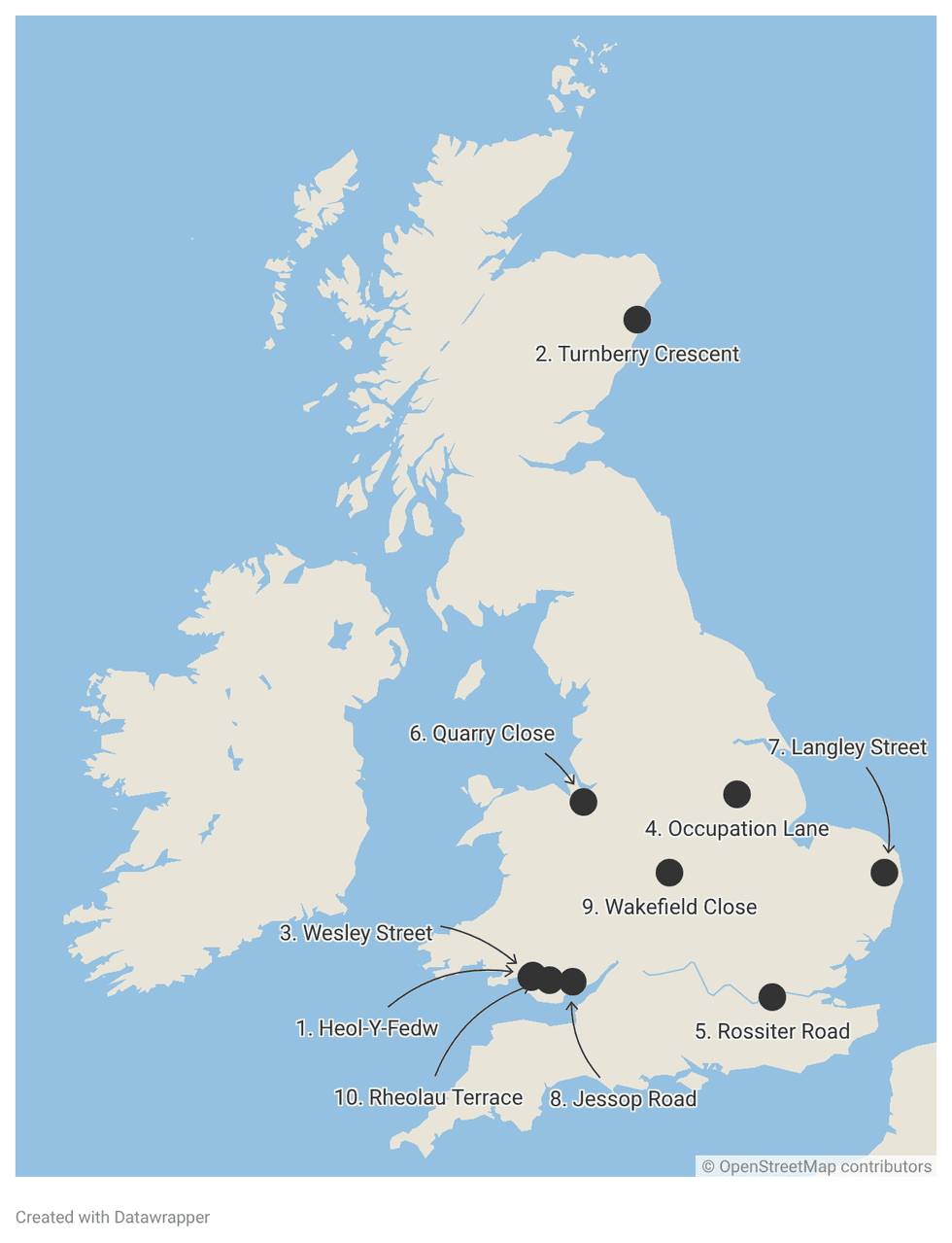
Comparison website Broadband Genie has found the streets in the UK with the slowest average speeds, with some areas dwindling at just 0.81Mbps
|BROADBAND GENIE
The disparity between these two British streets is staggering. Those in Heol-Y-Fedw will see speeds that are a dismal 1,494x slower than those in Derby, where residents enjoy download speeds of 1.21Gbps. The latter is 5.3x faster than the average household broadband connection, as measured by Ofcom.
Comparison website Broadband Genie put together this comprehensive picture of broadband speeds across the UK. It examined data across 12 months between 2024 - 2025, ranking postcodes from slowest to fastest across the country. The slowest streets span the length and breadth of Britain.
The chart includes parts of Scotland, Wales, and various corners of England.
 Full-fibre broadband in the UK has expanded massively in recent months, with 4 out of 5 homes now able to connect to the fastest internet connection. However, you might need to renegotiate your broadband contract with your current provider or switch to a new supplier to take advantage of the full-fibre improvements in your area | GETTY IMAGES
 Here's the complete list of the 10 slowest streets for broadband:
- Heol-Y-Fedw, Cymmer, Port Talbot | 0.81Mbps
- Turnberry Crescent, Bridge of Don, Aberdeen | 1.06Mbps
- Wesley Street, Maesteg | 1.45Mbps
- Occupation Lane, Broadholme, Lincoln | 1.63Mbps
- Rossiter Road, London | 1.74Mbps
- Quarry Close, Handbridge, Chester | 2.23Mbps
- Langley Street, Langley | 2.23Mbps
- Jessop Road, Rogerstone, Newport | 2.62Mbps
- Wakefield Close, Hurley, Atherstone | 2.66Mbps
- Rheolau Terrace, Pontypridd | 2.80Mbps
Wales features heavily on the list, with four streets making the Top 10. Scotland and England both appear, showing that sluggish connections aren't limited to one particular region of the UK. Even the tenth-slowest street, Rheolau Terrace in Pontypridd, manages only 2.80Mbps – still painfully slow by modern standards.
LATEST DEVELOPMENTS
Alex Tofts, a broadband expert at Broadband Genie, urged people not to accept poor connections. He told GB News: "No one should have to put up with sluggish broadband, it’s an essential utility we rely on for essential services, work, education, social interaction and much more.
“Our analysis found that many people on the slowest streets can upgrade their broadband. We encourage anyone who is frustrated with their broadband to check what other options are available in your area with a quick search on our comparison tool. If you’re one of the 8.8 million people out of contract, you can likely get a faster deal and still reduce your monthly bill.
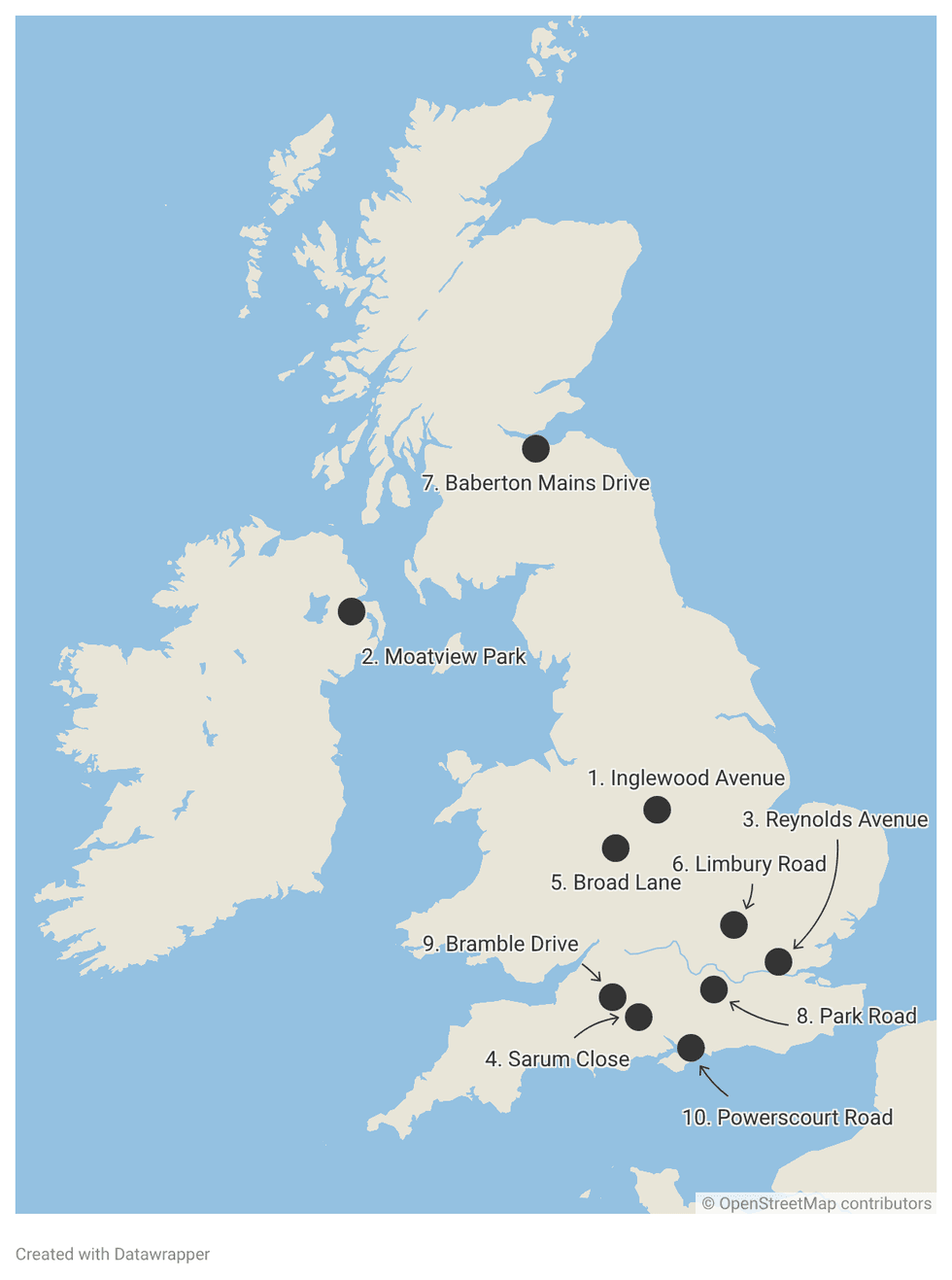
Inglewood Avenue, in Derby boasts the fastest average download speeds in the UK
|BROADBAND GENIE
“The UK’s full fibre landscape is looking stronger and catching up with European rivals. Currently, the UK has 2.4 networks servicing each home and 78% overall full fibre coverage. And take-up is catching up. We’re seeing a competitive market as broadband providers race to encourage more people onto their services and gain market share.
“However, 44,000 premises still can’t get a download speed of at least 10Mb, or what the Government calls a ‘decent’ broadband connection. These homes represent some of the hardest-to-reach areas. If you have no decent fixed-line connection available at your home, consider 4G or 5G home broadband or alternatives such as satellite broadband.”
Across Britain, the picture is steadily getting better.
BT-owned Openreach is working to connect 25 million properties by December 2026. Its cables are used by a swathe of well-known brands, including EE, BT, and TalkTalk, to name just a few.
Full-fibre supplier CityFibre has plans to reach 8 million homes – unlocking some of the fastest speeds available anywhere in the UK. And lastly, smaller independent providers – known as altnets – such as Community Fibre, Hyperoptic and Gigaclear are also expanding their networks.
Full fibre broadband is now available to 78% of households, whilst gigabit-capable broadband reaches 87% of homes – up from 83% the previous year. But it's not all good news.
Around 44,000 premises still can't get a download speed of at least 10Mbps, which the Government calls a 'decent' broadband connection. These homes are in some of the hardest-to-reach areas. The switch to newer, future-proofed, and speedier full-fibre connections has also signalled the end of the traditional landline.