

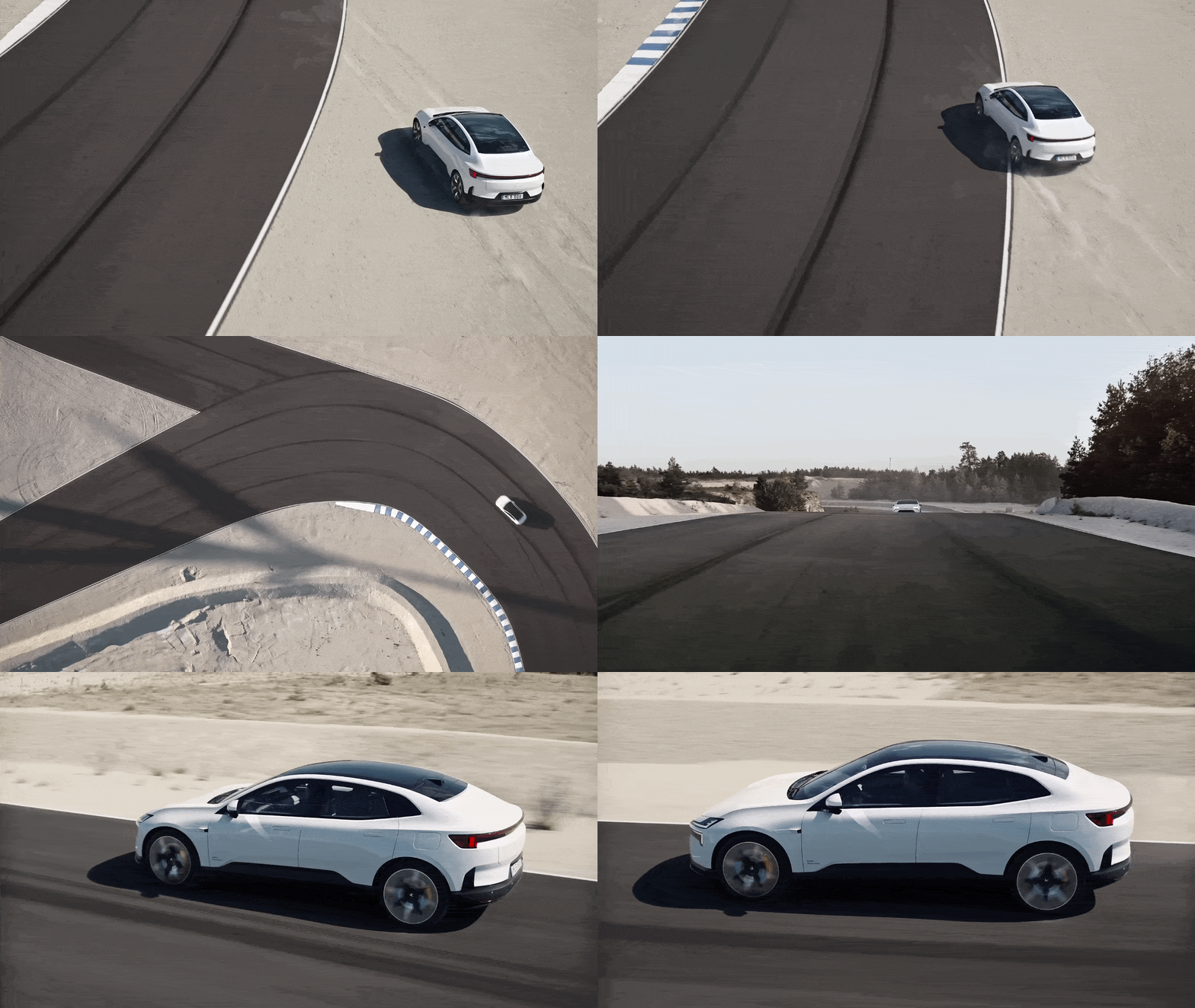








Even compared to its closest competition, there's something distinctly futuristic about the Polestar 4.
It arrives with all of the trimmings you'd expect from a modern EV, including jaw-clenching acceleration (0-60mph is shrugged off in 3.7 seconds), an expansive 15.4-inch touchscreen in the centre stack, mood lighting themed around the planets in our solar system, automatic lane change, and a Heads-Up Display so you can check your current speed without looking away from the road ahead. It's all clever stuff.
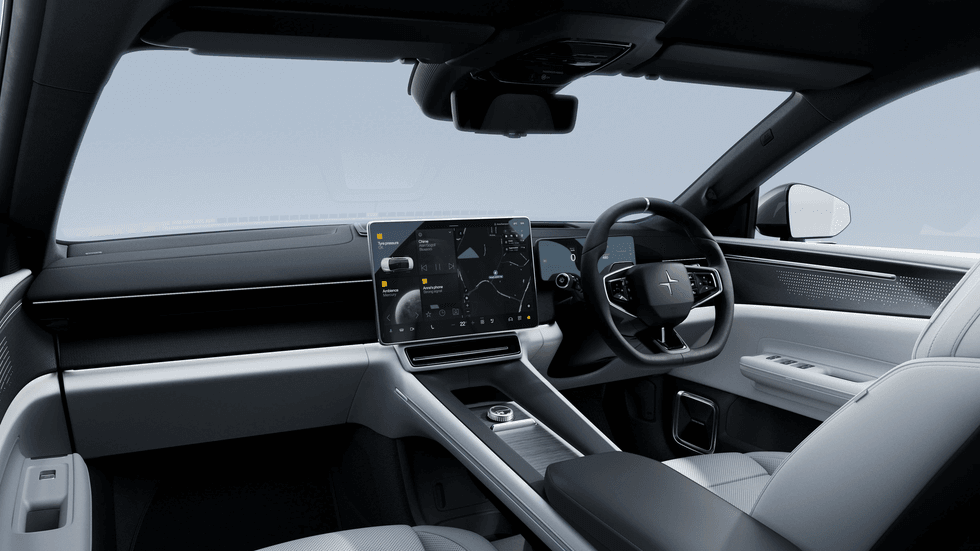
From the inside, Polestar 4 has all the minimalist design, high-resolution screens and sensors that we've come to expect from modern EVs
|POLESTAR PRESS OFFICE
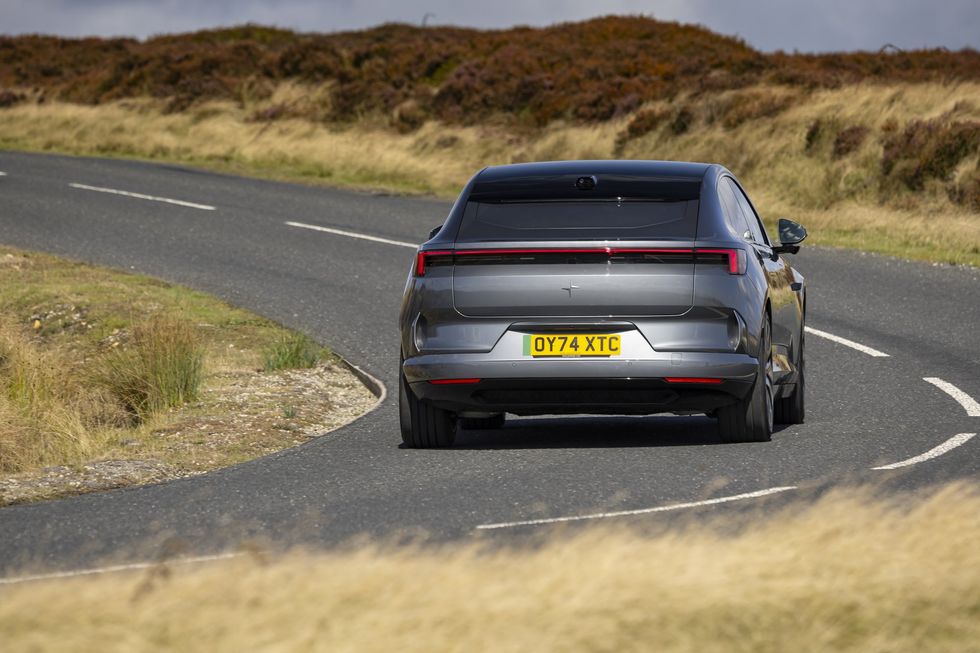
But the team at Polestar didn't stop there, and fitted its newest model with a first-of-its-kind design quirk – the Polestar 4 is the first car without a rear window to be approved for UK roads.
Why did the Swedish EV-maker decide to break with a staple that can be traced back to the very first automobiles as the industry transitioned away from open-air carriages in the early 20th century? According to Polestar, ditching the rear window afforded its designers space to stretch the impressive glass roof, so that it extends beyond the heads of anyone sitting in the backseats.
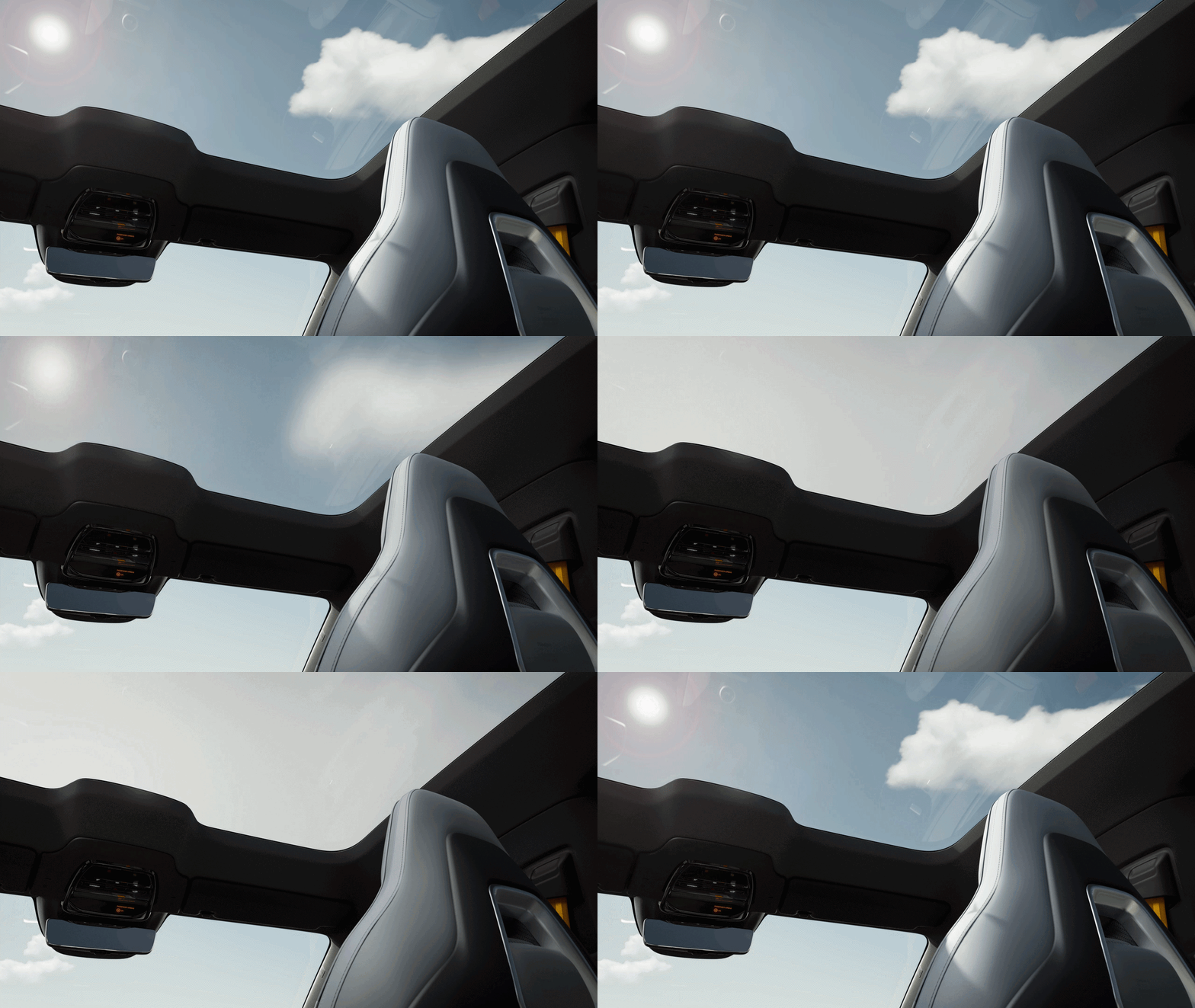
The impressive glass roof is fitted with a layer of liquid crystals to reduce glare. By activating it via the centre display, the glass can turn from opaque to transparent, reflecting light or allowing it to pass through
|POLESTAR PRESS OFFICE | GB NEWS
With the tap of a button, Polestar lets you switch this expansive glass from opaque to transparent, reflecting light or allowing it to pass through into the cabin. From the rear seat of this coupé-SUV, the electrochromic glass roof acts like an optical illusion – giving the sensation of more breathing room to the interior.
But what does the lack of a rear window mean for the driver?
We drove the Polestar 4 over 600 miles across the UK to put this one-of-a-kind design through its paces.
And while we never missed an old-fashioned rear window, and were charmed by the bootful of technical wizardry built into this £67,000 EV, we found the Polestar 4 was let down by the charging infrastructure across the UK, which isn't anywhere near as futuristic as the car we found ourselves trying to top-up.
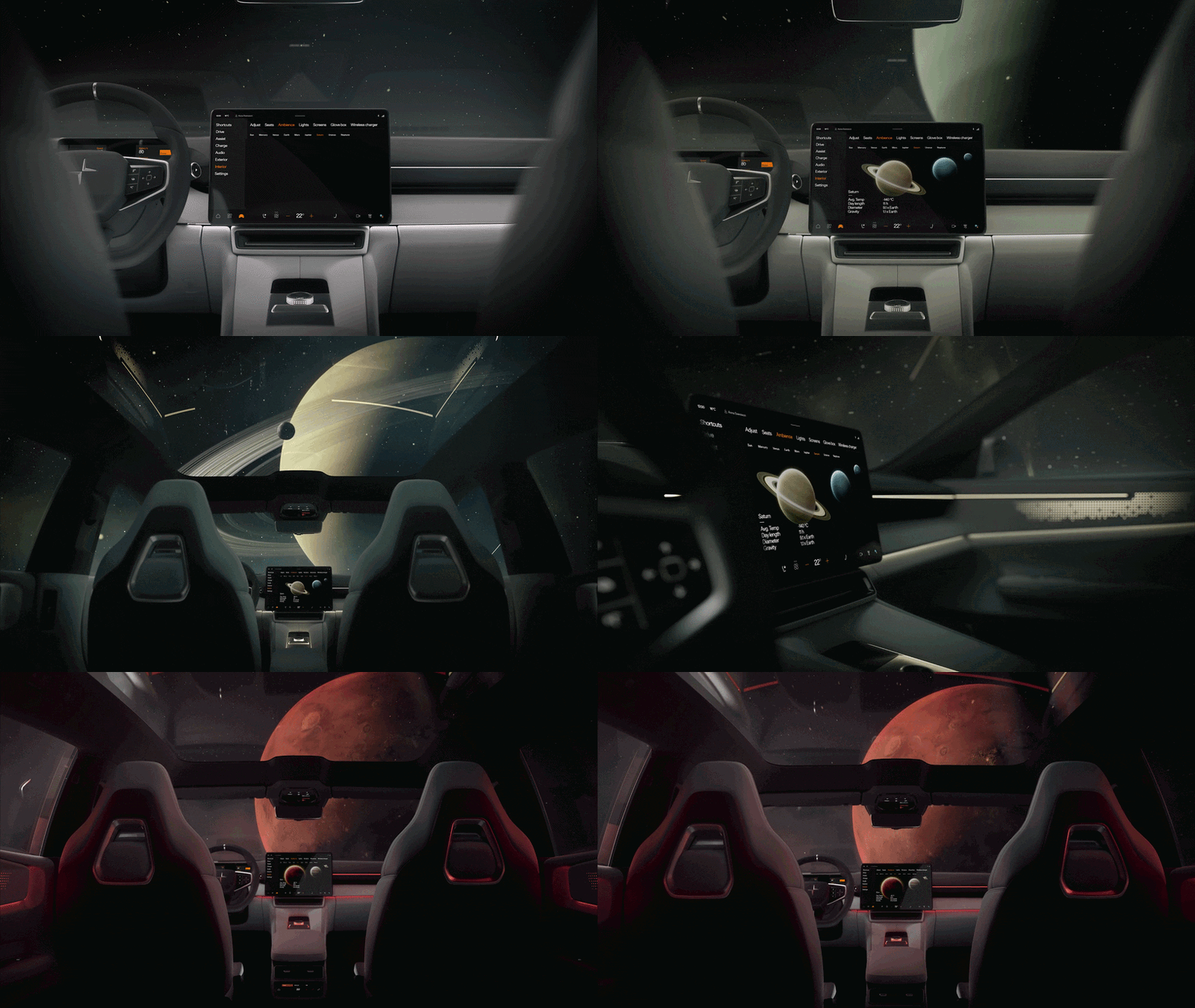
As if the interior of the Polestar 4 wasn't futuristic enough, the designers have fitted the cabin with mood lighting inspired by the planets in our solar system
|POLESTAR PRESS OFFICE | GB NEWS
Admittedly, it did take a few miles to get used to the missing rear window in the Polestar 4. More than a couple of times, we found ourselves peering into the back, only to be greeted with a view of the stylish "ambience lighting" — which uses strips of LEDs to bring colour themes inspired by planets throughout the cabin — instead of the parking space behind us that we expected to see.
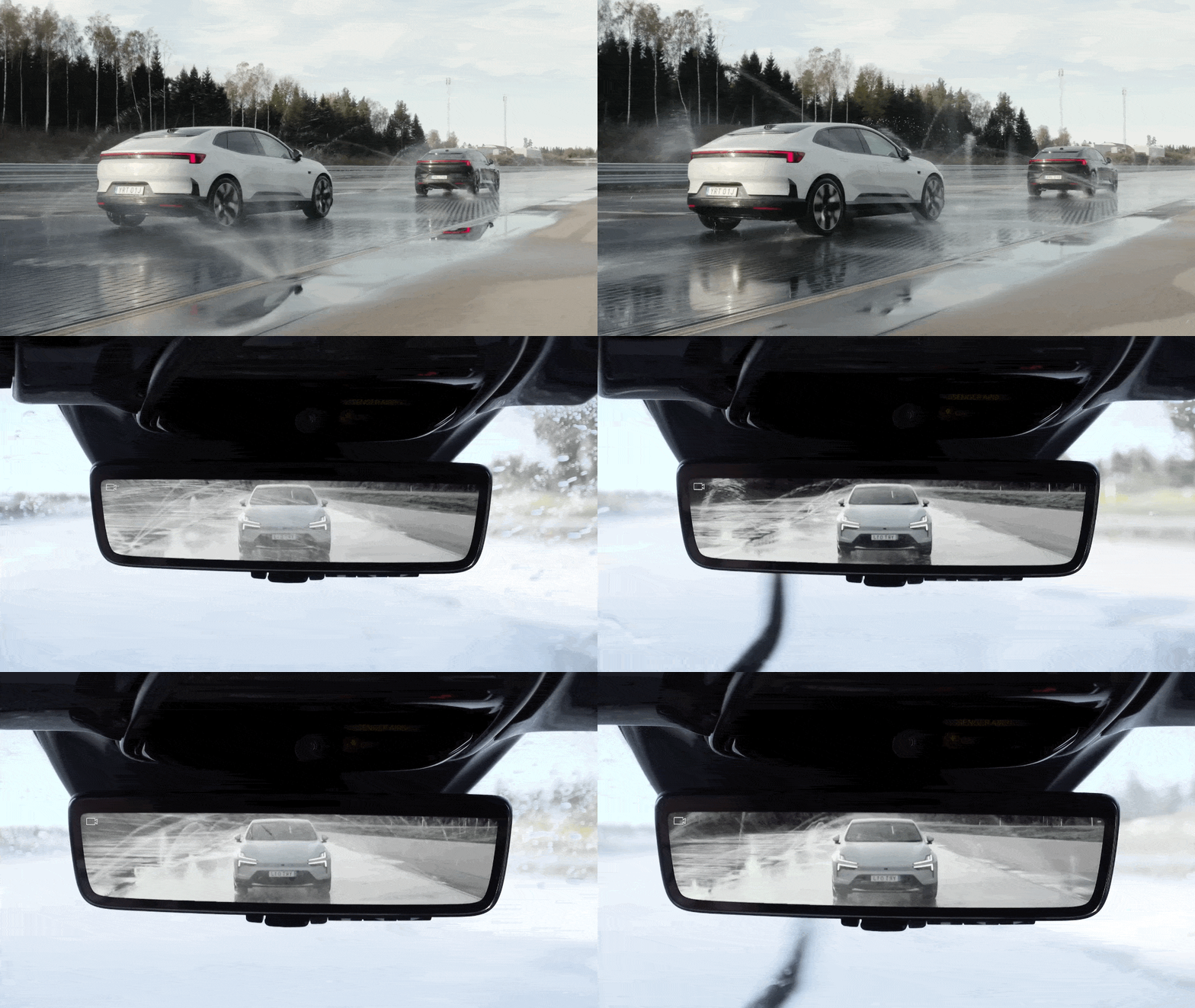
Sometimes, the feed from the camera is a step-up compared to a traditional window, with the Polestar software leveraging the wide field-of-view from the camera to show more of the adjacent lanes and surrounding traffic, reducing the blind spots
|POLESTAR PRESS OFFICE
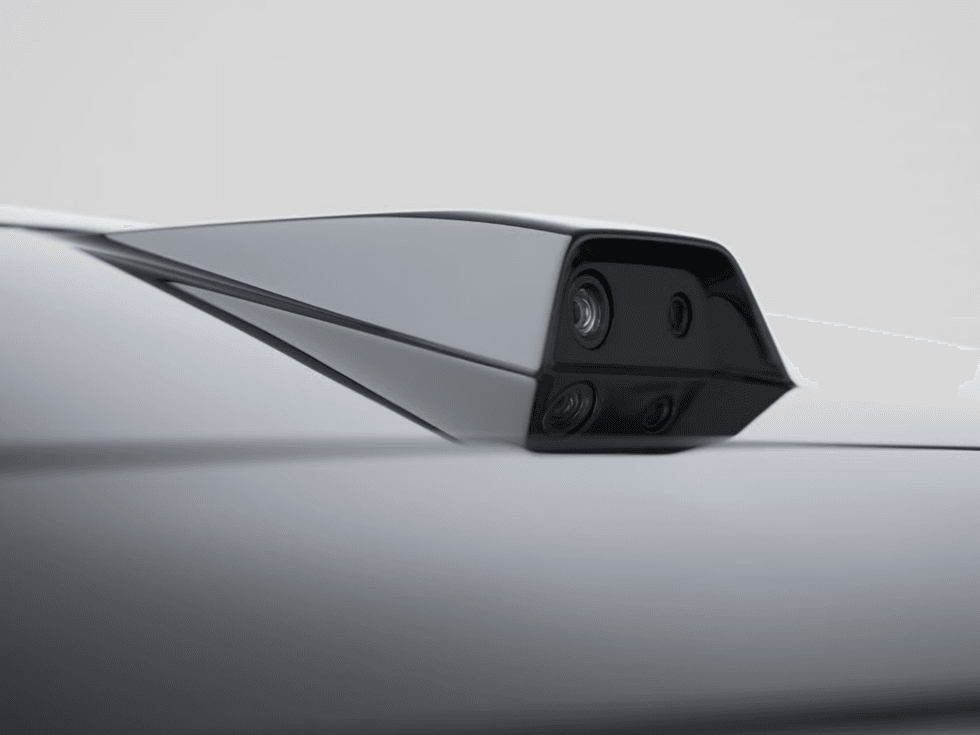
Polestar 4's rear-view mirror is powered by a roof-mounted High Definition camera, which offers a vantage point from just above the boot. This enables a wider field-of-view than you'd experience in most modern cars. It's also positioned to direct airflow away from the lenses — keeping water, dirt, and dust from detracting from your view. For the most part, the sharp and colourful video feed feels like a like-for-like swap with a traditional rear-view mirror.
But there are times when the tech-packed solution from Polestar is an improvement on the traditional mirror.
When changing lanes, Polestar leverages the wide field-of-view from the camera to show more of the adjacent lanes and surrounding traffic, reducing the blind spots. Granted, it's subtle, but arms you with more context whenever attempting a manoeuvre than you'd otherwise get from a standard rearview mirror.
It's part of a longer list of features dubbed the Advanced Driver Assistance System (ADAS) from Polestar, which combines one mid-range radar, an impressive 11x exterior cameras, and 12x ultrasonic sensors to continuously monitor the surroundings and support your awareness.
The designers at Polestar have positioned the HD camera at the top of the boot, with an aerodynamic housing that protects the wide field-of-view from air, dirt and rain
|POLESTAR PRESS OFFICE | GB NEWS
Of course, rearview mirrors aren't just used to monitor what's happening on the road behind you.
Anyone with children will know the importance of being able to check what's happening over your shoulder, and Polestar has accounted for this feature. You can deactivate the feed from the rear-mounted camera by pushing the rearview mirror away from you, letting you see the rear occupants.
The team at Polestar, which is owned by Swedish staple Volvo and behemoth Chinese conglomerate Geely Holding, has clearly put a lot of thought – and no shortage of cutting-edge technology — into this solution. Those who spend most of their time in the rear seats will appreciate the observatory-like view from the newly elongated glass roof, while those in the driver's seat are sure to be taken aback by how unremarkable this design quirk feels on the road.
The subtle switch in viewpoint to account for blind spots when manoeuvring is a really nice touch. We would've loved a few more tricks to showcase why losing the rear window is actually an upgrade, but with a steady stream of over-the-air software updates released by Polestar, these may still be in the works.
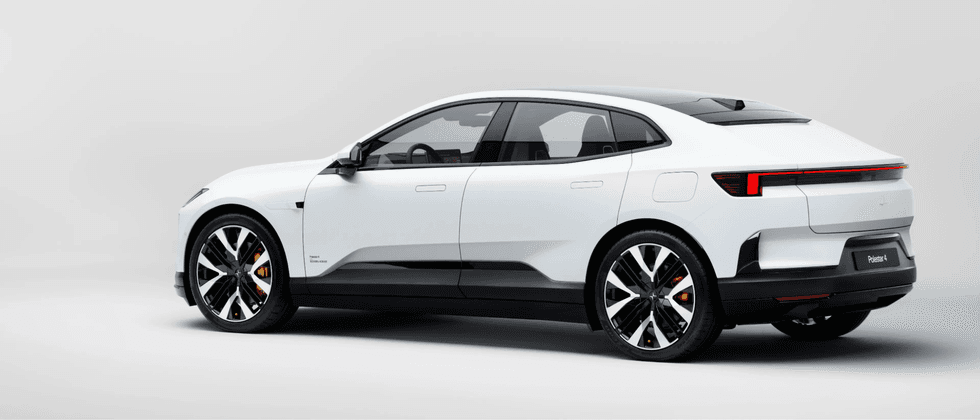
Without a rear window to worry about, something that has been a staple for over 100 years of car design, the team at Polestar were able to stretch the glass rooftop and offer more headroom for those in the back
|POLESTAR PRESS OFFICE
The digital rearview mirror is powered by a high-resolution feed from the camera fitted at the back of the Polestar 4
|POLESTAR PRESS OFFICE
In the meantime, the missing rear window shouldn't put anyone off switching to the Polestar 4.
Elsewhere, the plethora of sensors and cameras dotted around the exterior of the Polestar 4 are used to support the automatic lane change functionality baked into the Pilot Assist mode. This takes its cue from the indicators to move you into the adjacent lane when it's safe to do so. When it works, it's a really convenient feature that helps remove a somewhat monotonous part of motorway driving.
If Polestar's Pilot Assist feature were sitting its DLVA practical exam, we'd have to knock it for "Undue Hesitancy" as there were a few times when it would abort a lane change at the last second – alerting us with a jolt and a beep! and making us look more than a little indecisive to everyone else on the road.
Polestar says this happens whenever its conditions for Pilot Assist aren't met, including your speed being outside of the 35-90mph range, a vehicle blocking the lane that you were hoping to move into, or a change in road markings. That all makes sense, but there were times when it seemed as if none of these conditions changed, but the automatic lane change failed just as the Polestar 4 was gearing itself up to pull out.
Unlike claims from arch-rival Tesla, it's important to note that this is not an autonomous driving system, and is not designed to replace whoever is sitting in the driver's seat.
Polestar requires you to keep your hands on the steering wheel at all times — and has a small camera built into the A-pillar to make sure you're abiding by its rules. Fortunately, the Heads Up Display (HUD) makes it easy to stay fixated on the road ahead.
Like the inside of Iron Man's helmet, this projects glanceable information on the inside of the windscreen, so there's no need to check the vibrant 10.2" LCD screen behind the wheel, nor the iPad-like centre stack screen, which handles all of your in-car entertainment, air-conditioning, heated seats, and more.
LATEST DEVELOPMENTS
It's seriously clever stuff, and there's a range of customisation options, so you can tweak the size and brightness of the text to your liking. In an EV packed with colourful displays that can draw the eye, the HUD is an elegant way to present the information that you need without shifting your eyes from the road.
The only issue? Some of the speed limits flagged by the HUD were wrong. And not wrong by a few miles per hour, we were told by a forceful beep to stay below 30mph on a road with a 50mph speed limit.
Fortunately, making up that difference is a complete joy in the Polestar 4. This is the fastest vehicle produced by the EV maker – even if you didn't know that statistic before getting behind the wheel, it's immediately apparent from the moment that you put your foot down.
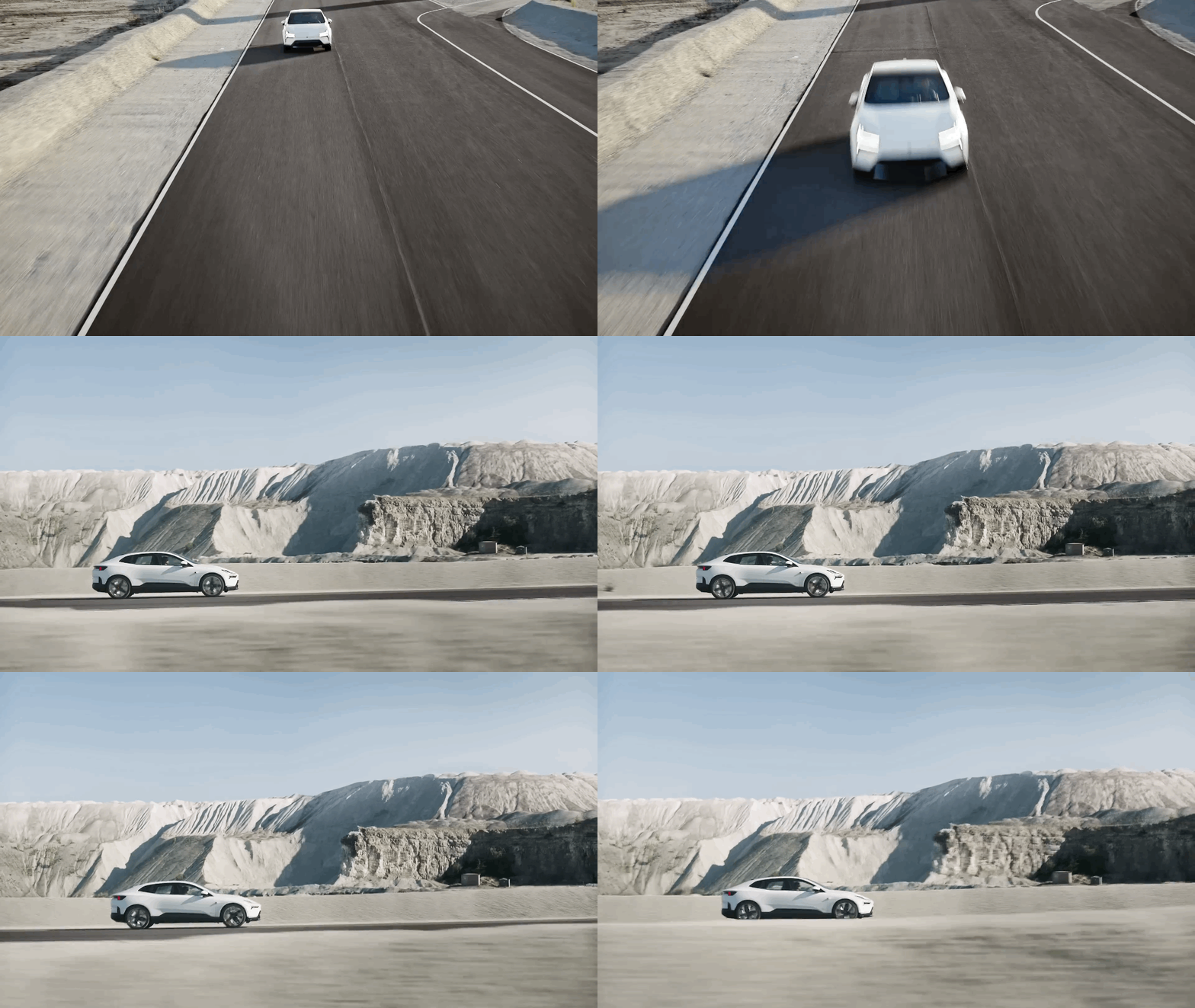
Polestar 4 is seriously fast, so it's probably a good thing the Swedish EV maker has limited the top speed to 124mph in the UK
|POLESTAR PRESS OFFICE | GB NEWS
The Polestar Engineered-performance chassis is catapulted to 60mph 3.7 seconds in the 536bph Dual Motor variant, while the 268bph Single Motor model takes a slightly longer 6.9 seconds. Top speed is limited to 124mph, and it's all too easy to silently reel in that horizon when you put your foot down in the Polestar 4.
This sleek EV eats up motorway slip roads, while the experience inside the cabin remains as quiet and luxurious as a Business Class lounge. It's impressive stuff. Fortunately, that eye-watering speed hasn't come at the expense of total range, which sits at 385 miles for the Single Motor and 367 miles for the speedier Dual Motor model.
That means you'll only have to stop once to charge on the beautiful North Coast 500 road trip in Scotland, or two-and-a-bit stops to recharge to complete the drive from Land's End to John O'Groats.
Of course, there's a long list of real-world factors that can impact that estimated range, including temperature, tyre pressure, driving style, and the amount of luggage you've packed into the 526-litre boot (including the extra 31-litres found under the floor compartment) and 15-litre 'frunk' under the bonnet.
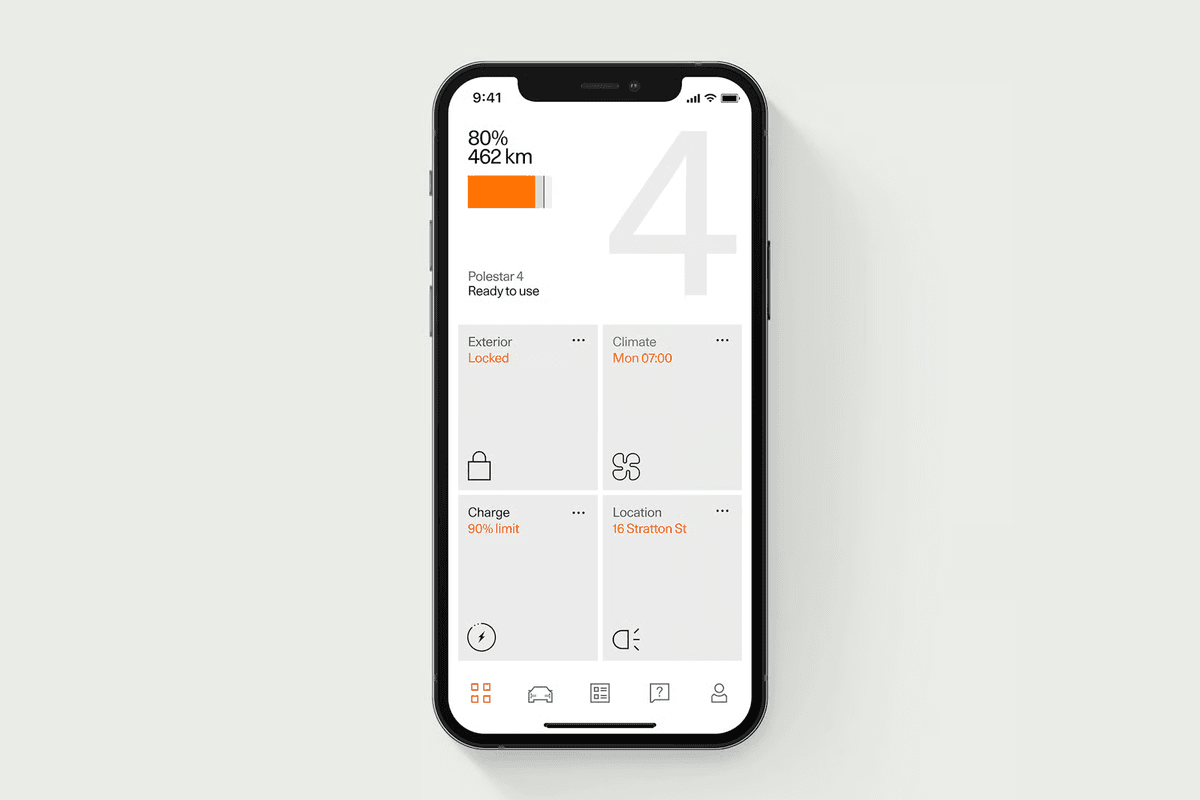
With the Polestar app on your phone, you can monitor the current charge levels from the coffee shop or the comfort of your sofa if you're fortunate enough to have a (significantly cheaper) home charging setup
|POLESTAR PRESS OFFICE
We set off on our first 322-mile journey with the Polestar 4 with 91% charge. We stopped once for a coffee, a quick bite, and a comfort break, and found that the EV had regained over 40% charge in as many minutes. That was more than enough to complete the trip with charge to spare, despite running the air conditioning, listening to music via the impressive 16-speaker Harman Kardon system, charging an iPhone via the built-in wireless charging pad (alas, Magsafe is not supported) and running CarPlay for turn-by-turn directions for the duration of the trip.
It was the sort of dream-like journey that petrolheads cannot fathom is even possible with an EV.
Unfortunately, the return drive wasn't as surreal. While there's no doubt that Polestar 4 feels like a futuristic vehicle plucked from the celluloid of the original Blade Runner, the charging infrastructure across the UK isn't as cutting-edge. With 20% left in the lithium-ion tank, we pulled into Tebay Services (if you know, you know...) to top up, only to find that the only two remaining chargers were broken.
With everyone else plugged in for the foreseeable future, and a queue of other vehicles with red battery icons already starting to form, we drove onto the next services and fitted the CCS connector.
Hoping to recreate the one-and-done experience of the ride a few days earlier, we luxuriated with our coffee, window-shopped in every aisle of the M&S Food Hall, and flicked through a few bestsellers in the TG Jones (née WH Smiths).
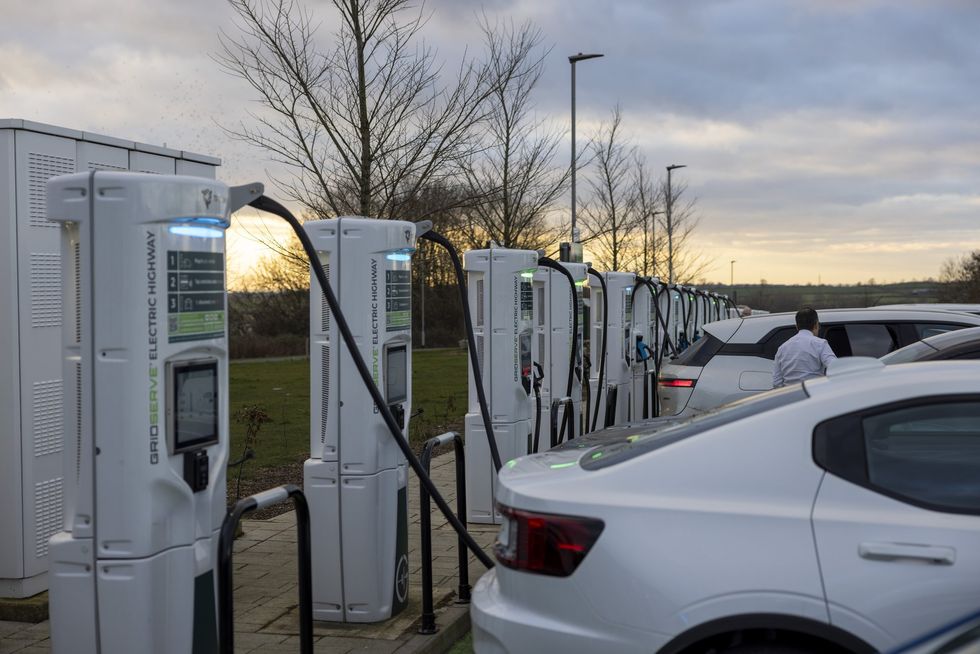
Looks can be deceiving, and not every Electric Vehicle Charging Station is created equally. You'll need to make sure you're plugged into the fastest — and most expensive — chargers to ensure you've got enough mileage to finish your journey without multiple stops
|GETTY IMAGES
With an hour successfully killed, and excited to fire up the Dual Motor with 100% charge, we settled into the driver's seat to discover that we'd plugged into – what we can only assume is – the last remaining slow charger available in a motorway service station in the UK.
The battery had crept up a fraction over 30% and would barely manage a third of the remaining 294-miles before running out of juice. Rather than stay another hour while connected to the speedier chargers from GRIDSERVE, we opted to push on. Unfortunately, this was before the latest update to Google Maps, which monitors your remaining range and spotlights upcoming chargers, so we were doing all of that work manually via voice commands.
The rest of the journey was peppered with multiple stops, leaving our Credit Card with a long list of holding charges from a variety of different companies, and at one particularly low moment, leaving us following directions to a pair of chargers in a Travelodge car park.
Squinting through the smeared fingerprints and glare from the sun to discern the amount of charge shown on the touchscreen of the EV charger doesn't feel futuristic.
And neither does wandering the aisles of TG Jones again until there's enough battery to make it home.
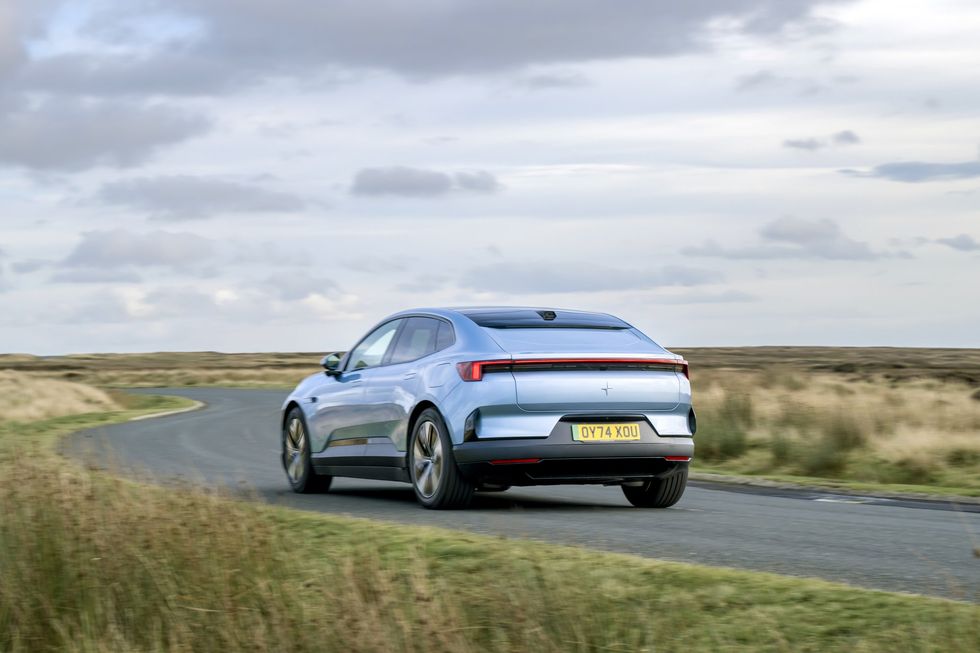
Granted, the missing rear window is one of the first things you'll notice about the Polestar 4, but it's quickly forgotten once you're behind the wheel of this superb EV
|POLESTAR PRESS OFFICE
Of course, none of this is the fault of the incredible team of engineers that put together the Polestar 4. But it's something that anybody considering one of these sleek coupé-SUVs should know before their first road trip.
While the missing rear window has secured plenty of headlines, Polestar 4 is much more than this unique design flourish. Its crisp, minimalist exterior looks stunning from every angle, and the interior oozes Scandinavian minimalism for a luxurious feel. Polestar has added a stylish solar system twist to the door panels, which can be backlit alongside the instrument panel and rear cabin with a variety of planet-themed colourways.
Polestar 4 is seriously fast and a joy to drive.
If you're a fan of gadgets, ditching a traditional internal combustion engine in favour of an EV means you'll enjoy whisper-quiet, eye-watering acceleration and a long list of futuristic features and tricks that would make the latest iPhone blush. Aside from a few software quirks, the Polestar 4 feels like a glimpse at the future.
We just wish that Britain's network of expensive, often-broken, and oversubscribed EV chargers felt as futuristic.