



All products and promotions are independently selected by our experts. To help us provide free impartial advice, we will earn an affiliate commission if you buy something. Click here to learn more








Chances are, you've been hearing more and more about VPNs lately.
Once the sole domain of enterprise users, these privacy-focused applications have gone mainstream — with thousands of Britons now relying on VPNs to unlock shows and films to stream, find cheaper deals on flights and hotels, and bypass strict rules imposed by the Online Safety Act.
Despite the surge in downloads across the UK, not everyone understands what a VPN is or why they might need to take advantage of the best VPN deals. As a result, some might still fall for the glorious mess of half-truths and myths that've somehow survived for years without anyone checking them properly
The reality is refreshingly less dramatic: a VPN can encrypt your internet traffic and change your IP address, but it is not a magic invisibility cloak. It is a privacy and security tool, not a cure-all. Below, we've brought together a handful of the myths about VPNs that you might mistakenly believe.
Subscribe to ExpressVPN for just £1.99 – just 6 pence a day

With its new multi-tier subscription structure, ExpressVPN has never been more affordable
If you want to unlock the ExpressVPN Basic plan, which offers unlimited access to its award-winning reliable and ludicrously speedy VPN servers across the globe, it has cut monthly subscriptions by 80%.
If you sign up for a 12-month plan, you'll be gifted with a generous 4 months of access to the award-winning VPN service for free. That equates to under 6 pence per day!
Get 80% off ExpressVPN Basic
$9.99
$1.99
1. “A VPN makes me completely anonymous”
Close, but not quite.
This is probably the biggest VPN myth of all, and it keeps coming back year after year. A VPN can hide your IP address and all of encrypt your traffic — in fact, the best VPN providers rely on the same military-grade encryption used by the British and US governments — but it cannot erase every trace of you online.
Cookies, logins, browser fingerprints and the information you hand over to websites can still identify you. For example, if you log in to your Facebook account or place an order on Amazon.co.uk, that activity can still be linked back to you — even if you were using a VPN.
In other words: a VPN boosts privacy, but it does not make you vanish.
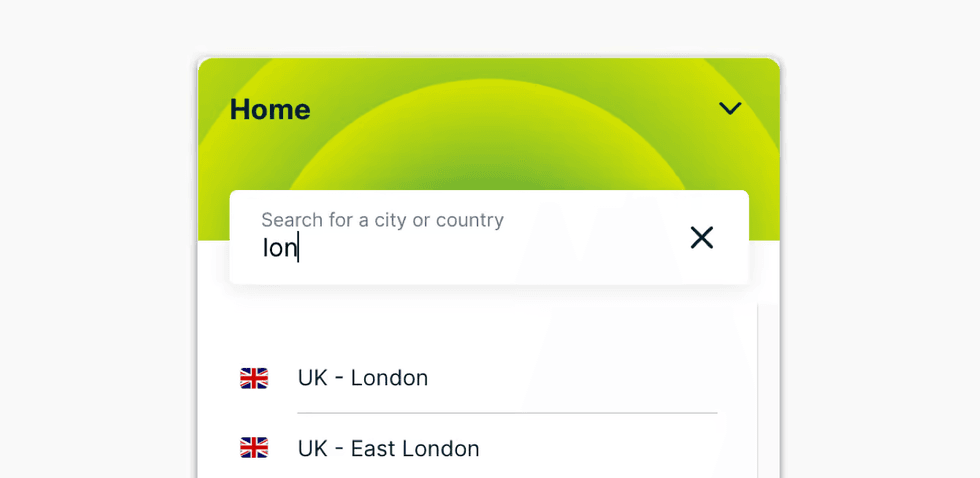 By default, most VPN services will either connect you to the nearest VPN server to your current location, or the last VPN server that you picked | KAPE TECHNOLOGIES PRESS OFFICE
 2. “VPNs are illegal”
This one is a classic scare story. In reality, VPN use is legal in most countries, including the UK, almost all of mainland Europe, the United States, and Canada. Not only that, but anyone who works remotely will most likely have been told they must install and use a VPN on the company laptop.
There are only a few countries on the planet where VPN usage is outright banned. These are North Korea, Turkmenistan, Belarus, Iraq, Iran, China, Russia, Oman, the United Arab Emirates, Turkey, Egypt, and Myanmar.
3. “People only use VPNs for shady stuff”
This is the sort of myth that gets repeated whenever VPNs pop up in conversation: as if the only reason to use one is to sneak around the internet in a (digital) trench coat. But legitimate use cases are everywhere.
Most VPN suppliers highlight their ability to protect your online traffic when using a public Wi-Fi connection, secure communication on sensitive topics, and handle confidential data. Running a VPN will prevent Man-In-The-Middle attacks – a common type of scam on shared Wi-Fi networks, like those provided in coffee shops and airports.
It's the reason that many companies require remote workers to use a VPN, especially larger organisations or companies handling sensitive data. This lets IT departments secure access to internal company systems by creating a private, encrypted connection to tools, servers, databases, or dashboards that are not exposed to the public internet.
VPNs also encrypt internet traffic on public Wi-Fi to reduce the risk of attackers intercepting passwords, emails, or company data on unsecured networks like cafés, protecting customer or financial data by adding an extra layer of security when employees handle sensitive records, payment information, or confidential business documents remotely.
In conclusion, a VPN is not automatically suspicious; often, it is just sensible digital hygiene.
LATEST DEVELOPMENTS
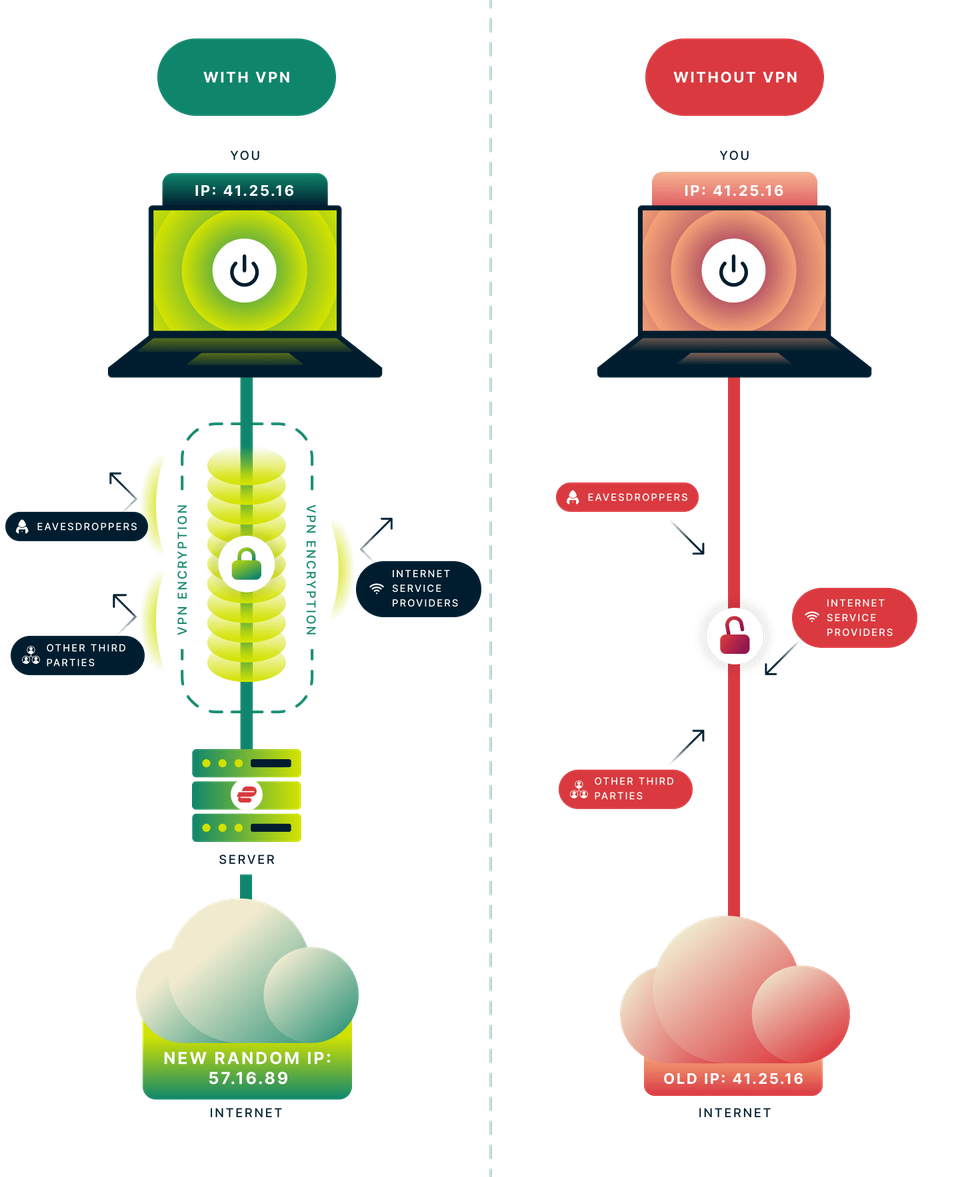 VPNs work by encrypting your online traffic before it's sent over the internet. This prevents your ISP, advertisers, hackers, and fraudsters from tracking your online activity, stealing your personal data, or placing restrictions on you | EXPRESSVPN PRESS OFFICE
 4. “A VPN will absolutely wreck your speed”
A VPN can slow things down, yes. But the idea that it will always turn your full-fibre broadband connection into a sluggish 3G connection from the mid-00s is nonsense.
ExpressVPN says all VPNs have the potential to reduce speed, but the best providers should only knock off more than about 10–20% off your usual internet speeds. The impact will depend largely on the quality of the VPN server and the distance — if you're routing all of your traffic via Japan, then expect more of an impact than a UK-based server. In other words, a decent VPN should feel more like a slight detour than a motorway closure.
5. “A VPN protects me from every cyber threat”
You might've heard people talking about VPNs as if they're a bulletproof vest for anything that could go awry on your laptop, tablet, or smartphone. As incredible as VPNs can be, it can't stop everything.
VPNs can secure your connection online, but it doesn't protect you from malware, phishing, device theft, weak passwords or dodgy websites. You'll still need a decent anti-virus, strong passwords, and two-factor authentication if you want the whole safety package. Fortunately, most VPNs provide these services as add-ons.
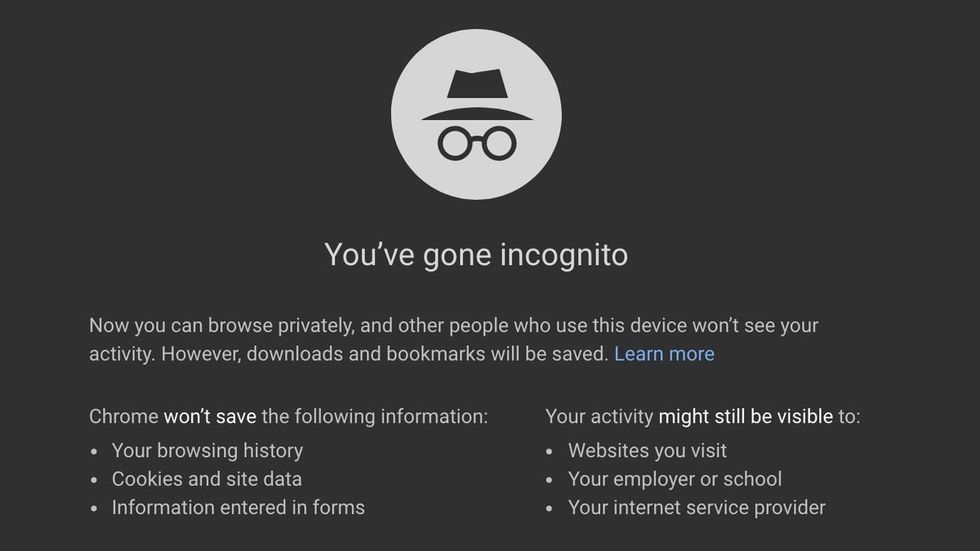
When you load up Google Chrome’s Incognito Mode, it states that, while “other people who use this device won’t see your activity”, it “might still be visible to websites that you visit, your employer or school, and your internet service provider”
|GOOGLE PRESS OFFICE
6. “Incognito Mode does the same job”
Nope. This myth survives because private browsing modes, like Private Browsing in the Safari browser or Incognit Mode in Google Chrome, both sound wonderfully stealthy. However, these modes are not encrypting or hiding your browsing habits in the same way as a VPN can do.
Google says Incognito Mode limits the data stored on your device while browsing, but does not make you invisible to the websites that you visit or your broadband provider. Google even issued a warning to millions of Chrome users to clear up this common misconception.
Whereas so-called "private" browsing modes do not hide your IP address, VPNs encrypt everything before it even leaves your device, so the list of websites that you've visited — and the amount of time you've spent on each one — will be hidden to advertisers, broadband providers, and anyone else on the Wi-Fi network.
Incognito Mode is a good way to avoid anyone else who uses the laptop, tablet, or smartphone spotting your gift-shopping in your browser history — a useful feature, but not a sure-fire way to stop everyone from seeing what you've been visiting online. Meanwhile, VPNs keep everything under lock and key.
7. “All VPNs are basically the same”
This is the one that catches people out when they assume a VPN is a VPN is a VPN. It is not.
Like any software, VPNs are created by hard-working engineers and can vary wildly depending on the quality of the code and the resources put into the service. If you're going to be reliant on a VPN, you will need a service with a clear no-logs policy and independent audits.
You'll also want a service with good-quality VPN servers that don't impact your internet speeds.
The bottom line? VPNs are genuinely useful, but they are useful in a specific way. They help protect your connection, reduce exposure on public networks, and make casual tracking harder. They do not make you invisible, do not solve every security problem, and are definitely not all created equal. Once you stop expecting miracles, a VPN becomes much more useful — and a lot less myth-ridden.