









Formula One is set to undergo its most significant transformation in a generation when the 2026 season commences, with the beloved DRS system being consigned to history.
The sport's governing body has unveiled three entirely new driver-controlled modes that will fundamentally alter how competitors battle for position on track.
These fresh regulations promise to deliver more thrilling wheel-to-wheel action whilst placing greater tactical responsibility in the hands of drivers themselves.
The sweeping changes encompass not merely overtaking mechanisms but extend to chassis design, power units and aerodynamic configurations.
According to F1, the forthcoming modifications will "shake up the order and create new excitement, while delivering incredible racing."
The announcement arrives as motorsport's premier category seeks to maintain momentum following years of growing global interest.
The first of these innovations, Overtake Mode, functions similarly to its predecessor by granting drivers additional electrical power when positioned within one second of a rival at designated detection points.
Crucially, however, competitors may deploy this advantage wherever they choose throughout the lap rather than being restricted to specific zones.
Boost Mode represents an entirely driver-operated energy deployment system available regardless of track position.
This function delivers maximum combined output from both engine and battery at the touch of a button, serving either offensive or defensive purposes.
Teams must exercise strategic prudence, however, as the total energy available remains strictly limited.
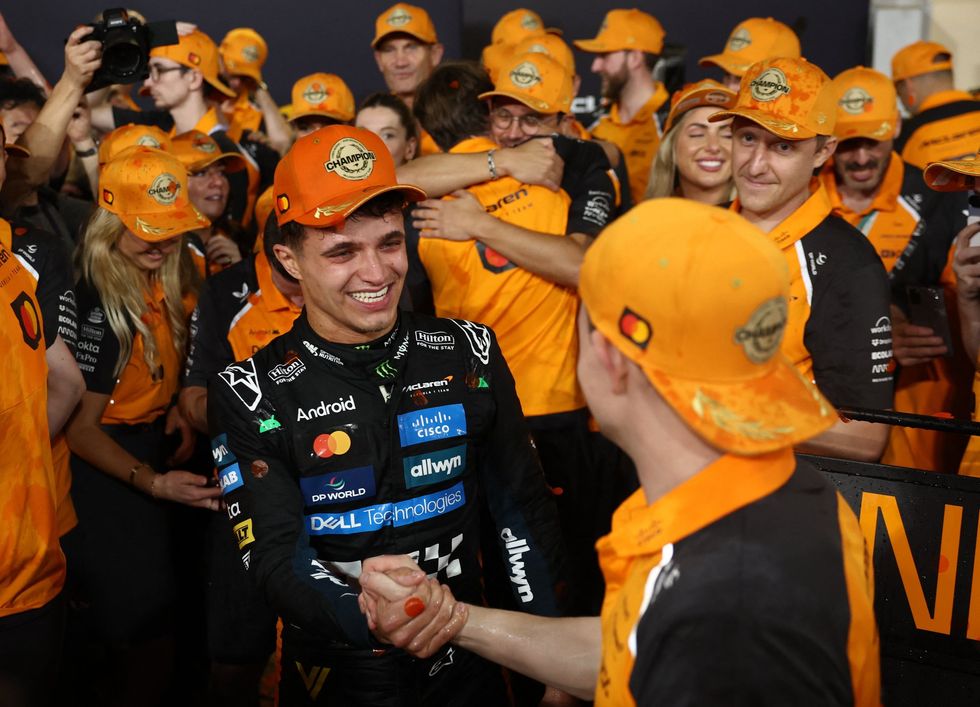
Lando Norris won the World Championship this year
|REUTERS
The third element, Recharge Mode, permits drivers to replenish their batteries using energy harvested during braking, throttle lift-off at straight ends, or through corners requiring only partial power application.
Beyond the new racing modes, the 2026 machinery will be considerably more compact and nimble than current specifications.
The wheelbase shrinks by 20 centimetres to 3.4 metres, whilst overall width reduces by 10 centimetres to 1.9 metres.
Minimum weight drops by a substantial 30 kilograms to 770 kilograms, creating more responsive vehicles.
Active aerodynamics will feature prominently, with movable front and rear wing elements automatically adjusting between "corner mode" and "straight mode" depending on circuit position.
Overall downforce decreases by 15 to 30 per cent following the removal of ground-effect floor tunnels, whilst drag reduces by 40 per cent.
The power unit undergoes equally dramatic revision, with output now split evenly between internal combustion and electrical systems.
This simplified hybrid approach has attracted manufacturers including Ford, Audi and a returning Honda.
The sport has collaborated with the FIA, teams and engineers to develop simplified terminology aimed at helping supporters comprehend the new regulations.
Research conducted by F1 revealed that 13 per cent of current fans remain unaware of what "DRS" actually stands for, despite the system operating for 14 years.
Williams driver Alexander Albon offered his perspective on the forthcoming changes, drawing parallels with electric racing.
"Look at Formula E as a more extreme version as to where we're going to go to," he explained.
"You can see how the drivers manipulate the racing and qualifying and how they deploy and all these kind of things to gain performance."
Albon added: "It's not going to be that extreme, but there will be an element of the drivers who have the brain capacity to understand and facilitate all these demands will go well."