








Venice is facing an invasion of a cannibalistic species of jellyfish, scientists have warned.
The creature, known as the warty comb jelly or sea walnut, is considered be one of the 100 most harmful invasive species across the globe.
Though it is native to the western Atlantic, the species have been present in the Adriatic Sea for around a decade, presenting problems for fisherman as they clog nets.
The creature is now found in the Venice Lagoon, which is visited by millions of tourists every year.
Scientists say its population in the waters may be as a result of climate change, which has made the conditions more favourable for the species.
Researches from the University of Padua and the National Institute of Oceanography and Applied Geophysics say the jellyfish could have a negative impact on other species within the ecosystem in the Venice Lagoon.
They published findings their findings in the journal Estuarine, Coastal and Shelf Science.
"Ongoing climate change may shift the lagoon towards more favourable conditions for this species, potentially intensifying bloom events and their cascading ecological impacts," the scientists wrote.
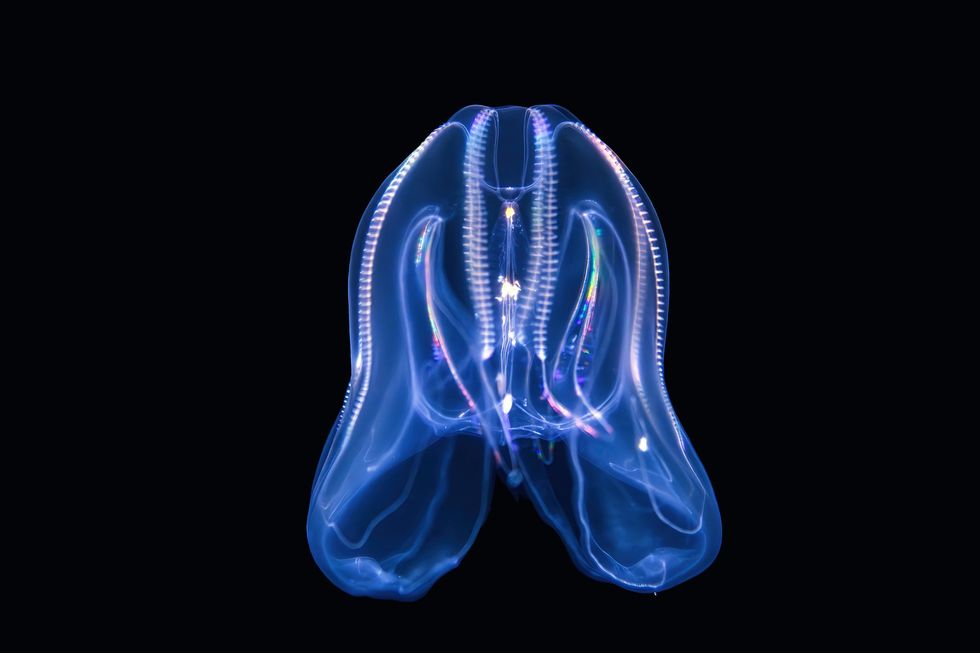
Researchers believe ongoing climate change may have contributed to the species population in Venice
|GETTY
"These findings highlight the need for targeted monitoring and adaptive management to mitigate the ecological and socio-economic consequences of [the species] expansion."
The researchers carried out their study in the species for two years.
The National Institute of Oceanography and Applied Geophysics said: "Researchers were able to establish the primary environmental benchmarks for the survival of this ctenophore species, unveiling a seasonal pattern marked by significant reproductive blooms in late spring and between late summer and early autumn.
LATEST DEVELOPMENTS
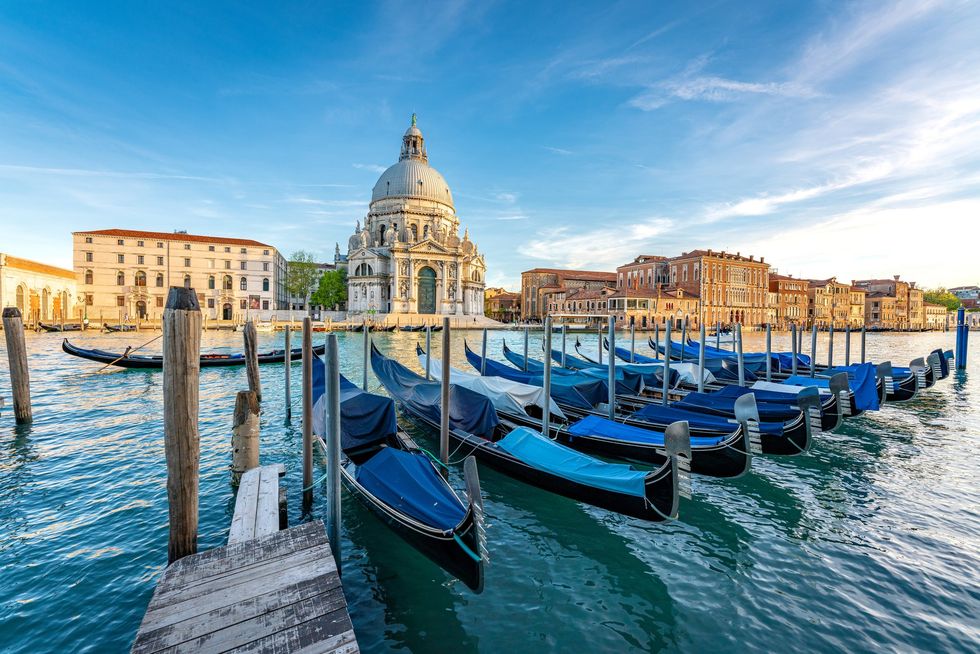
The creature is now found in the Venice Lagoon
|GETTY
"These blooms are likely influenced by elevations in temperature and optimal salinity levels."
The species, which have an oval-shaped and transparent body, first caused disruption in the Black Sea in the 1980s.
The researchers explained: "The first invaded area where the impact of this species was disruptive was the Black Sea, where the first massive bloom was recorded in 1989.
“Favoured by the warming of the sea, the ecosystem experienced a strong regime shift.”
This led to the "collapse" of the European anchovy stock and had "cascading impacts" on fisheries.