










Astronomers have discovered a unidentified object surrounded by a rotating metal cloud in the depths of spce.
Scientists had been tracking a star roughly 3,000 lightyears from Earth - and noticed it growing significantly fainter over time.
The star, designated J0705+0612, is more than two billion years old and resembles our own sun.
Between September 2024 and May 2025, its brightness dropped by a factor of 40, according to the US National Science Foundation's NOIRLab, which announced the findings on Tuesday.
At first, researchers didn't know why.
"Stars like the sun don't just stop shining for no reason," said Nadia Zakamska, a professor of astrophysics at Johns Hopkins University, "so dramatic dimming events like this are very rare."
The swirling cloud of gas and dust spans roughly 120 million miles and is gravitationally tethered to a second object orbiting the star.
Researchers have yet to identify what this object is, though measurements indicate it has a mass several times greater than Jupiter, at minimum.
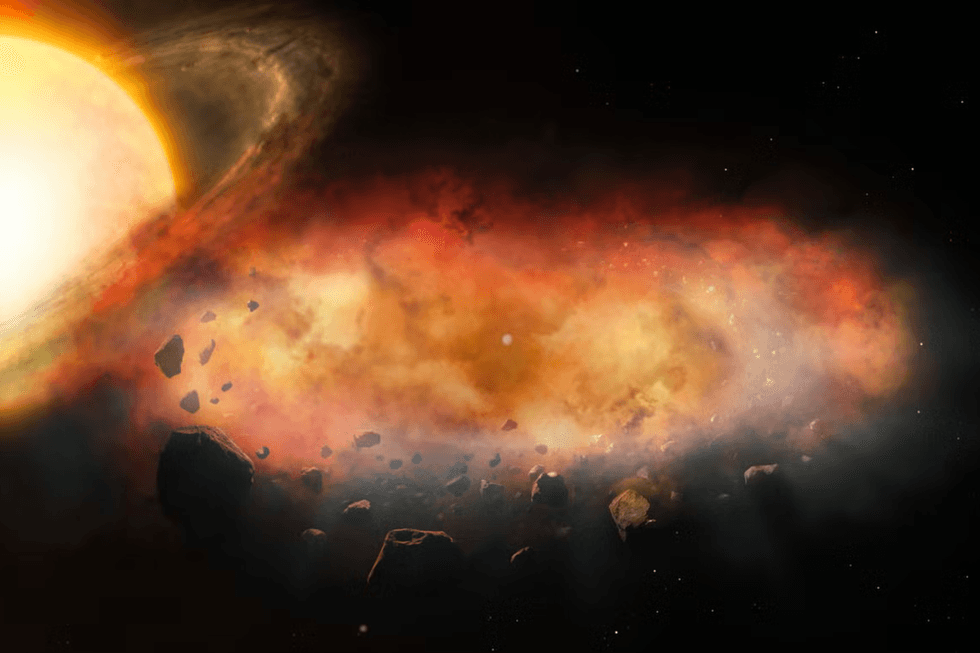
PICTURED: An artist's impression of a disc of planetary debris shrouded by a thick cloud of dust and gas
|INTERNATIONAL GEMINI OBSERVATORY/NOIRLAB
NOIRLab suggested it could be either a brown dwarf or a low-mass star.
Depending on its nature, the cloud would be classified as a circumsecondary or circumplanetary disc.
Such a find is exceptionally uncommon.
Analysis revealed the cloud, currently positioned about 1.2 billion miles from the star, contains multiple metals, including iron and calcium.
The Gemini South telescope in Chile, operated by NOIRLab, made the initial observation, with additional data gathered from New Mexico's Apache Point Observatory and Chile's Magellan Telescopes.
SPACE MYSTERIES - READ MORE:
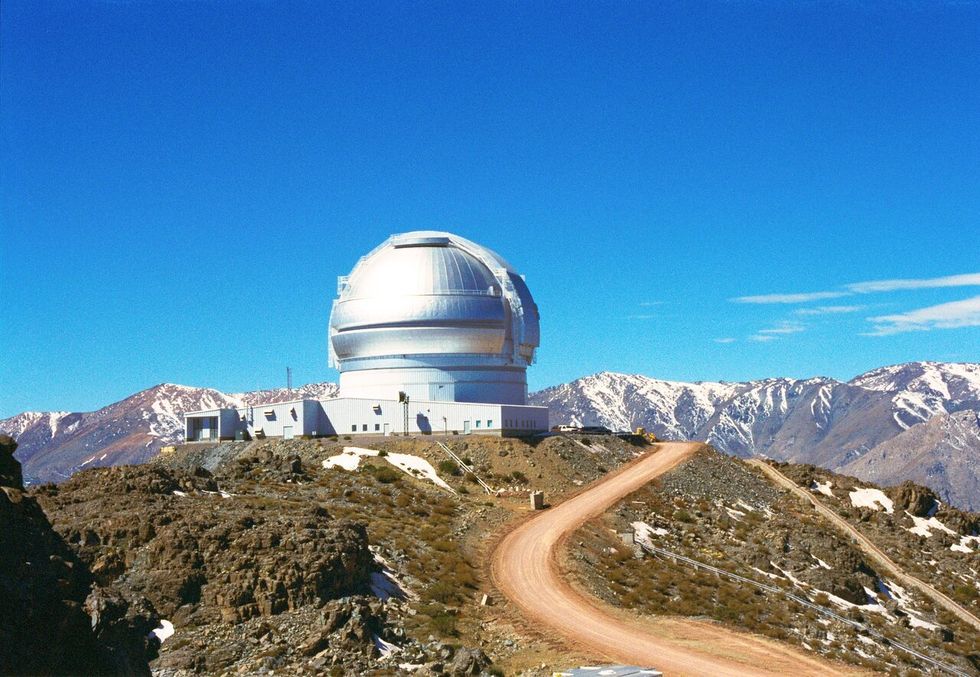
The Gemini South telescope in Chile, operated by NOIRLab, made the initial observation
|NOIRLAB
Scientists then cross-referenced their findings with historical records of the star.
The GHOST instrument aboard Gemini South, which analyses objects through light wavelength patterns, examined the cloud for over two hours.
"The sensitivity of GHOST allowed us to not only detect the gas in this cloud, but to actually measure how it is moving," said Prof Zakamska.
"That's something we've never been able to do before in a system like this."
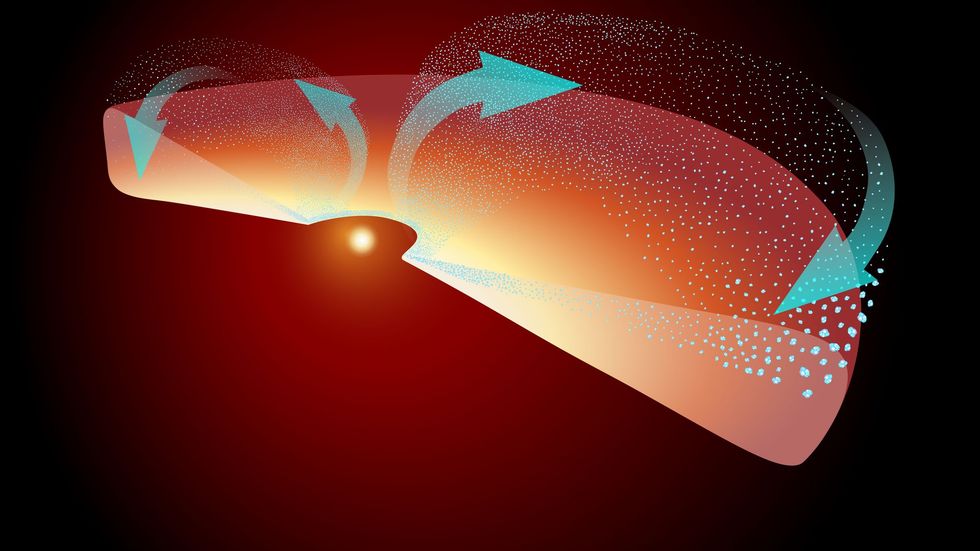
Researchers believe the cloud formed after a collision between two planets - with the dust eventually circling outwards like this
|NASA
She believes the cloud formed following a collision between two planets within the J0705+0612 system.
The finding provides insight into how planetary systems continue to evolve long after their initial formation.
"This event shows us that even in mature planetary systems, dramatic, large-scale collisions can still occur. It's a vivid reminder that the universe is far from static - it's an ongoing story of creation, destruction and transformation," the professor said.