










Jupiter's frozen moons may have arrived in the solar system with the ingredients for life already inside them, according to groundbreaking research from an international scientific collaboration.
The study reveals that Europa, Ganymede, and Callisto likely inherited complex organic molecules at the very moment of their formation, some billions of years ago.
Scientists from the Southwest Research Institute, Aix-Marseille University, and the Institute for Advanced Studies have demonstrated carbon-based compounds containing oxygen and nitrogen—elements vital for living organisms—could have been woven into these celestial bodies from their earliest beginnings.
This challenges the long-held notion that such elements arrived much later via comets and asteroids.
TRENDING
Stories
Videos
Your Say
The findings, published in The Planetary Science Journal and Monthly Notices of the Royal Astronomical Society, suggest these planets were never completely chemically blank.
To understand how these organic compounds formed and migrated through space, the research team constructed sophisticated computer simulations of the ancient solar system.
Their models recreated both the protosolar nebula—the vast cloud of gas and dust that led to our solar system—and the smaller circumplanetary disk that encircled Jupiter.
"By combining disk evolution with particle transport models, we could precisely quantify the radiation and thermal conditions the icy grains experienced," explained Dr Olivier Mousis of the Southwest Research Institute, who led one of the companion studies.
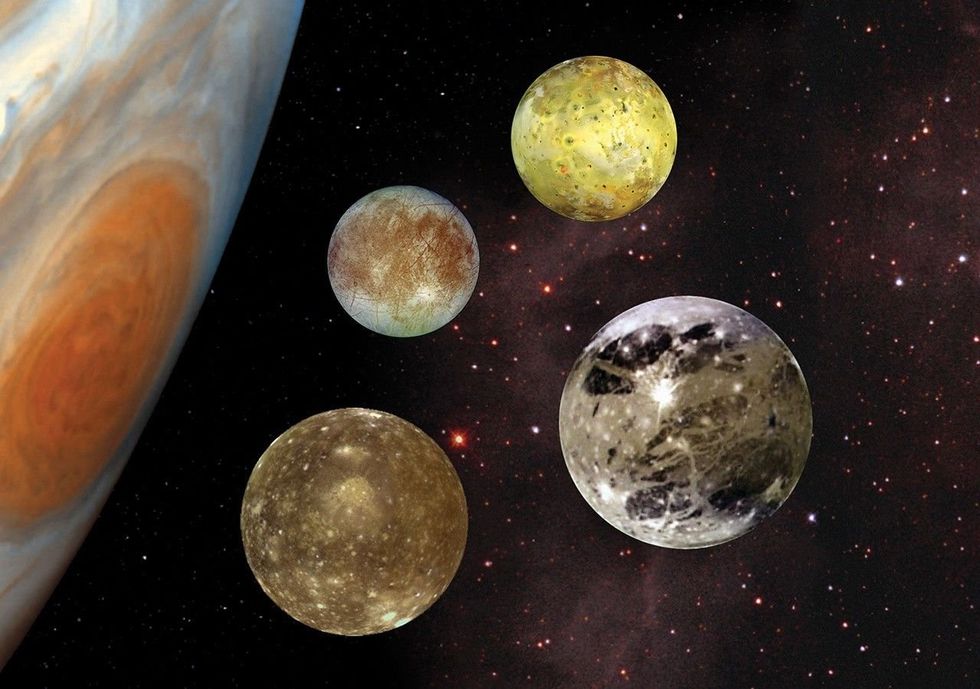
Jupiter's frozen moons may have arrived in the solar system with the ingredients for life already inside them, according to groundbreaking research from an international scientific collaboration
|NASA
The simulations were then validated against laboratory experiments replicating authentic astrophysical conditions.
The research uncovered two distinct pathways through which these vital molecules reached Jupiter's moons.
Some organic compounds originated in the broader solar nebula before travelling inward, whilst others formed locally within Jupiter's own circumplanetary disk, where temperatures proved sufficient to trigger the necessary chemical reactions.
In certain modelled scenarios, nearly half of the icy particles successfully transported freshly synthesised organic molecules into the moon-forming region without significant chemical degradation.
LATEST DEVELOPMENTS
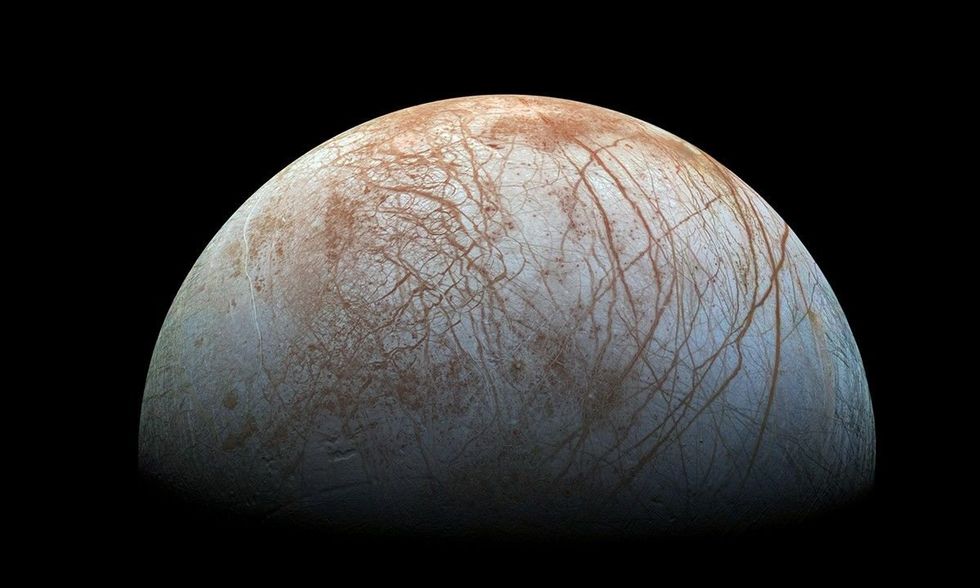
Nasa have long been hunting for signs of life on Jupiter's moon Europa
| NASAThis dual supply mechanism operated billions of years ago, effectively providing a steady stream of life's precursors from multiple directions simultaneously.
The survival of these fragile compounds during their cosmic journey proved crucial to the findings, as radiation and heat in space can readily destroy such delicate molecular structures.
Europa, Ganymede, and Callisto are believed to hold liquid water oceans hidden beneath their frozen exteriors, making them prime candidates in humanity's search for extraterrestrial life.
Should complex organic molecules have been embedded within their construction materials from the outset, these moons may already contain the chemical foundations for prebiotic processes, including amino acid and nucleotide formation.
"Our findings suggest that Jupiter's moons did not form as chemically pristine worlds," said Dr Mousis.
"Instead, they may have accreted, or accumulated, a significant inventory of COMs at birth, providing a chemical foundation that could later interact with the liquid water in their interiors."
Nasa's Europa Clipper and the European Space Agency's Juice spacecraft are presently en route to investigate these moons.
"Establishing credible pathways for COMs formation and delivery provides scientists with a critical framework for interpreting upcoming measurements of Jupiter's surface and subsurface chemistry," Dr Mousis noted.
Our Standards: The GB News Editorial Charter