










Nasa has announced a major overhaul of its Artemis programme, inserting an additional mission before astronauts attempt to land on the Moon for the first time since the Apollo era.
Under the original timeline, Artemis II would carry a crew around the Moon in March, followed by a lunar landing with Artemis III in 2028.
That schedule has now been significantly revised.
Artemis III will instead remain in low-Earth orbit in 2027, where astronauts will rehearse docking with a lunar lander rather than descending to the surface.
TRENDING
Stories
Videos
Your Say
Nasa insists the extra step will not delay its broader ambitions, with one - or possibly two - Moon landings still targeted for 2028 under Artemis IV and V.
Administrator Jared Isaacman outlined the reasoning at a press conference, warning against long gaps between missions.
He described the previous approach as “not a pathway to success".
"You don't go from one uncrewed launch of SLS [Artemis I], wait three years, go around the Moon [Artemis II], wait three years and land on it," Mr Isaacman said.
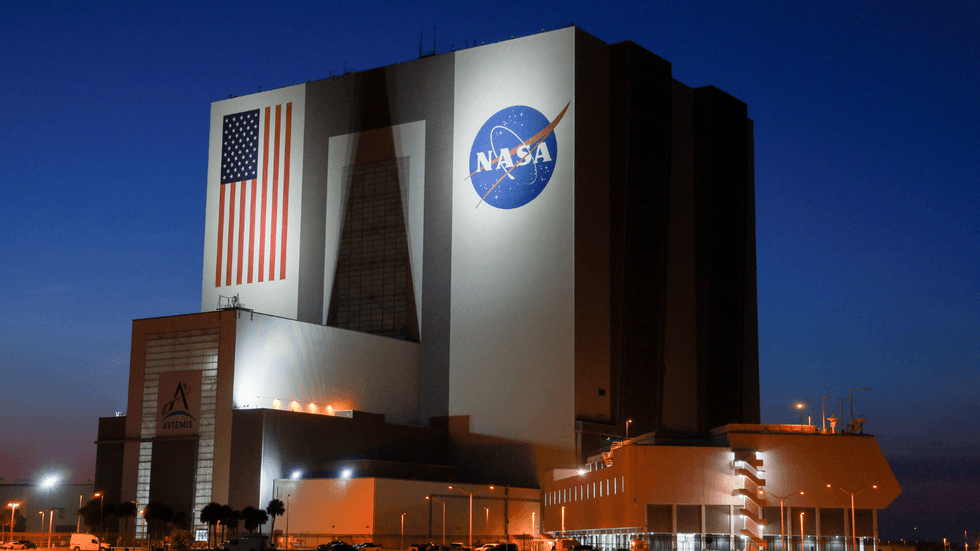
Nasa insists the extra step will not delay its broader Moon landing ambitions
|GETTY
He added that it would be safer to test critical systems closer to Earth.
"I would certainly much rather have the astronauts testing out the integrated systems of the lander and Orion in low-Earth orbit than on the Moon," the US space agency administrator said.
Mr Isaacman also highlighted the opportunity to test spacesuits before astronauts rely on them during surface operations.
Meanwhile, Artemis II - which will carry four astronauts around the Moon’s far side - has faced technical setbacks.
SPACE - READ THE LATEST:

Nasa Administrator Jared Isaacman described the space agency's previous approach as 'not a pathway to success'
|GETTY
A helium leak in the Space Launch System rocket forced Nasa to delay a planned March launch.
The rocket has since been rolled back to the Vehicle Assembly Building at Kennedy Space Center in Florida for repairs.
April is now the earliest possible launch window, though the exact timing will depend on the progress of the fixes.
A key piece of the lunar strategy remains unresolved - the choice of landing vehicle.
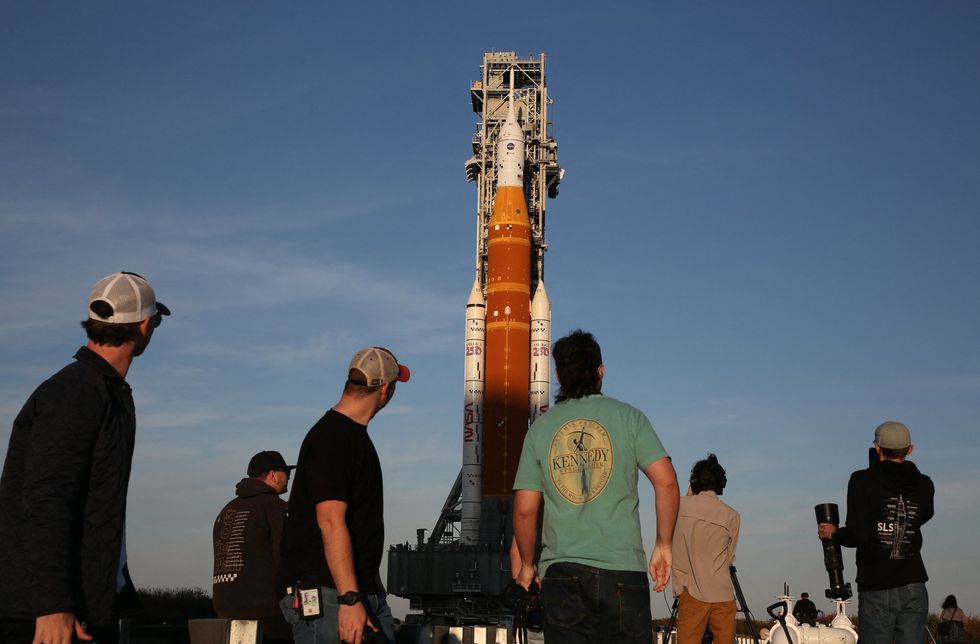
PICTURED: Mobile launcher 1 containing the massive Artemis II Space Launch System (SLS) rocket
|GETTY
SpaceX is contracted to build the lander using its Starship rocket, but development delays have prompted NASA to request a faster proposal.
Jeff Bezos’s Blue Origin has also been asked to accelerate its rival lander timeline.
The low-Earth orbit docking test could involve either or both spacecraft.
The shake-up comes as competition intensifies in the new space race, with China advancing towards its goal of landing astronauts on the Moon by 2030.
Both Washington and Beijing are targeting the lunar south pole, vying for prime territory to establish a long-term presence.
Our Standards: The GB News Editorial Charter