










Scientists using the James Webb Space Telescope (JWST) have made an unprecedented breakthrough, capturing the most distant supernova ever recorded in the cosmos.
The stellar explosion, catalogued as SN in GRB 250314A, took place when our universe was merely 730 million years old, situating it firmly within the reionisation epoch.
This period marks a crucial phase in cosmic history when the earliest stars and galaxies were only beginning to emerge.
The discovery, detailed in the journal Astronomy & Astrophysics this month, offers astronomers their first direct glimpse at the violent death of a massive star from this ancient era.
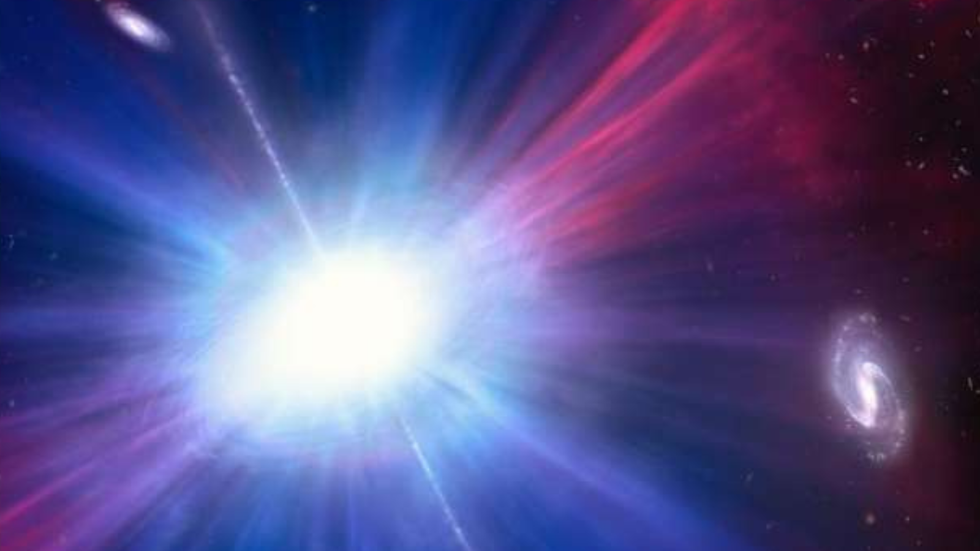
The stellar explosion, catalogued as SN in GRB 250314A, took place when our universe was 730 million years old
|NASA
The initial alert came on 14 March 2025, when the space-based multi-band astronomical Variable Objects Monitor, known as SVOM, registered an intense burst of high-energy radiation classified as a long-duration gamma-ray burst.
Astronomers at the European Southern Observatory subsequently used the Very Large Telescope to verify the extraordinary distance of the event.
The pivotal observations arrived roughly 110 days following the initial burst, when researchers directed JWST's Near-Infrared Camera towards the target location.
This allowed the team to distinguish the supernova's light from the dim galaxy in which the dying star had resided.
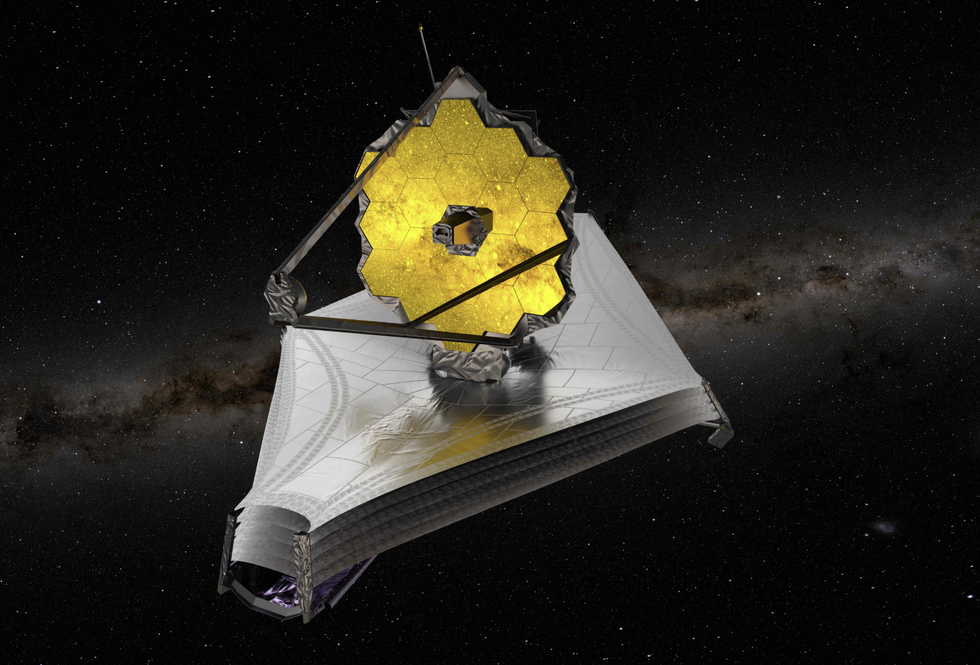
Scientists made the unprecedented breakthrough by using the James Webb Space Telescope
| ESADr Antonio Martin-Carrillo, an astrophysicist at UCD School of Physics and co-author of the study, explained the importance of the finding.
"The key observation, or smoking gun, that connects the death of massive stars with gamma-ray bursts is the discovery of a supernova emerging at the same sky location," he said.
He noted that the vast majority of supernovae studied to date have been relatively close to Earth, making this ancient example exceptionally valuable.
"Using models based on the population of supernovae associated with GRBs in our local universe, we made some predictions of what the emission should be and used it to propose a new observation with the James Webb Space Telescope.
SPACE - READ THE LATEST:
The research team excluded the possibility of a super luminous supernova event
|GETTY
"To our surprise, our model worked remarkably well and the observed supernova seems to match really well the death of stars that we see regularly."
The analysis revealed that this ancient explosion bears a striking resemblance in luminosity and spectral characteristics to SN 1998bw, a well-documented supernova linked to gamma-ray bursts in our cosmic neighbourhood.
This unexpected similarity indicates that the massive star which triggered GRB 250314A was fundamentally comparable to nearby stellar progenitors, despite the early universe's markedly different conditions, including significantly lower metallicity levels.
The research team also excluded the possibility of a super luminous supernova event.
These results upend previous assumptions that primordial stars would produce distinctly different explosions.
The astronomers intend to conduct additional JWST observations within the next two years to fully characterise the host galaxy once the supernova fades.
Scientists estimate that billions of supernovae are occurring at any given time across the observable universe.
The largest supernova ever detected, SN 2006gy, reached a peak brightness roughly 100 billion times that of the Sun..
Our Standards: The GB News Editorial Charter