









Antarctica's Thwaites glacier, widely known as the "doomsday glacier," stands on the brink of a significant transformation as its eastern ice shelf prepares to detach.
Scientists at the British Antarctic Survey have taken the unusual step of drafting a press release in advance to announce the shelf's eventual collapse.
"Its final demise could happen suddenly, and to avoid being caught on the hop, we have already prepared an 'obituary' press release," says Rob Larter, of the British Antarctic Survey.
The glacier, roughly equivalent in size to Britain, currently contributes four per cent of global sea level rise.
Its potential collapse threatens to trigger a chain reaction throughout the West Antarctic ice sheet, which could ultimately push sea levels up by 3.3 metres worldwide.
Satellite imagery reveals the ice shelf is fragmenting at an alarming pace, with vast sections disintegrating rapidly.
"Suddenly, large areas are just falling to pieces," says Christian Wild, from the University of Innsbruck in Austria. "It looks like a windscreen that's shattering."
Massive cracks have emerged around the pinning point, where an underwater ridge once anchored the floating ice in position.
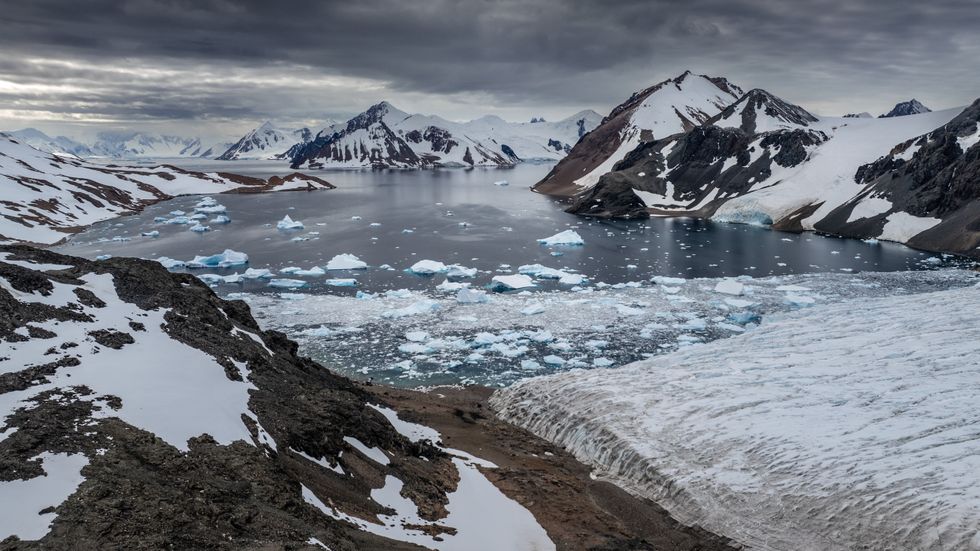
The Antarctic region is infamously uninhabitable
| GETTYKaren Alley, at the University of Manitoba in Canada, has witnessed the deterioration firsthand.
She said: "It's dramatic. I was there in 2019/2020 and when I look at the satellite images now, I don't recognise the shelf. There are huge gashes where there used to be none."
The structure has weakened considerably due to melting caused by shifting ocean currents, transforming what was once a robust barrier into a fractured mass.
The velocity at which the ice shelf moves has increased threefold between January 2020 and January 2026, now exceeding 2,000 metres annually.
LATEST DEVELOPMENTS
- Antarctic explorers left stunned as strange 'brown landmass' emerges from remote ocean depths
- Antarctica's hidden secret exposed by scientists as incredible discovery reveals exactly what is concealed beneath the ice
- Science breakthrough as Antarctic mystery unlocked after melting of rare 1.5 million-year-old ice
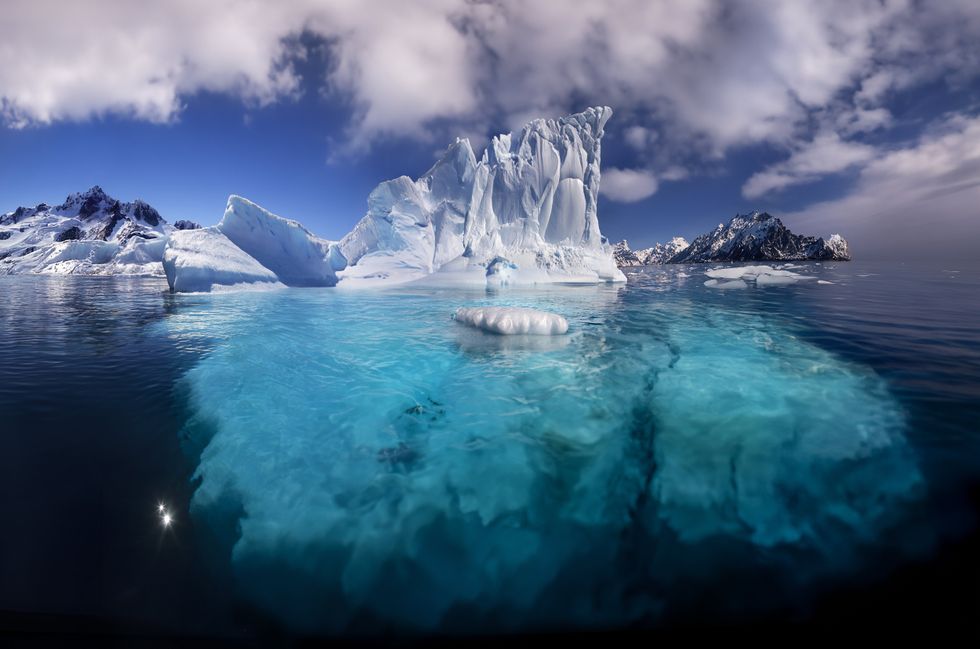
An ice shelf from a glacier the size of Britain is breaking apart
| GETTY"It's essentially in free fall now," says Mr Wild, noting the pace has quickened further over the past five months.
Fresh rifts have appeared along the grounding line, where the glacier transitions from land to floating ice.
Ted Scambos, a researcher the University of Colorado at Boulder, notes these fractures began forming as the shelf's movement accelerated significantly in recent years.
Research due for publication shortly indicates the glacier's flow behind the shelf has surged by approximately 33 per cent since 2020, demonstrating the buttressing effect has largely vanished.
Scambos emphasises this represents a gradually developing crisis rather than an immediate emergency, with consequences likely to materialise over coming decades.
Projections suggest that by 2067, the glacier will shed around 190 gigatonnes of ice each year, representing a 30 per cent increase from current losses and matching Antarctica's total present-day ice loss.
The neighbouring Pine Island Glacier is experiencing similar rapid deterioration, with its own ice shelf breaking apart.
"Ice shelves are only really stable when it's quite cold," says Ms Alley. "The ocean has to be cold and the atmosphere has to be cold. But we're warming the world and we're losing the ice shelves, and that's exactly what you'd expect."
Scientists have monitored ice shelf destabilisation since the 1990s, with the current trend marking a departure from natural cycles of iceberg calving.
The consequences will reshape coastlines across the planet for generations to come.
Our Standards: The GB News Editorial Charter