









Antarctic explorers were left stunned after they discovered a "brown landmass" emerging from remote ocean depths.
A team of 93 scientists aboard the German research vessel Polarstern stumbled upon a previously unknown island on the continent's Weddell Sea.
The crew from the Alfred Wegener Institute made the unexpected find while seeking refuge from tumultuous weather near Joinville Island.
Nautical charts had flagged the area as containing unspecified navigational hazards, with the mysterious landmass only appeared to be nothing more than an unusually discoloured iceberg at first.
However, upon closer examination, researchers realised they were looking at solid rock rather than ice.
Simon Dreutter, an underwater mapping specialist at the institute, described the incredible moment of his team's discovery.
He recounted how he "scoured all the coastlines" before he returned to the bridge.
Mr Dreutter continued: "Looking out of the window, we saw an 'iceberg' that looked kind of dirty," he noted. "On closer inspection, we realised that it was probably rock.
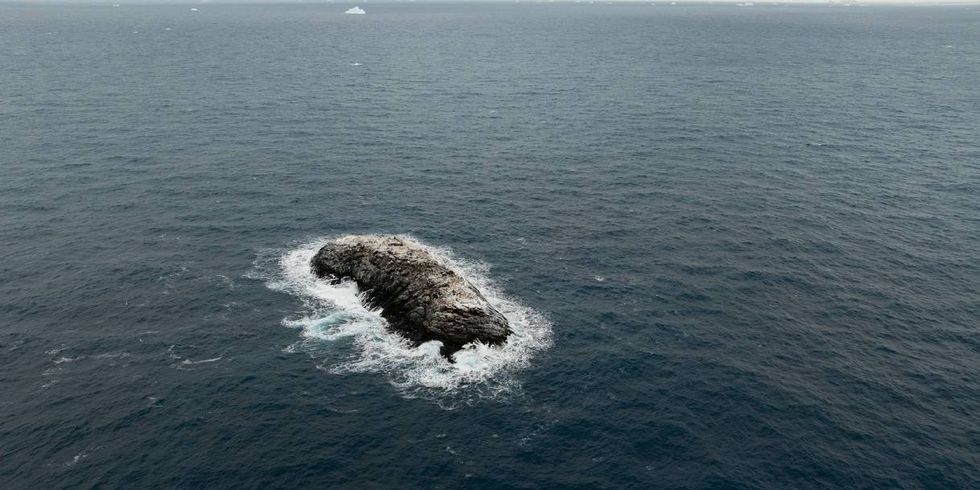
Scientists believed the island to be nothing more than an iceberg at first
|ALFRED WEGENER INSTITUTE/CHRISTIAN HAAS
"We then changed course and headed in that direction and it became increasingly clear that we had an island in front of us."
The vessel carefully approached the landmass, eventually positioning itself within 150 metres of the rocky outcrop.
Drone footage subsequently confirmed the island's massive dimensions.
The rocky formation stretches 130 metres in length and spans 50 metres across, rising approximately 16 metres above the waterline.
LATEST SCIENCE NEWS:
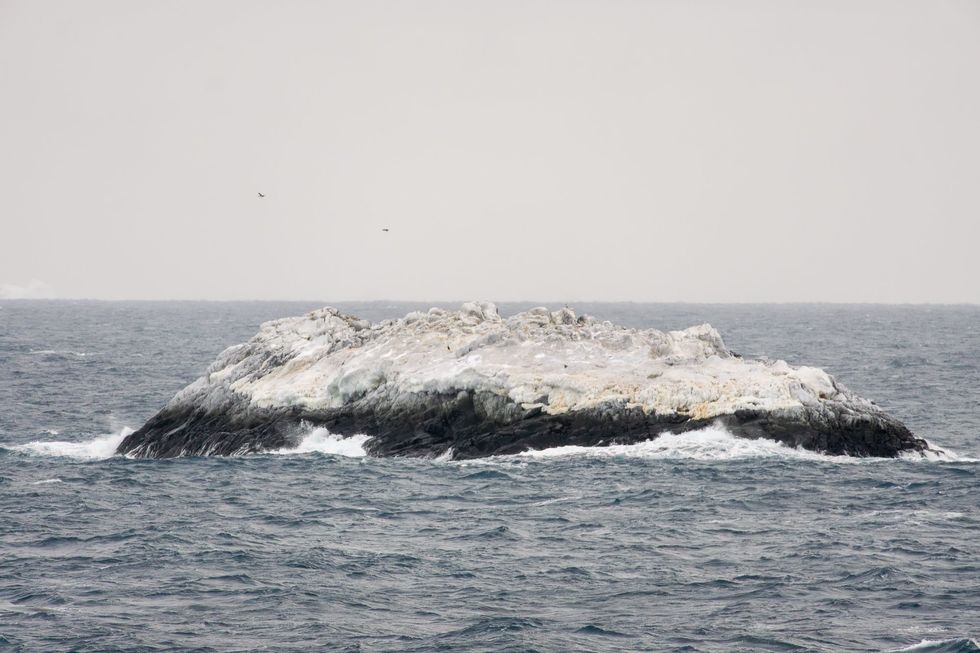
A team of 93 explorers made the remarkable discovery
|ALFRED WEGENER INSTITUTE/CHRISTIAN HAAS
The sheer magnitude makes the island roughly equivalent in length to the Great Pyramid of Giza.
Nevertheless, scientists continue to be baffled why existing charts marked the location as hazardous - without identifying it as land.
The island's ice covering made it virtually indistinguishable from the numerous icebergs floating nearby, which is also why satellite imagery had failed to detect the landmass.
Equally, from above, the formation blended seamlessly with the surrounding frozen debris.
Before the island can officially appear on navigational charts, it must first receive a formal name.
As such, individuals have flocked to social media to propose names for the newly-discovered territory.
One suggestion was "Eisberg", the German word for iceberg.
Meanwhile, another online user whimsically proposed "Lummerland", in reference to the fictional island from Michael Ende's children's book Jim Button and Luke the Engine Driver.