






British researchers have unveiled a series of remarkable discoveries in the waters surrounding the UK's Caribbean territories.
The expedition, conducted aboard the RSS James Cook, has revealed an entirely unknown underwater mountain range, a colossal blue hole that may prove to be the Caribbean's deepest, and coral reef systems that appear completely unaffected by the climate pressures devastating marine ecosystems elsewhere.
Scientists from the UK Centre for Environment, Fisheries and Aquaculture Science also documented marine creatures never previously observed by researchers.
The findings represent a significant achievement for British marine science, with the team exploring waters around the Cayman Islands, Anguilla and Turks and Caicos using outdated charts riddled with inaccuracies.
The operation ran continuously for six weeks, with equipment subjected to extreme pressures at depths reaching 6,000 metres.
Professor James Bell, who led the scientific team, said: "This is the first step into environments people have never seen, and in some cases didn't know existed."
The diversity encountered left researchers astonished. "Just yesterday we found a kind of type of swimming sea cucumber, and we still don't know what it is," Prof Bell added, calling the variety he witnessed "really, really astonishing."
Researchers catalogued nearly 14,000 individual specimens alongside 290 distinct marine species, although further laboratory analysis will be required to confirm these classifications.
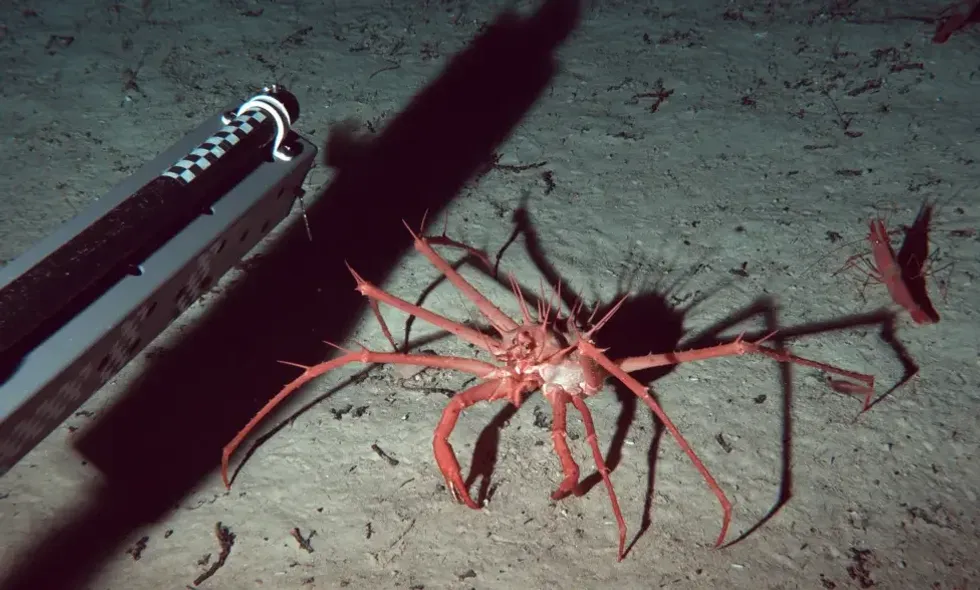
British researchers have unveiled a series of remarkable discoveries in the waters surrounding the UK's Caribbean territories
|CEFAS
Using deep-sea cameras and acoustic echo-sounders deployed from the vessel, the team charted approximately 25,000 square kilometres of ocean floor while capturing 20,000 photographs of extraordinary creatures including luminescent lanternfish and unusual cephalopods.
Among the most striking discoveries was an uncharted underwater peak called Pickle Bank, situated north of Little Cayman, which rises dramatically from 2,500 metres depth to merely 20 metres beneath the surface.
Footage captured vibrant mountainsides adorned with golden coral towers and brain-shaped formations, with fish weaving through gorgonian whip coral alongside orange sea sponges.
The reef system proved to be amongst the healthiest in the region, entirely free from the stony coral disease ravaging Caribbean waters elsewhere.
LATEST DEVELOPMENTS
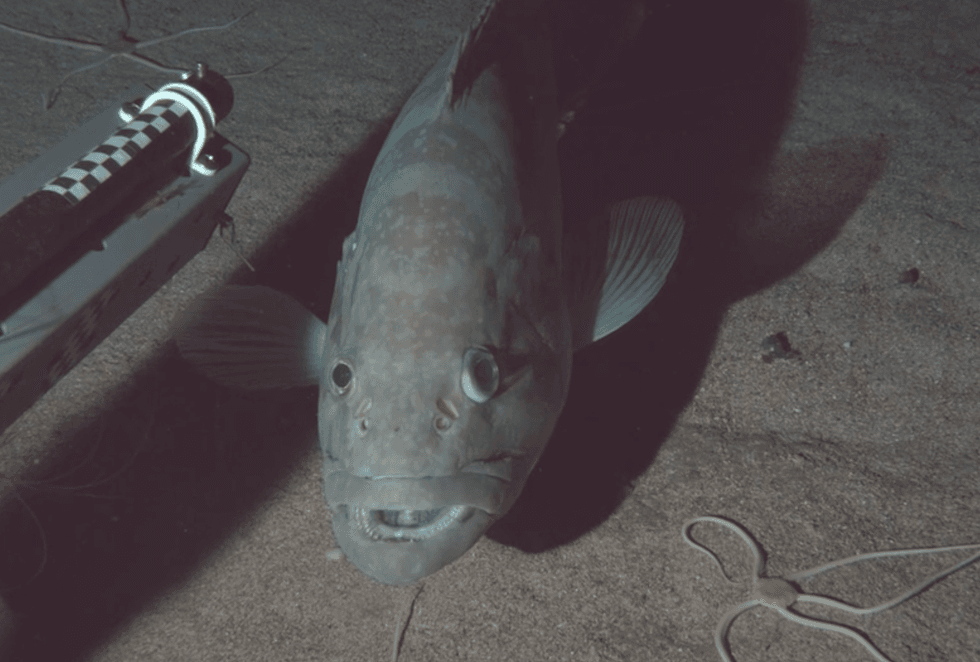
The study made some remarkable finds
|CEFAS
Perhaps most extraordinary was the identification of a vast blue hole located 45 miles south of Grand Turk.
"Imagine taking an ice cream scoop out of the seafloor. That's what we saw... a crater about 300m wide to 550m below sea level," Prof Bell explained.
Scientists believe this vertical sinkhole could rival Belize's celebrated Great Blue Hole in depth.
The expedition forms part of the Blue Belt Programme, a collaborative initiative bringing together environmental specialists from the Cayman Islands, Anguilla and Turks and Caicos alongside CEFAS researchers.
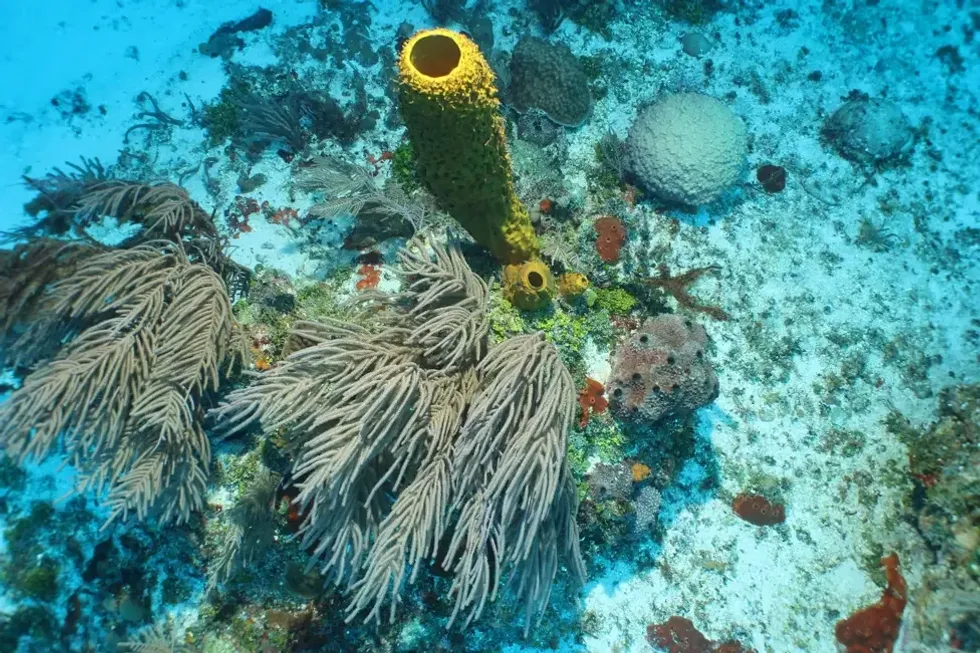
The expedition forms part of the Blue Belt Programme
|CEFAS
Kelly Forsythe, from the Cayman Islands Department of Environment, emphasised the importance of this work, saying: "Our islands were literally born from the sea. But when it comes to our offshore environments, we really haven't had a chance before to discover what's out there."
The data gathered will prove essential for Britain's legally binding United Nations commitments to safeguard 30 per cent of global oceans within designated Marine Protected Areas by 2030.
Prof Bell underscored why such research matters: "Anyone can draw a box on a map and say, 'That's a marine protected area'. But unless you know what's in it, you don't know if that's useful at all."
Our Standards: The GB News Editorial Charter