










Scientists have revealed the findings of a study which saw salmon fed cocaine to uncover the hidden impact of Britain's drug habits on aquatic wildlife.
Scientists from the Zoological Society of London (ZSL) collaborated with researchers at Griffith University in Australia and the Swedish University of Agricultural Sciences to conduct the first study examining how drug pollution affects fish behaviour.
The international team discovered that cocaine-fuelled young Atlantic salmon can swim almost double the distance compared to sober fish.
Prior experiments had demonstrated that drugs in waterways altered animal behaviour, but until now researchers had not confirmed whether such effects occurred in wild settings.
The research team fitted 105 young Atlantic salmon with implants that slowly released benzoylecgonine, the metabolite produced when cocaine passes through the human body.
These fish were then set free in Sweden's Lake Vattern, where scientists tracked their movements over an eight-week period.
The results showed that drugged salmon covered up to 1.9 times more distance each week compared with their untreated peers.
Perhaps more concerning still, the cocaine-exposed fish spread out across the lake to a far greater extent, dispersing up to 7.6 miles further than the control group.
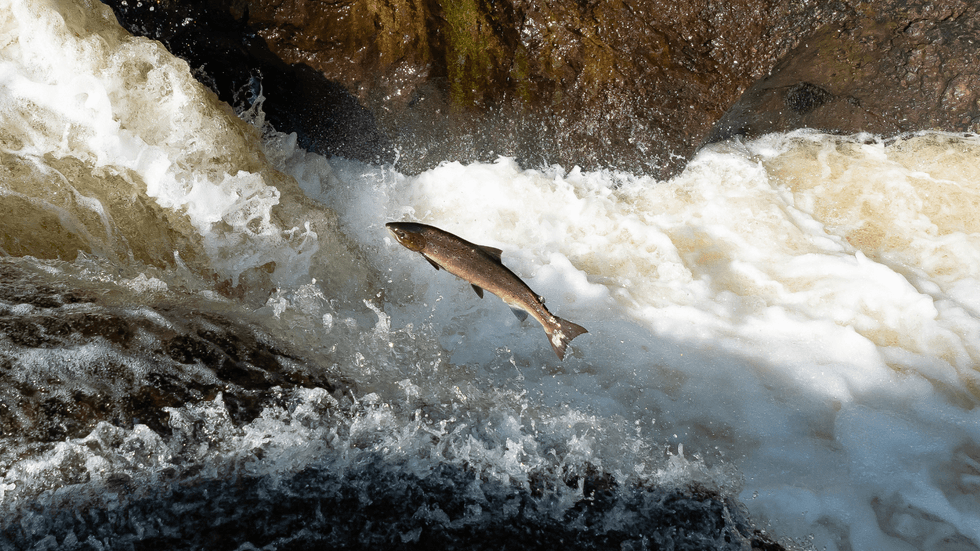
Cocaine-fuelled young Atlantic salmon can swim almost double the distance compared to sober fish
|GETTY
Researchers calibrated the drug concentrations to mirror levels found downstream from major urban sewage outlets in areas with high cocaine consumption, such as London.
Dr Marcus Michelangeli, from Griffith University's Australian Rivers Institute, acknowledged the findings might appear unexpected.
"The idea of cocaine affecting fish might seem surprising, but the reality is that wildlife is already being exposed to a wide range of human-derived drugs every day," he said.
He warned that altered movement patterns could reshape entire ecosystems, adding: "Where fish go determines what they eat, what eats them and how populations are structured.
SCIENCE - READ THE LATEST:

An estimated 80,000 lines of cocaine contaminates the Thames every single day
|GETTY
"If pollution is changing these patterns, it has the potential to affect ecosystems in ways we are only beginning to understand."
Meanwhile, Dr Jack Brand, a visiting researcher at ZSL, explained: "For juvenile salmon, 'energy budgets' are particularly tight, so any additional cost during this vulnerable period could have real consequences."
The scale of Britain's cocaine problem becomes starkly apparent when examining pollution data.
Estimates suggest the equivalent of 80,000 lines of the drug contaminate the Thames every single day.

Around 123,000kg of cocaine flows through the nation's sewage infrastructure.
|GETTY
Home Office figures released last week from its waste-water analysis programme revealed around 123,000kg of cocaine - carrying a street value of £9.8billion - flows through the nation's sewage infrastructure.
Sewage treatment facilities were never engineered to filter out such compounds, meaning they inevitably reach rivers and lakes.
Global illicit drug consumption has risen by roughly 20 per cent over the past decade.
Scientists caution that predicting long-term consequences remains challenging, though fish populations may become fragmented and increasingly susceptible to predators.
The research appeared in the journal Current Biology.
Our Standards: The GB News Editorial Charter