








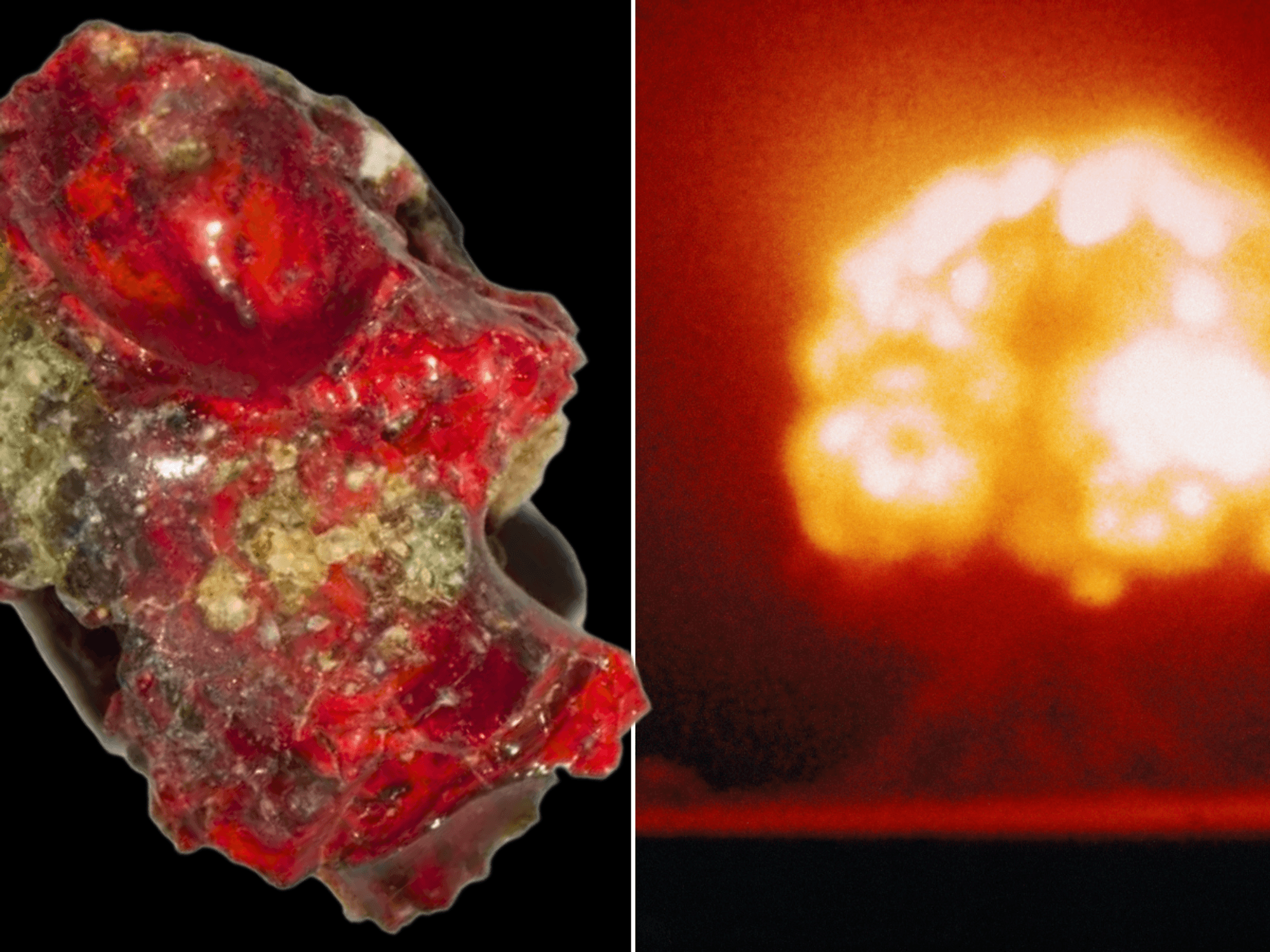

The world's "oldest octopus" thought to be 300million years old has been stripped of its title.
Scientists at the University of Reading have uncovered that the fossil long celebrated as the world's oldest octopus is actually something else entirely.
Pohlsepia mazonensis, a 296-million-year-old specimen discovered in the US state of Illinois, held the Guinness World Records title for the earliest known octopus.
However, researchers have now confirmed this was a "case of mistaken identity".
TRENDING
Stories
Videos
Your Say
The creature is in fact a relative of the nautilus, a multi-tentacled mollusc with an external shell, the Times reports.
According to the University of Reading team, this revelation means the record books entry should probably be "quietly written out".
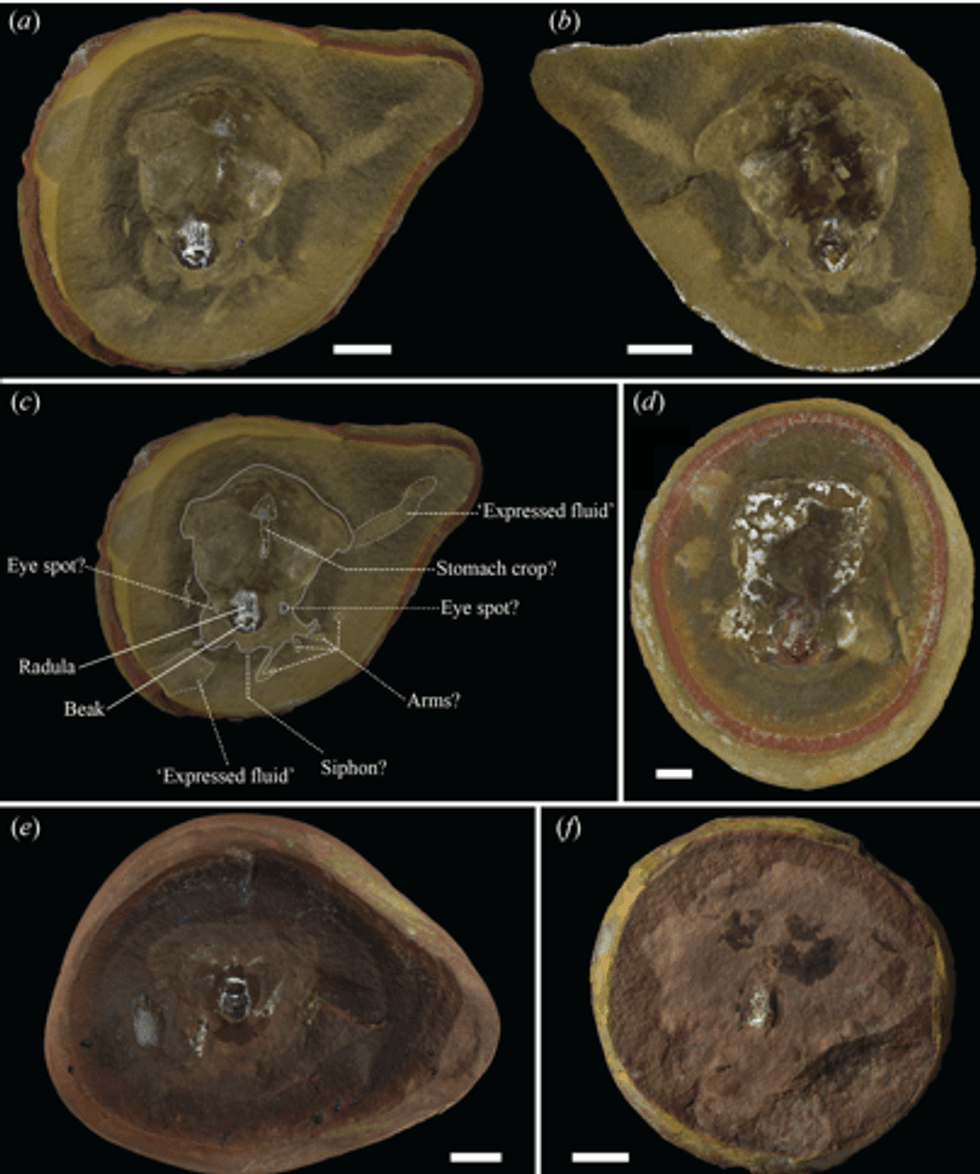
World's 'oldest octopus' thought to be 300million years old is stripped of its title to be given a new one as the oldest preserved soft tissue from a nautiloid ever discovered
|DR THOMAS CLEMENTS / UNIVERSITY OF READING
The finding, published in the journal Proceedings of the Royal Society B: Biological Sciences solves a puzzle that has perplexed scientists for decades and represents the oldest preserved soft tissue from a nautiloid ever discovered.
The true identity of the fossil emerged when scientists employed a synchrotron to fire X-rays deep into the specimen.
These scans exposed a set of teeth concealed within the rock for 300 million years.
The dental structures proved decisive in ruling out any octopus classification.
LATEST DEVELOPMENTS
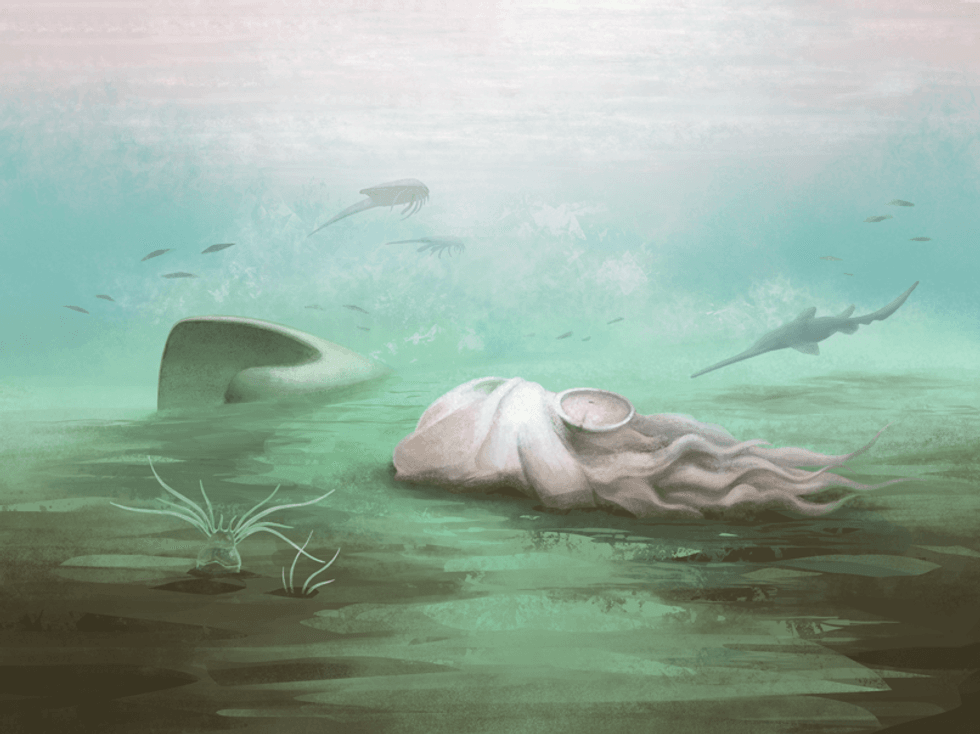
Reconstruction of a Paleocadmus decaying prior to burial in the Mazon Creek marine basin
|DR THOMAS CLEMENTS / UNIVERSITY OF READING
Within a ribbon-like body part known as a radula, researchers counted 11 tooth-like structures per row.
This configuration "ruled out an octopus entirely", according to the study, since octopi possess either seven or nine such structures.
The tooth count instead pointed towards a mollusc classification, ultimately leading scientists to conclude the creature was more closely related to the modern nautilus.
Partial decay before fossilisation had altered the specimen's appearance, preserving it for millions of years looking markedly different from its living form.
Dr Thomas Clements, a lecturer in invertebrate zoology at Reading and lead author of the study, said: "It turns out the world's most famous octopus fossil was never an octopus at all.
"It was a nautilus relative that had been decomposing for weeks before it became buried and later preserved in rock, and that decomposition is what made it look so convincingly octopus-like.
"Using modern techniques showed us what was beneath the surface [of] the rock, which finally cracked the case.
"We now have the oldest soft tissue evidence of a nautiloid ever found, and a much clearer picture of when octopi actually first appeared on Earth."
The specimen had spent weeks decaying before burial, fundamentally transforming its appearance in ways that fooled researchers for over two decades.
The discovery fundamentally reshapes understanding of when octopi first appeared on Earth.
An analysis published in 2000 had pushed octopus origins back 150 million years to the Palaeozoic era, but the new research "refutes a Palaeozoic origin" for eight-armed cephalopods - the animal grouping in which squid, octopus, cuttlefish and nautilus belong.
Instead, the evidence now suggests octopi evolved during the Jurassic period, between 200 and 145 million years ago.
Dr Clements said: "It's amazing to think a row of tiny hidden teeth, hidden in the rock for 300 million years, have fundamentally changed what we know about when and how octopi evolved."
Adam Millward, Guinness World Records' managing editor, said: "This is a fascinating discovery and congratulations to the University of Reading on their research.
"We will be resting the original title and look forward to seeing the new evidence."