










Scientists at the University of Iowa have identified and named a lorry-sized crocodile which feasted on our ancestors.
The ancient reptile, which lurked in Ethiopia over three million years ago, has been called Crocodylus lucivenator, meaning Lucy's hunter.
This name reflects the creature's overlap in both time and location with the famous hominin Lucy and her species, Australopithecus afarensis.
Lucy's skeleton, unearthed in 1974, remains significant as the oldest and most complete early human ancestor discovered.
Researchers published their findings on Wednesday in the Journal of Systematic Palaeontology.
The crocodile existed between 3.4 million and 3 million years ago in the same Ethiopian region where Lucy once lived.
It between 12 and 15 feet long - the size of a small lorry - with adult specimens weighing as much as 92 stone.
It dominated its environment as an ambush hunter, lying submerged in waterways before striking at animals that approached to drink.
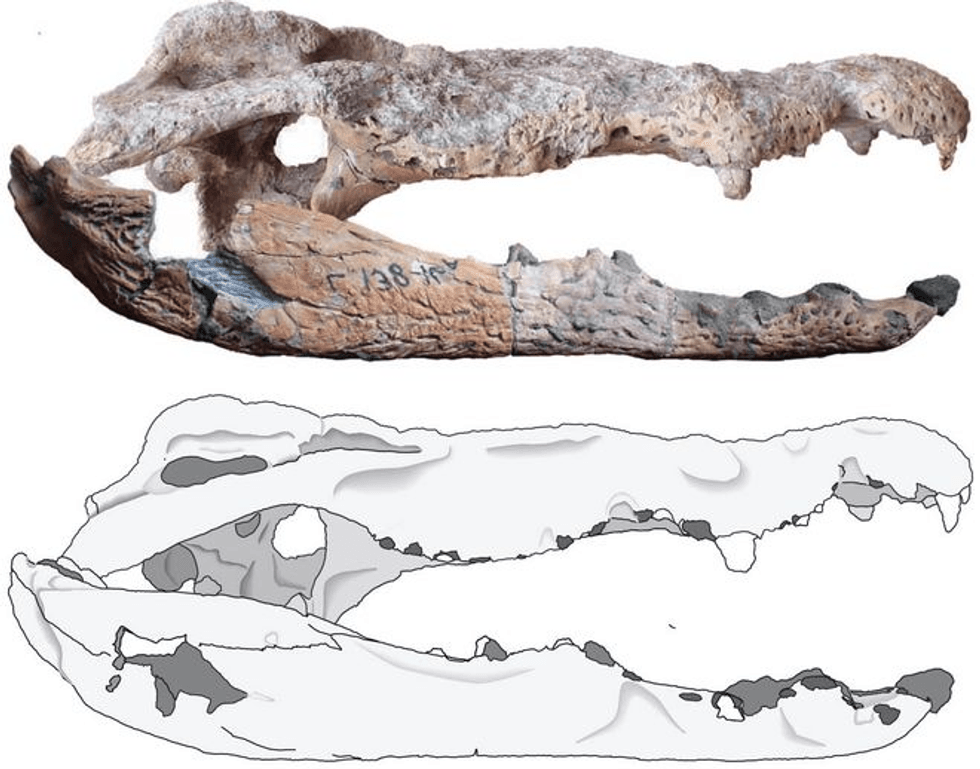
PICTURED: The skull of Crocodylus lucivenator
|CHRISTOPHER BROCHU
A distinctive raised lump sat in the middle of its snout, a feature resembling that of American crocodiles but absent in African Nile crocodiles.
Researchers believe male crocodiles used this prominent hump to attract females to mate.
The species also had a snout which extended further from its nostrils than other crocodiles of that era, more closely matching modern crocodiles.
Christopher Brochu, professor in the Department of Earth and Environmental Sciences at Iowa and the study's corresponding author, described the creature's dominance in its ecosystem.
PREHISTORIC DISCOVERIES - READ MORE:
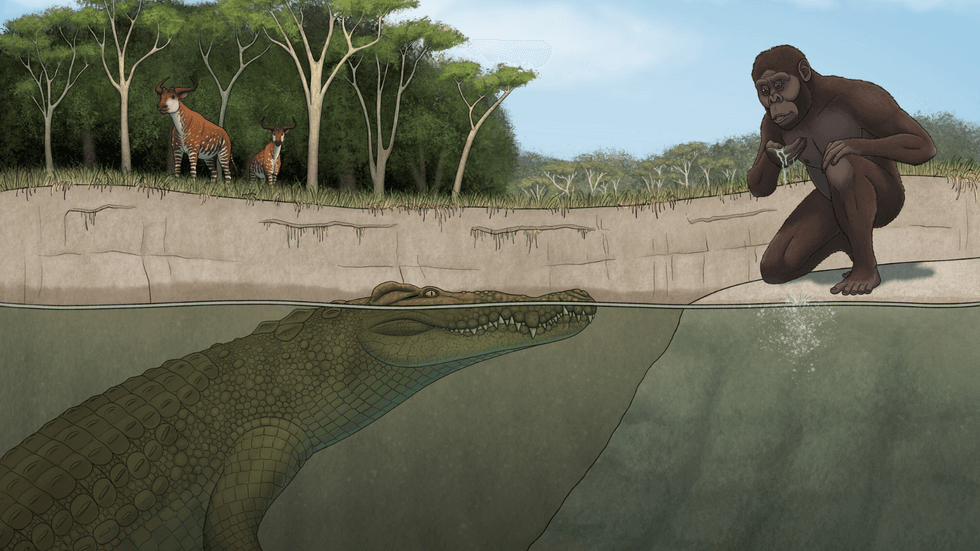
The huge crocodile would have hunted human ancestors like this
|TYLER STONE/UNIVERSITY OF IOWA
"It was the largest predator in that ecosystem, more so than lions and hyenas, and the biggest threat to our ancestors who lived there during that time," Prof Brochu said.
"It's a near certainty this crocodile would have hunted Lucy's species. Whether a particular crocodile tried to grab Lucy, we'll never know, but it would have seen Lucy's kind and thought: 'Dinner.'"
Brochu first examined the specimens during a 2016 visit to a museum in Addis Ababa, the Ethiopian capital.
"I was just blown away because it had this really weird combination of character states," Prof Brochu said.
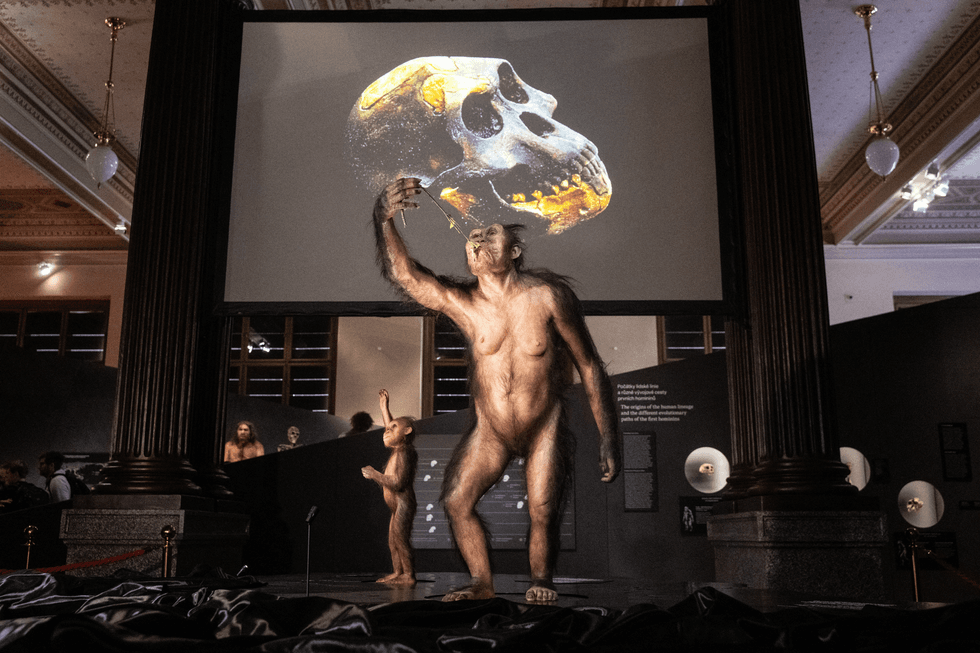
PICTURED: A reconstruction of 'Lucy' in Prague. The prehistoric crocodile 'would have seen Lucy's kind and thought: "Dinner,"' Prof Brochu said
|GETTY
The research team analysed 121 catalogued fossil remains, mainly skulls, teeth and jaw fragments, representing dozens of individual crocodiles.
These specimens were excavated from the Hadar site in Ethiopia's Afar region, a Unesco World Heritage site since 1980 renowned for hominin discoveries.
One fossil displayed partially healed wounds on its jaw, indicating a violent encounter with another crocodile.
"The fossil record preserves similar injuries in extinct groups as well, so this kind of face-biting behavior can be found throughout the crocodile family tree," says Stephanie Drumheller, teaching associate professor at the University of Tennessee and study co-author.
Lucy's hunter appeared to be the sole crocodile species inhabiting Hadar's waters during this period.