










NASA has confirmed a target date of March 6 to send astronauts around the Moon.
The Artemis II mission represents the first crewed lunar voyage in more than half a century.
The Apollo programme concluded in 1972 when Eugene Cernan, Ronald Evans and Harrison Schmitt ventured towards the Taurus-Littrow valley.
Four astronauts will undertake what NASA describes as humanity's most distant journey into space to date.
TRENDING
Stories
Videos
Your Say
Administrator Jared Isaacman hailed the progress as "a big step toward America's return to the lunar environment" on the social media platform X.
The crew comprises of three American astronauts alongside one Canadian team member.
The successful outcome followed a troubled first attempt earlier this month, when dangerous quantities of liquid hydrogen escaped during the initial fuelling demonstration.
Engineers addressed the problem by fitting two replacement seals, enabling the test to proceed without significant leakage.
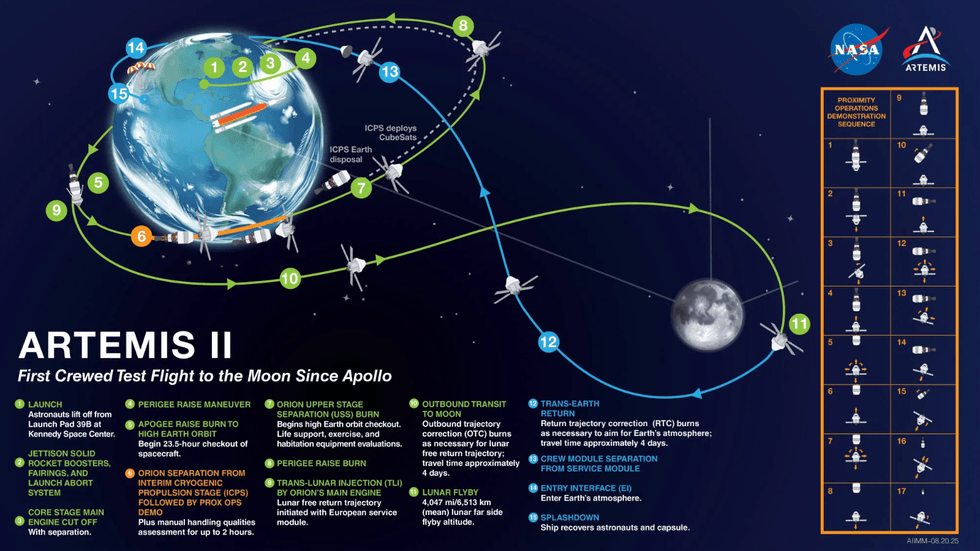 PICTURED: Artemis II's projected flight map | NASA
The countdown rehearsal reached its intended stopping point at the 29-second mark, demonstrating that the repairs had resolved the issue.
Commander Reid Wiseman and two fellow crew members observed the operation alongside launch controllers at Kennedy Space Center in Florida.
NASA's Lori Glaze noted that whilst the fixes proved effective, additional work remains outstanding, including completion of a flight readiness review.
The 10-day expedition will take the crew around the far side of the Moon before returning to Earth, establishing the groundwork for subsequent lunar landing missions.
LATEST DEVELOPMENTS
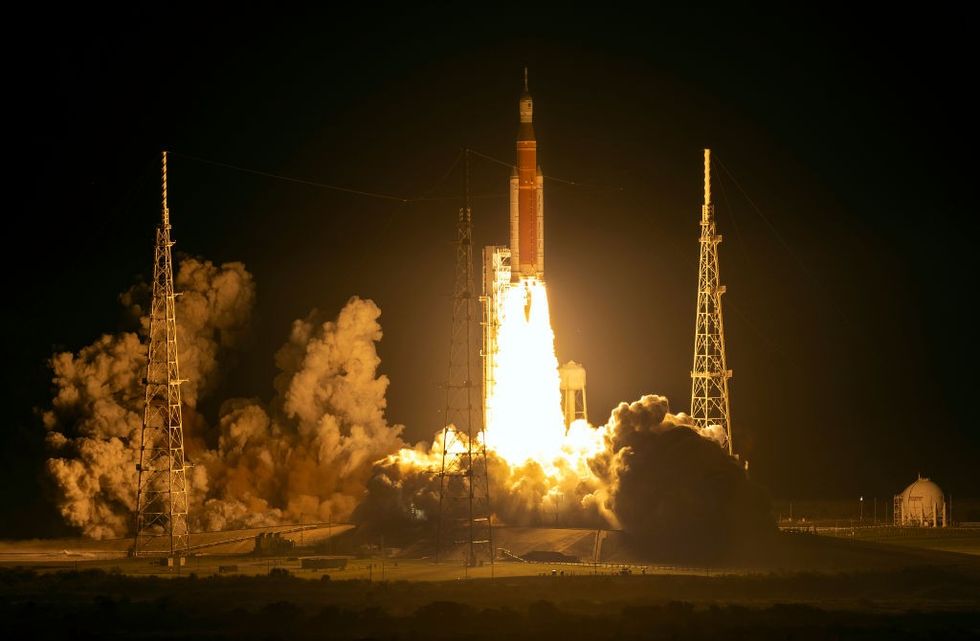
The crew comprises three American astronauts alongside one Canadian team member
|GETTY
To preserve all available options, the astronauts are due to begin their mandatory two-week health isolation period on Friday evening.
NASA faces a narrow launch window, with only five days available in March to send the crew aboard the Space Launch System rocket from Kennedy Space Center.
Should the agency miss this opportunity, the next available dates would not arrive until April, after February's chances were lost due to the hydrogen leak complications.
Our Standards: The GB News Editorial Charter