







Zahi Hawass, seen as the world's most renowned archaeologist, is racing to find the burial site of ancient Egyptian Queen Nefertiti before he retires.
Nefertiti died more than 3,000 years ago - but the former Egyptian Antiquities Minister believes a breakthrough may be around the corner.
"If I made this discovery, I think I would be happy to end my career with the most important discovery of the most important queen of Egypt - Queen Nefertiti," Mr Hawass says in a new documentary about his life.
The film, titled "The Man with the Hat" and directed by Jeffrey Roth, premiered on streaming platforms just days ago.
Nefertiti was married to Akhenaten, the pharaoh who ruled from 1353 to 1336 BC.
Akhenaten launched a religious upheaval that shifted Egypt's worship towards the Aten, or sun disk.
The queen was sometimes depicted in ways reserved exclusively for pharaohs, including striking down enemies.
Mr Hawass and other Egyptologists believe Nefertiti may have governed Egypt as pharaoh following her husband's death.
She is thought to have adopted the name Neferneferuaten during this period.
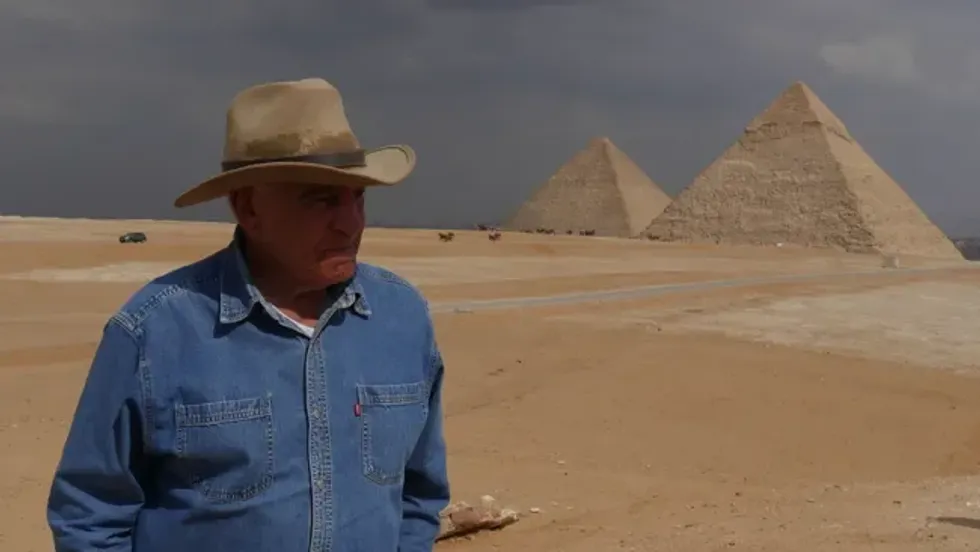
Zahi Hawass is racing to find the burial site of ancient Egyptian Queen Nefertiti
|PLAYGROUND PRODUCTIONS
The documentary chronicles the archaeologist's decades-long career and his numerous excavations across Egypt.
It also addresses several controversies that have surrounded him over the years.
Mr Hawass and his team have spent years excavating in Egypt's Valley of the Kings.
They previously uncovered two plundered tombs, designated KV 65 and KV 66, which were likely raided in ancient times.
EGYPTIAN MARVELS - READ MORE:
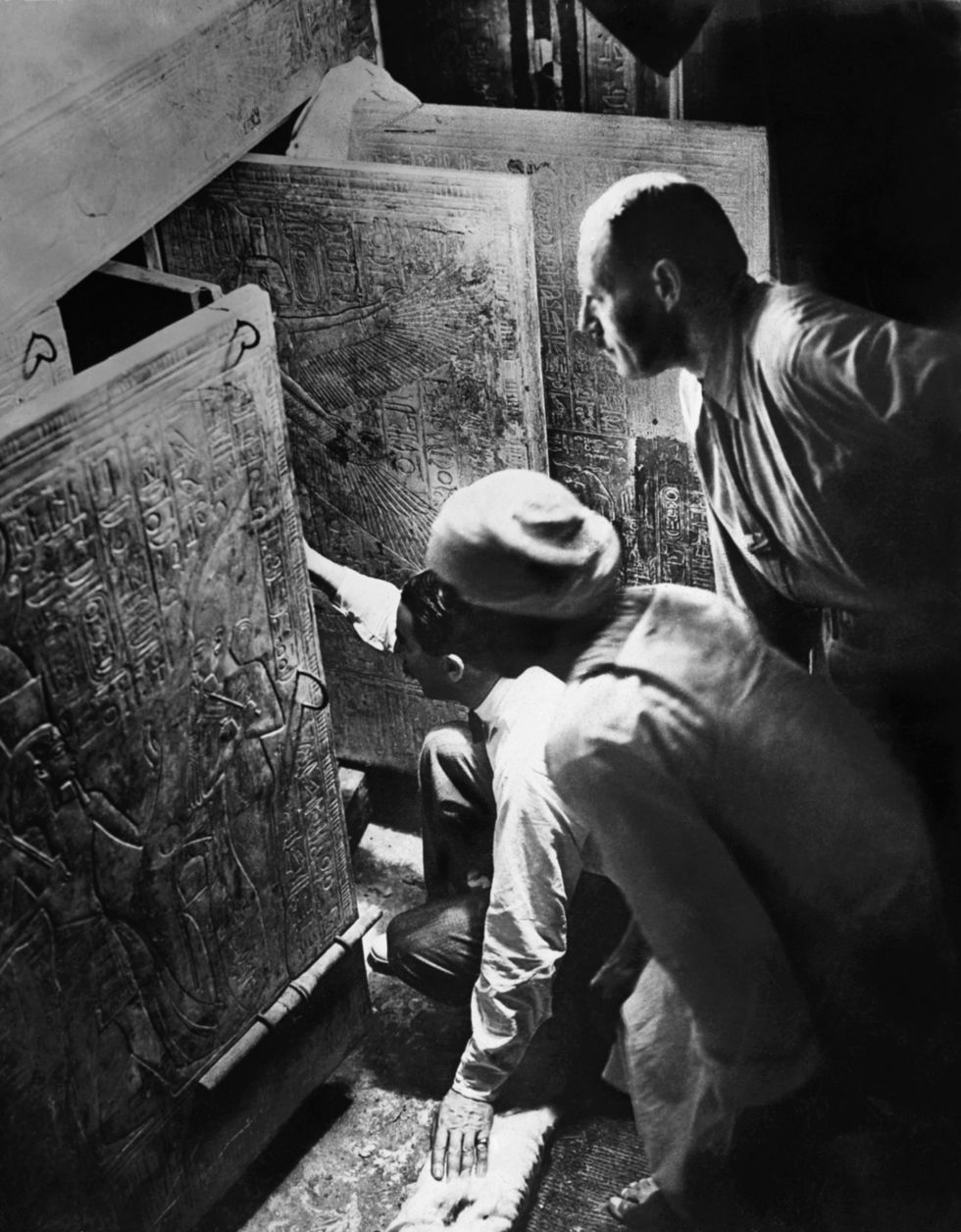 PICTURED: Howard Carter (kneeling) and AR Callender open Tutankhamun's tomb in the Valley of the Kings | GETTY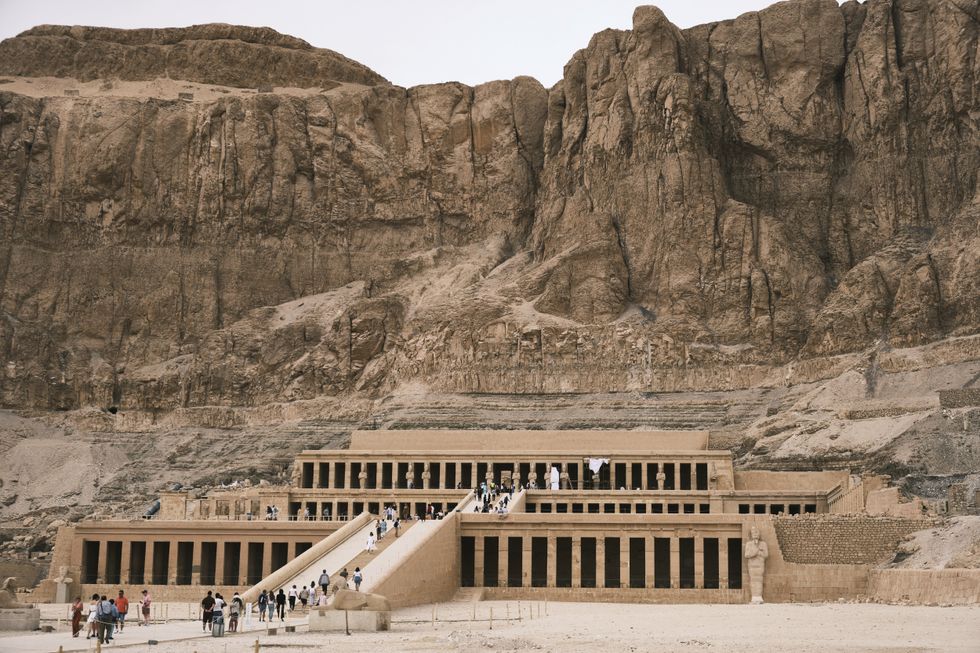
Researchers are now working in the eastern section, near the tomb of Hatshepsut (pictured)
|GETTY
These finds, he says, demonstrate that major discoveries remain possible in the valley.
The team is now working in the eastern section, near the tomb of Hatshepsut, a powerful female pharaoh who reigned from 1479 to 1458 BC.
Though Mr Hawass admits he lacks concrete evidence, he says he has a hunch about the location.
"There is one area now that we are working in the east valley, near the tomb of Queen Hatshepsut," Mr Hawass told Live Science. "I'm hoping that this could be the tomb of Queen Nefertiti."
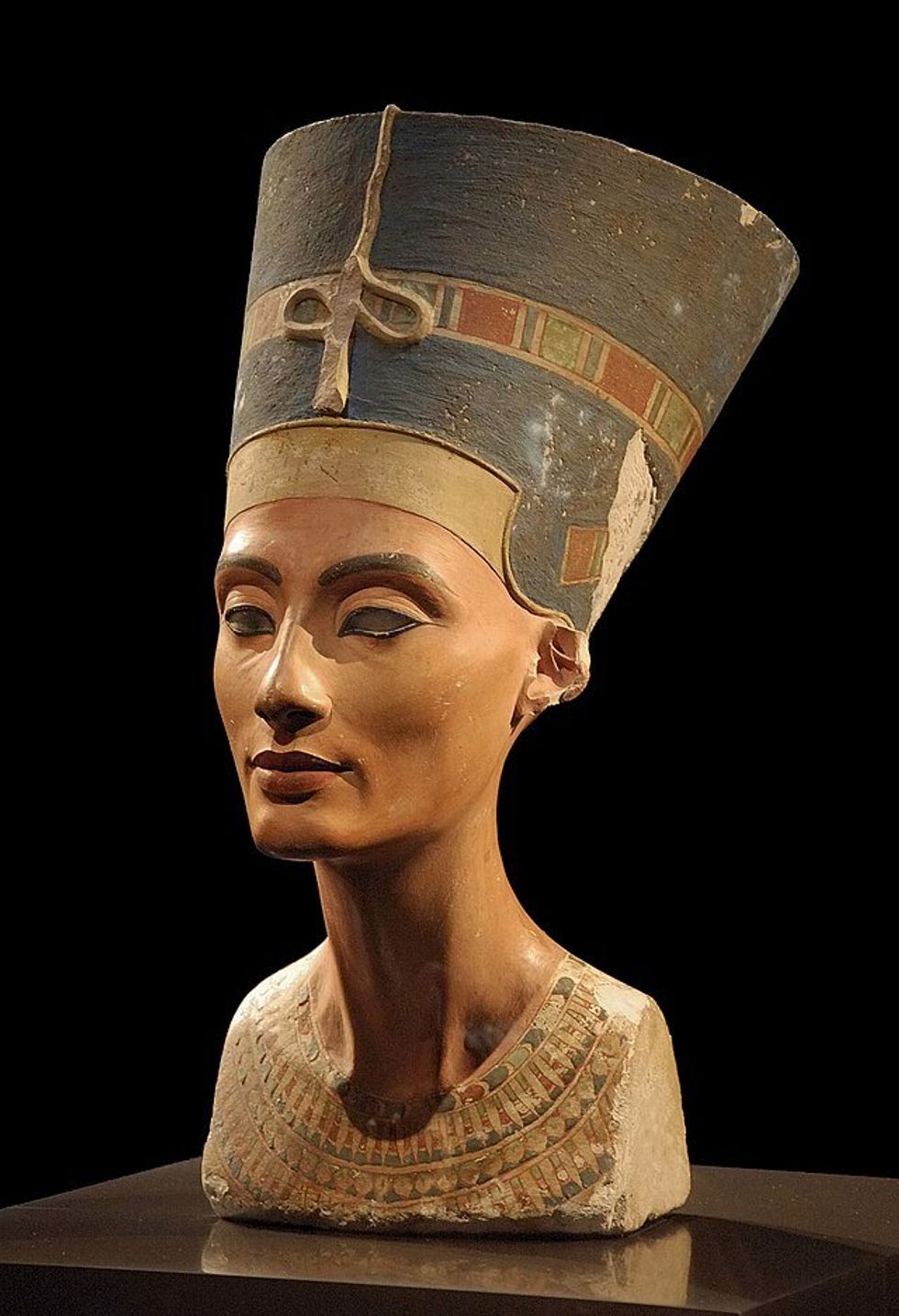
Mr Hawass has demanded this bust of Nefertiti be brought back to Egypt Germany's Neues Museum
|WIKIMEDIA COMMONS
He added that "this discovery could happen soon."
Mr Hawass is also campaigning for the return of three prized artefacts currently held in European museums.
He wants the Rosetta Stone controversially returned by the British Museum, the Dendera Zodiac from the Louvre, and the bust of Nefertiti from Germany's Neues Museum brought back to Egypt.
Hawass told Live Science these objects "are the icon of the Egyptian identity and their home should be the Grand [Egyptian] Museum," which opened in November.
It's "fair [for] these three objects to come back to Egypt because the Europeans, in the last century," removed countless artefacts from the region, he said.