










Ancient graffiti written in Indian languages has been uncovered on tomb walls in Egypt's Valley of the Kings, scholars have revealed.
One enthusiastic visitor named Cikai Korran left his mark eight times across five different burial chambers.
His inscriptions were carved in Old Tamil, a language from southern India.
The Tamil text translates to "Cikai Korran came here and saw," according to researchers, who presented their findings at a February conference in Chennai.
Mr Korran was among several Indian travellers who scratched their names into the ancient Egyptian monuments roughly 2,000 years ago.
The discoveries strengthen evidence that South Asian people visited Egypt in antiquity.
Researchers have now dated around 30 inscriptions written in three different Indian languages to the period between the first and third centuries AD - still long ago, but more than 1,000 years after the height of ancient Egypt.
The markings, half of which were in Old Tamil, were found across six separate tombs in the famous valley, where pharaohs and nobles had been interred for centuries.
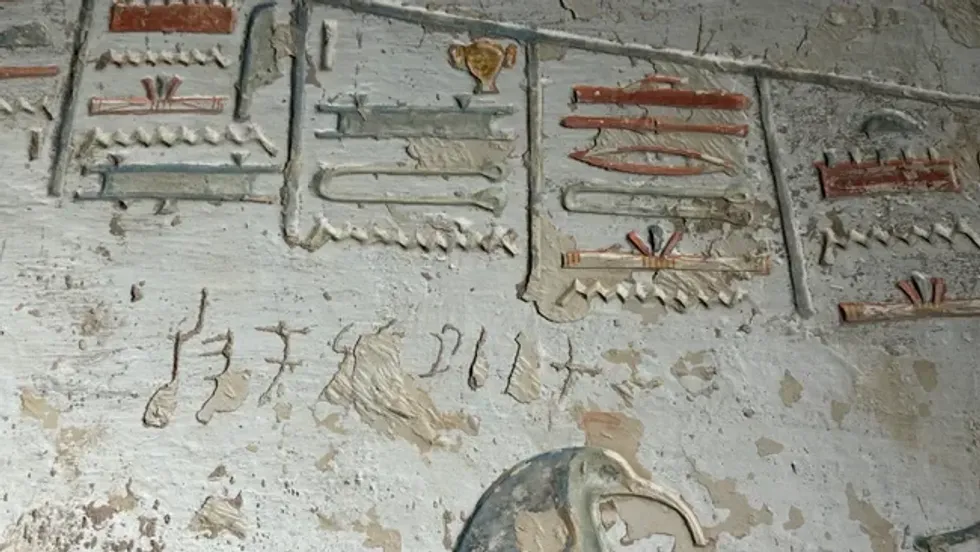
One man named Cikai Korran left at least eight messages on walls in the Valley of the Kings
|INGO STRAUCH
The Valley of the Kings "was a tourist destination, like today," said Ingo Strauch, a professor at the University of Lausanne who helped identify many of the texts.
Earlier Egyptologists had noticed these markings but could not determine which language they were written in or translate them.
One Sanskrit inscription was left by a man called Indranandin, who identified himself as a "messenger of King Kshaharata."
The Kshaharata dynasty governed part of India during the first century AD.
READ MORE FROM THE VALLEY OF THE KINGS:
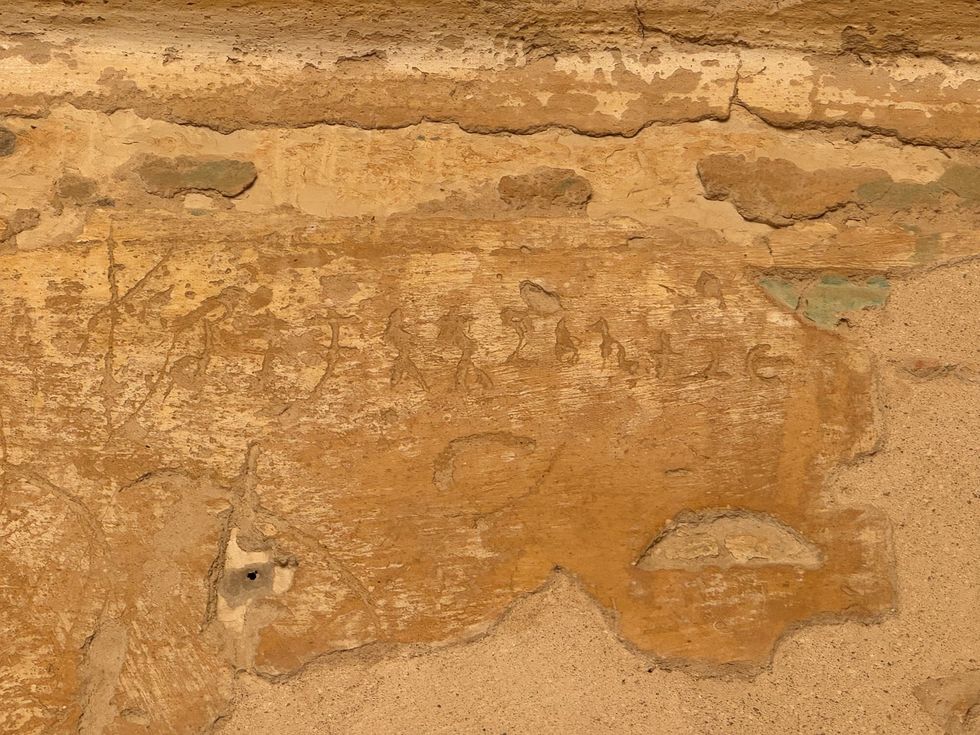
Mr Korran's inscriptions were written in Old Tamil
|TIMOTHEE SASSOLAS
"It is possible that Indranandin arrived by ship at Berenike [on the east coast of Egypt], perhaps together with other Indians, and from there continued inland to the Valley of the Kings," Prof Strauch said.
"Whether he later travelled on to Rome, however, is unknown."
Mr Korran displayed a peculiar tendency to position his inscriptions at considerable heights.
At the tomb of Ramesses IX, he carved his name between five and six metres above the entrance.
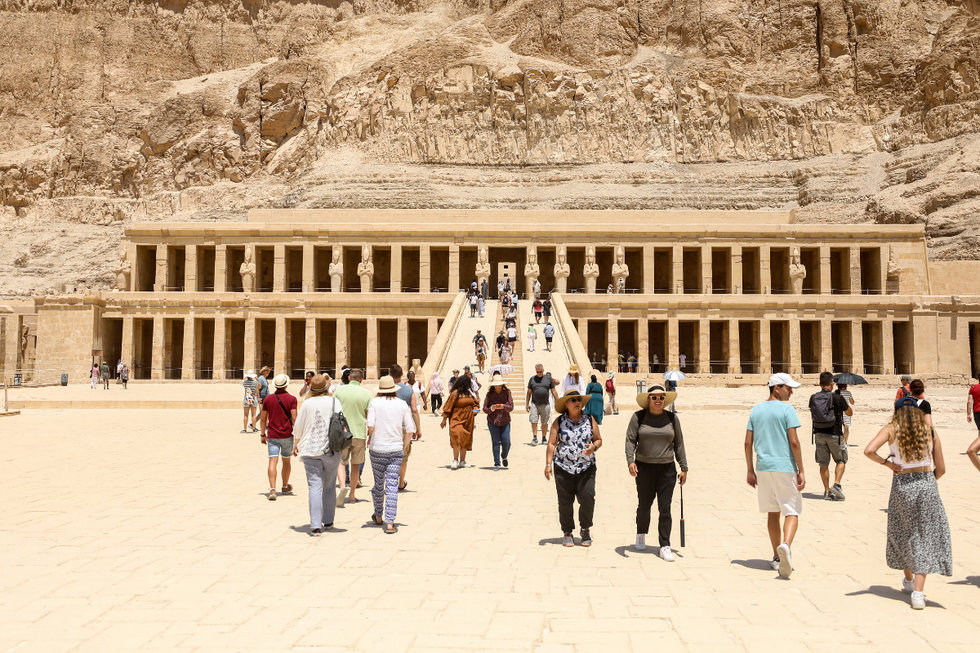
The ancient Indians saw the Valley of the Kings as a tourist resort - just as holidaymakers do today
| GETTYCharlotte Schmid, a researcher at the French School of the Far East, noted that how he reached such heights remains a mystery.
"It's weird, to be frank," she said.
The discoveries represent significant documentation of ancient trade connections between India and Egypt.
"These new discoveries by Strauch and Schmid, alongside both old and more recent findings from the Roman Red Sea ports of Myos Hormos and Berenike, are exactly the kind of evidence of visiting Tamil and Western Indian merchants that we would hope to find - but have never previously been able to document on this scale," said Kasper Gronlund Evers, an independent scholar who studies ancient long-distance trade.
While Alexandra von Lieven, a professor of Egyptology at the University of Munster, said the texts "prove not just the mere presence of Indians in Egypt, but also their active interest in the culture of the land."
Additional research could reveal more Indian inscriptions at other Egyptian sites, including temples, Prof Von Lieven added.