










The sanctuary of Trojan War hero Odeysseus has been uncovered on a Greek island in one of the "most significant" archaeology discoveries in years.
Archaeologists excavating on the Ionian island of Ithaca made a remarkable find that they believe is an ancient place of worship devoted to the legendary literary hero Odysseus.
The excavation at a location known as the "School of Homer" has yielded a tile fragment inscribed with a variation of the famous wanderer's name, the Greek City Times reports.
As such, researchers believe they have identified a place of organised worship at the site in the Ionian sea.
The Greek Ministry of Culture declared the finding was one of the most important archaeological breakthroughs in recent years.
Aside from the inscribed tile, researchers also found an extensive bounty of votive offerings, ceramics, metal artefacts and ritual objects.
Together, they detailed the intricate facts of a dedicated space of religious devotion to Ithaca's mythical king.
First, the votive offerings date from the Mycenaean period, roughly 1600 to 1100 BC, through to the Hellenistic era, which concluded in 31 BC.
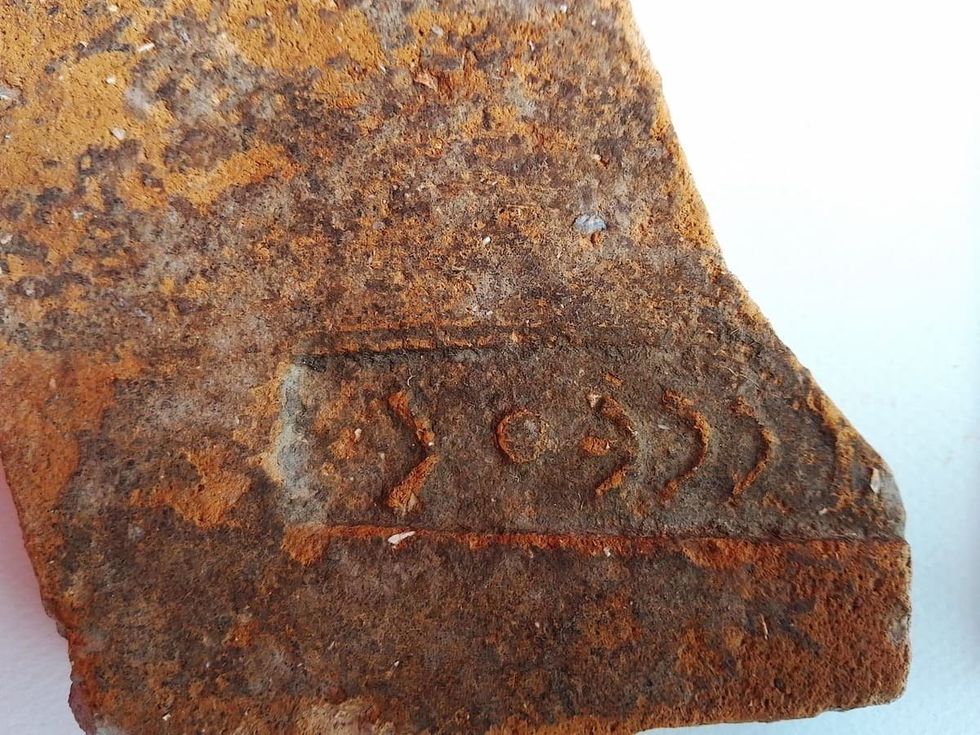
The Homeric hero could well have been far more than just a legend
|GREEK MINISTRY OF CULTURE
They subsequently assessed that worship of Odysseus persisted for more than a millennium there.
The presence of Mycenaean materials intrigued the academics, with the connection between Ithaca and its legendary king possibly predating Homer's composition of The Odyssey in the eighth century BC.
Hellenistic artefacts, meanwhile, have shown the cult persisted through significant political and cultural transformations across the ever-evolving Greek world, researchers noted.
They added the archaeological complex occupies an higher position with commanding views across the sea, making it a particularly apt setting for a shrine to honour a legendary seafarer.
LATEST ARCHAEOLOGICAL BREAKTHROUGHS:
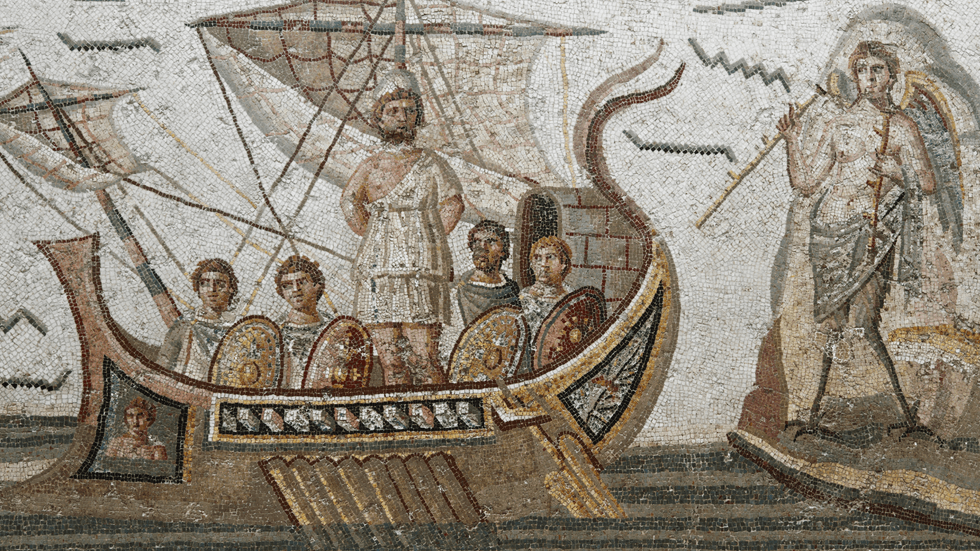
The Homeric hero could well have been far more than just a legend
|GETTY
In Homer's epic, Ithaca serves as the homeland that Odysseus desperately seeks to reach following the 10-year-long Trojan War and his subsequent decade of wandering across the Mediterranean.
Although the find does not prove that Odysseus was a genuine historical figure, the discovery has re-emphasised just how intertwined mythology and daily existence were in ancient Greece.
More often than not, epic heroes transcended their roles as literary characters to become subjects of active veneration through rituals, offerings and purpose-built sacred spaces while fanatics obsess over the epics.
For nearly three thousand years, The Odyssey has stood as a cornerstone of Western literature.
As one of the oldest surviving pieces of literature, the Odyssey is split across 24 books, detailing the king's heroic quest to return home to Ithaca after the decade-long war.
Travelling from Troy, he and his crewmates face trouble and turmoil on their journey - while his wife Penelope and son Telemachus presume he is dead.
Homer's other great work, the Iliad, is also one of the world's oldest literary works, recounting the 10-year siege of the city of Troy by the Greeks.