









Archaeologists have lifted 80-tonne stones from the seabed in Egypt linked to one of the seven wonders of the ancient world.
A major underwater effort has ensued in the Eastern Harbour of Alexandria, Egypt, where teams of archaeologists have successfully raised 22 massive stone blocks directly linked to the Lighthouse of Alexandria.
The lighthouse, considered one of the seven wonders of the ancient world, for centuries only existed in history and legend.
However, due to modern technology, archaeologists have recovered stones linked to the legendary structure.
TRENDING
Stories
Videos
Your Say
The recovery also included architectural elements such as lintels (the horizontal beam over a doorway), door supports, thresholds and large paving slabs.
One of the most significant discoveries is a previously unknown pylon-like structure containing what is believed to be an Egyptian-style doorway, indicating the lighthouse may have been more architecturally complex than previously thought, with the structure design showing both Egyptian and Greek influences.
Led by archaeologist Isabelle Hairy, the archeological site forms part of the international Pharos project who is hoping to develop a ‘digital twin’ (highly detailed virtual reconstruction) of the lighthouse.
Researchers will scan and analyse the newly lifted stones in detail, to observe construction and design techniques and create hypotheses on how the structure was built and what it looked like.
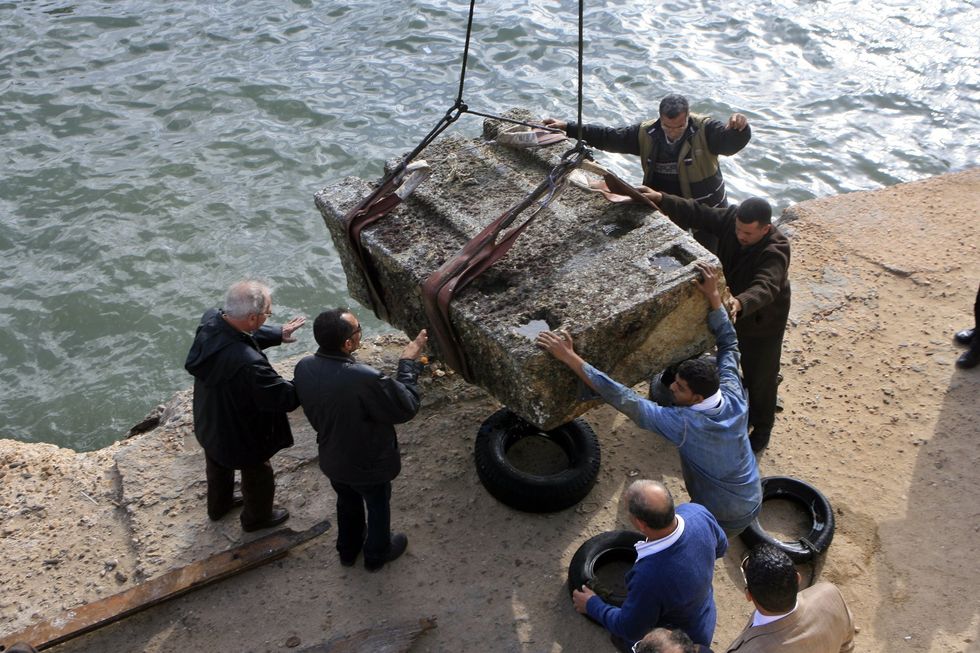
Archaeologists lift 80-tonne stones from seabed linked to one of seven wonders of ancient world
|GETTY
The ruins of the Pharos (lighthouse) of Alexandria was built in the early 3rd century BC by the Ptolemaic Kingdom of Ancient Egypt, during the reign of Ptolemy II Philadelphus (280-247 BC).
It is estimated to have been at least 100 metres in height and for centuries, it was one of the world’s tallest man-made structures.
The lighthouse was destroyed by the early 14th century AD after a series of earthquakes beginning around the 4th century AD, causing the shoreline and surrounding city to gradually erode and submerge.
Following its destruction, the remains of the lighthouse were forgotten for centuries.
LATEST DEVELOPMENTS
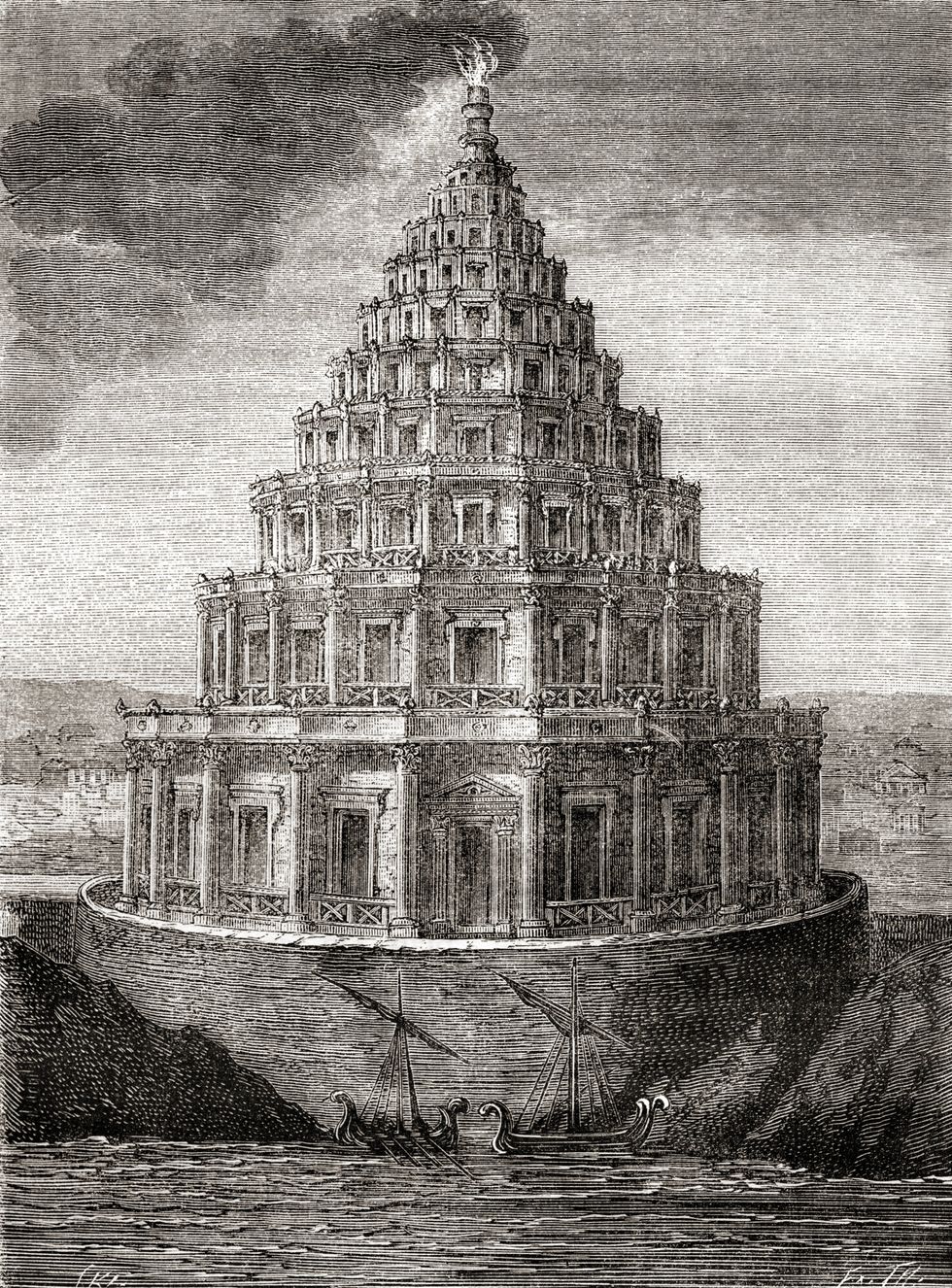
A nineteenth century imaginary depiction of The Lighthouse of Alexandria
|GETTY
It was only when local authorities trying to conserve another archaeological site, the Citadel of Qaitbay, that the remains of the lighthouse were rediscovered.
The submerged archaeological site covers at least 13,000 square metres and contains more than 3,000 individual elements lying between 2.6 and 8.5 metres below sea level.
These include architectural blocks, statues and metal components such as bronze, iron and lead fixings, which were used to form the original structures.
Systematic underwater excavations began in 1994 and since then, the site has been investigated through regular annual missions, with researchers creating detailed maps and databases cataloguing the recovered material.
After more than two decades of study, researchers say they are now able to propose historical interpretations of the site and begin partial reconstructions of the monuments that once stood there.
The project is supported by the French National Centre for Scientific Research and the Egyptian Ministry of Tourism and Antiquities.