











A section of a historic shipwreck has been discovered at a Dorset beach following recent winter storms, with the National Trust beginning an investigation.
Found washed ashore at Studland Bay, Dorset on January 28, the exposed timbers have been surveyed by maritime archaeologists from Bournemouth University who dated the remnants as 17th century, and are likely to be a section of the Swash Channel wreck.
The Swash Channel wreck was first discovered in the 1990s at the key shipping approach to Poole Harbour, with historical records indicating the wreck is Dutch or German in origin and most likely the Fame from Hoorn, a Dutch merchant ship which ran aground and sank in 1631.
Tom Cousins, Maritime Archaeologist at Bournemouth University, said: “It’s really exciting to find this piece of historical ship.
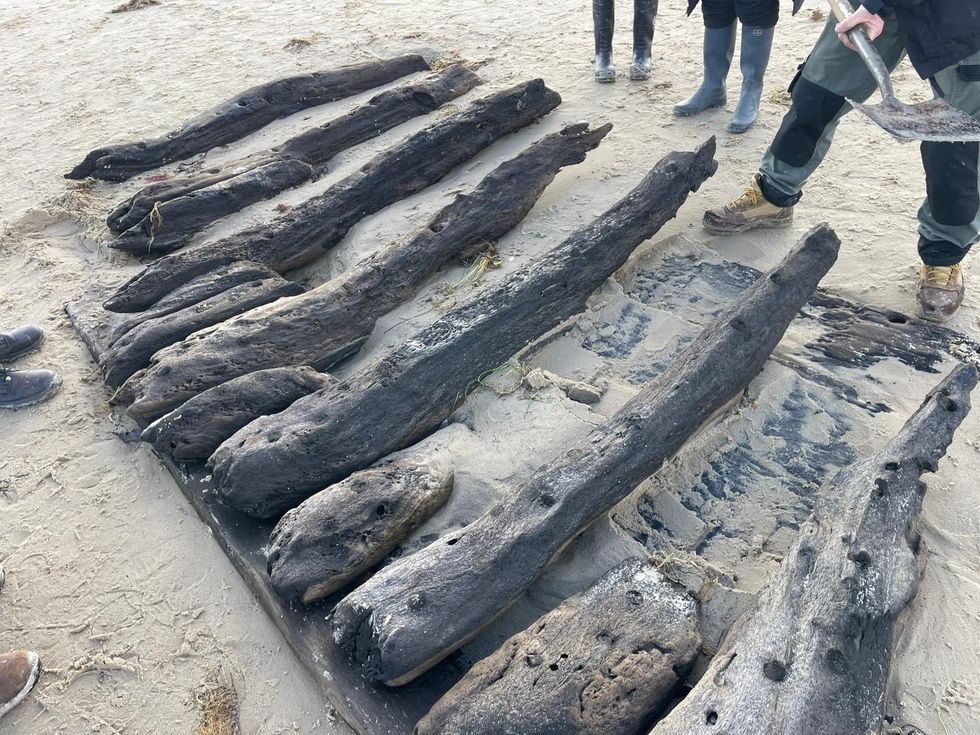
The remnants have been dated back to the 17th century
|National Trust
“During our excavation of the Swash Channel wreck in 2013, there were pieces of the ship missing and we do believe a section of the hull has now been revealed at Studland.”
The exposed section of the ship measures approximately 6 meters long and 2 neters wide, and consists of at least fifteen frames connected with wooden treenails to five outer hull planks.
The frames appear eroded, but the hull planks are in excellent condition, with a layer of planking on the inside of the vessel appearing to have been lost, suggesting the remains have been buried in sand since the 1630s and intermittently exposed over the centuries.
Tracey Churcher, General Manager for the National Trust in Purbeck, said: “I’m always astounded by the history we find at Studland but this has been a real treasure.
“The wooden tree nails are still in place and holding after four hundred years, what a testament to the craftsmanship at the time.”
Final confirmation will come from dendrochronology testing, which will identify when and where the timbers used to build the ship were grown, and whether they match those previously analysed from the Swash Channel wreck.
The team at Bournemouth University applied to Historic England for a grant to excavate the timbers on the presumption it is part of the protected wreck.
Hefin Meara, Maritime Archaeologist from Historic England, said “The Swash Channel wreck is one of only 57 shipwrecks around the coast of England designated under the Protection of Wrecks Act 1973, and firmly dated remains of vessels predating 1700 are exceptionally rare.
LATEST DEVELOPMENTS
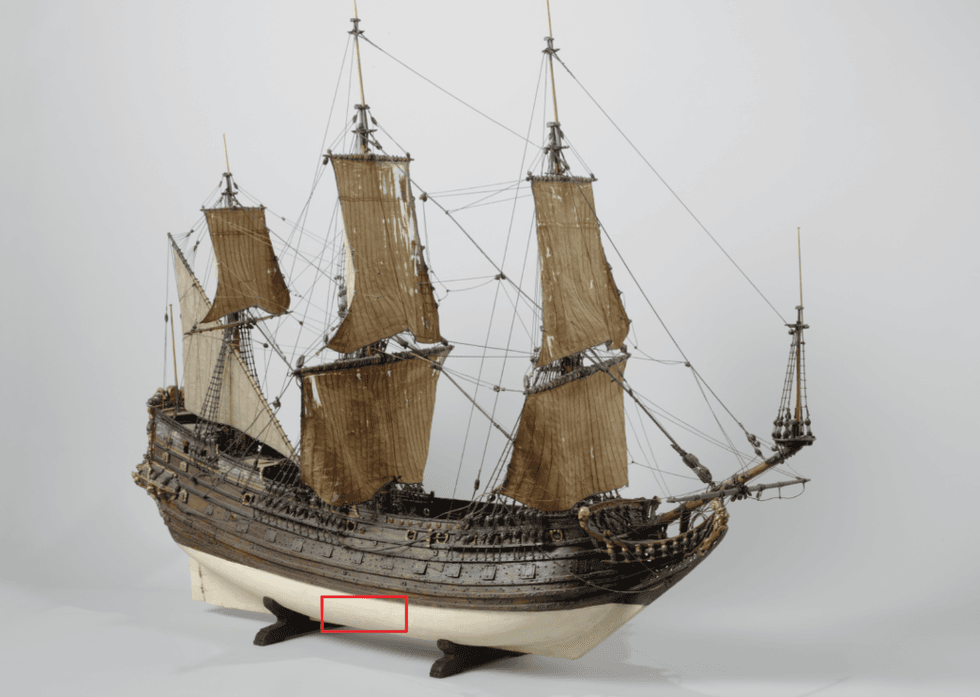
A reconstruction of the Fame of Hoorn vessel that sank in 1631.
|National Trust
“We can't say for certain that these fragments come from that wreck site, but it's an intriguing possibility.”
Protected wrecks have legal protection because of their archaeological and historical significance, meaning that any disturbance or interference is only permitted under an official licence.
It is hoped the timbers revealed at Studland will join the collection currently displayed at Poole Museum. Visitors are asked to help protect the site by not touching or damaging the exposed timbers.
The Fame of Hoorn was estimated to be around 40 metres long, 10 metres wide and 15 metres high, capable of carrying more than forty guns to defend itself against pirates during voyages to the Caribbean to bring back salt.
Sarah Coggins, Coast and Marine advisor for the National Trust, said: “In 1630 this section of beach would’ve been open sea, but over the past 400 years, sand has been deposited creating the dunes, wetlands and shoreline we see at Studland today.”
“That’s why this historic wreck is found buried in sand rather than lying on the seabed and highlights the ever-changing nature of the coast.”
Our Standards: The GB News Editorial Charter