










A hill overlooking the Irish Sea may be the final resting place of one of the most fearsome Viking commanders ever to wage war on English soil, according to new research.
The ninth-century warlord, sometimes called Ivarr the Legless or Ivarr the Dragon, established a ruling dynasty in Dublin and served as a principal commander of the Great Heathen Army during its devastating campaigns across Anglo-Saxon England.
Despite his terrifying legacy and considerable historical importance, his burial site has never been definitively identified.
However, independent archaeologist Steve Dickinson believes the Viking leader was interred alongside his ship beneath a prominent hill known in medieval documents as "The King's Mound."
TRENDING
Stories
Videos
Your Say
The site's precise location remains undisclosed to prevent looting.
The mound measures approximately 60 metres in diameter and rises nearly six metres above the surrounding landscape, positioned close to the coastline.
Surrounding the central earthwork are 39 smaller burial mounds, which Mr Dickinson suggests may hold the remains of the ruler's retainers, family members and warriors.
"They kind of formed the honour guard for the ruler," he said.
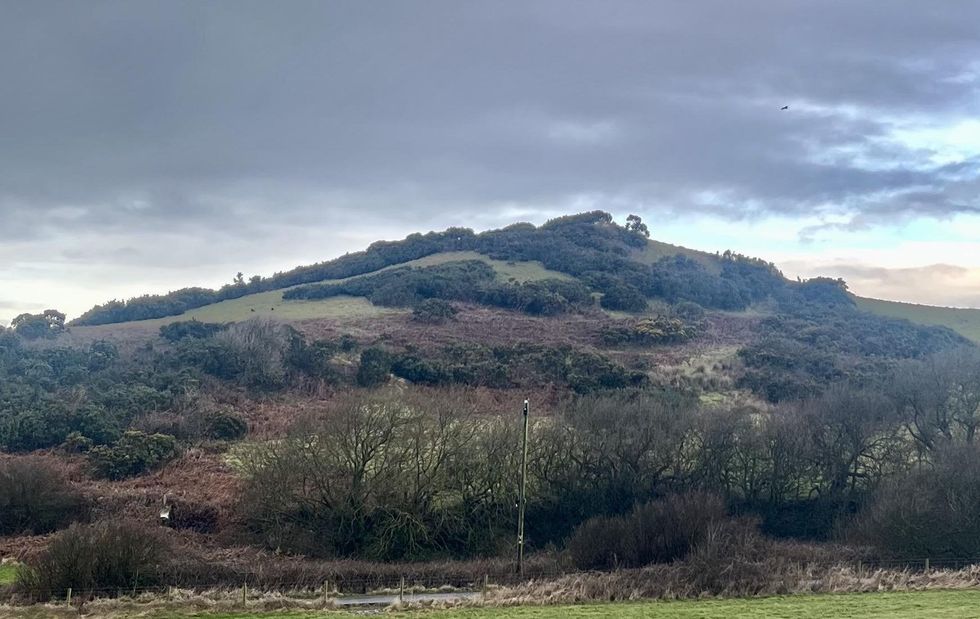
The hill could be the final resting place of the tyrannical warlord
|FACEBOOK/STEVE DICKINSON
Metal detecting in the vicinity has yielded significant finds supporting the ship burial theory.
"We've been able to use metal detecting to find various things including, interestingly enough, very large ship rivets and lead weights used in weighing out a significant silver hoard that was found nearby," Mr Dickinson explained.
The nearby Beckermet Hoard, containing silver from the Carolingian Empire and coins originating in Baghdad, appears to have been weighed out beside the mound.
Ivarr Ragnarsson, son of the legendary king Ragnar Lothbrok, led the coalition of Norse forces that invaded England in 865 CE, capturing York and extending Viking power across the region.
LATEST DEVELOPMENTS
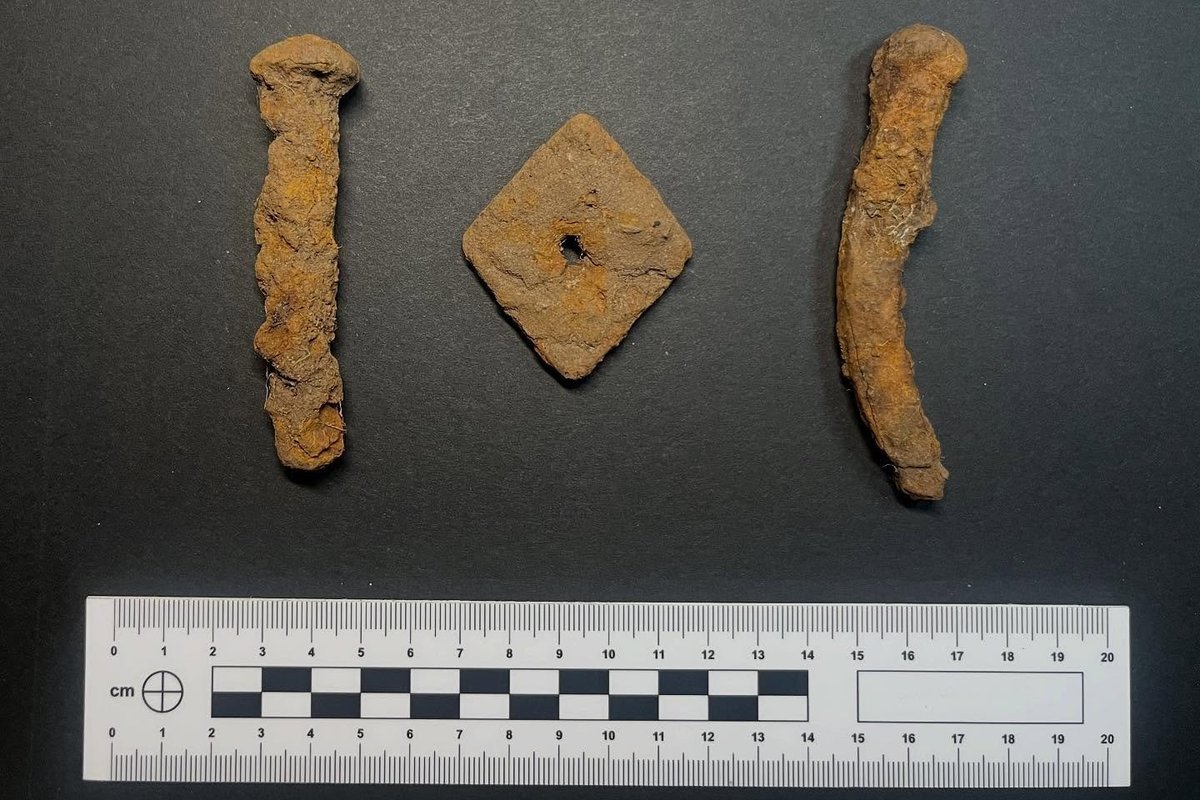
Metal boat rivets found nearby
|FACEBOOK/STEVE DICKINSON
His unusual epithet "the Boneless" derives from the Old Norse term "beinlausi," though scholars remain divided on whether this referred to a physical condition, an unconventional combat technique, or held purely symbolic meaning.
Previous searches for his grave centred on Repton in Derbyshire, where a major Viking encampment existed and a mass burial was uncovered in the 1980s.
However, that claim rests on a burial reportedly discovered in 1686, and no conclusive link to Ivarr has been established.
Mr Dickinson's attention shifted westward after encountering repeated references to "Coningeshou" in Icelandic sagas during his research.
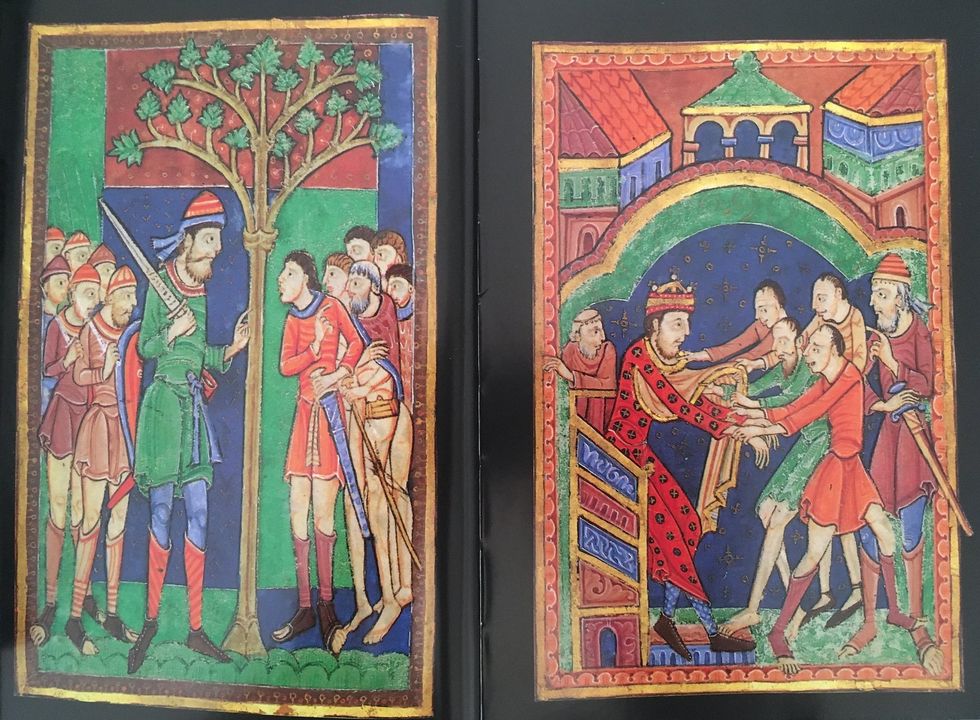
Artwork displaying the invasion of Ivar the Boneless
|WIKICOMMONS
Mr Dickinson intends to conduct ground-penetrating radar scans later this year to determine whether subsurface features match the structural outline of a buried vessel.
Should his theory prove correct, the site would represent the first confirmed Viking ship burial ever discovered in the United Kingdom, joining just 16 such monumental burials known across northwest Europe.
Recent discoveries have bolstered the case for west Cumbria as a major Norse power centre.
Satellite imagery, LiDAR scanning and ground surveys have revealed what archaeologists interpret as Viking fleet bases and large timber hall complexes in the region.
A hall measuring approximately 63 metres has been detected south of Gosforth, which would make it the largest pre-Norman hall known in the UK and Ireland.
Professor Neil Price, Chair of Archaeology at Uppsala University, has compared the complex to royal Viking Age palaces in Scandinavia.